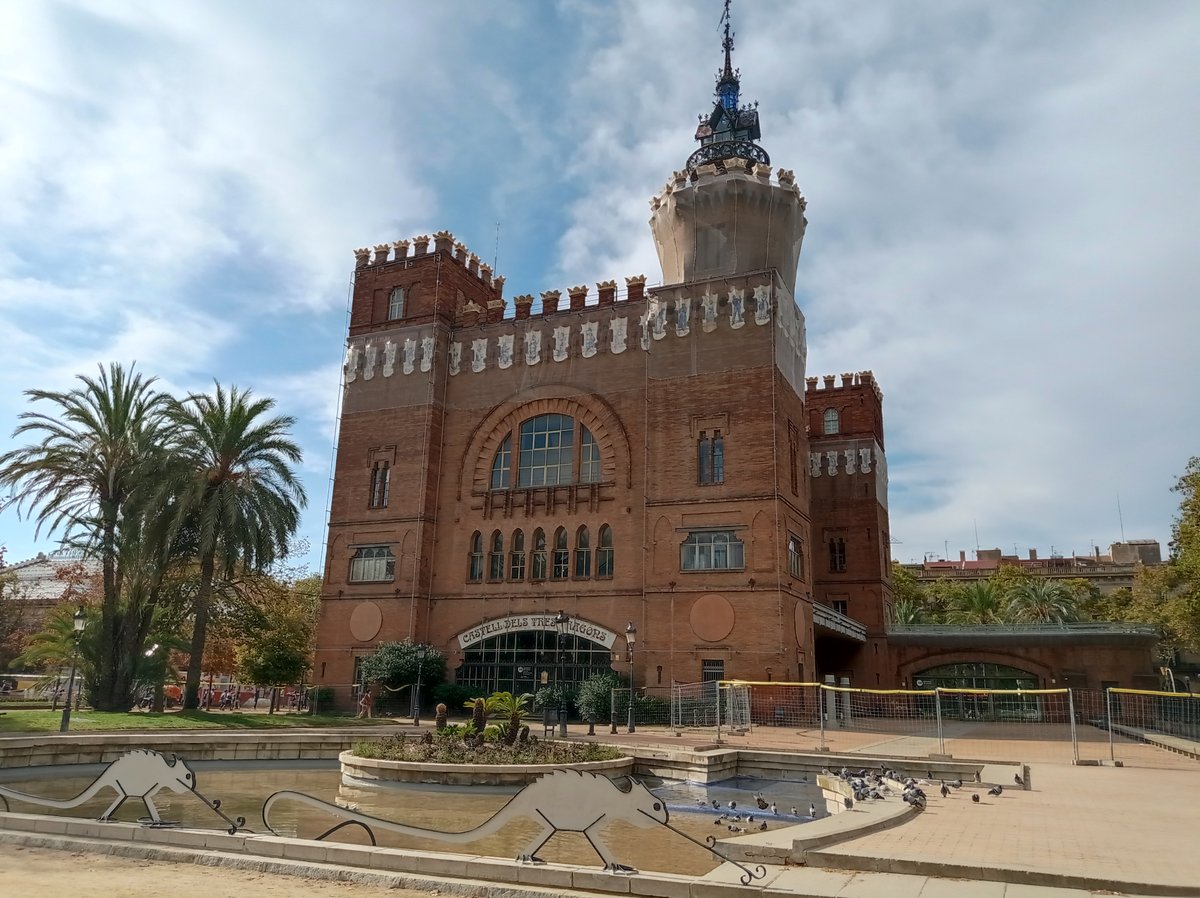

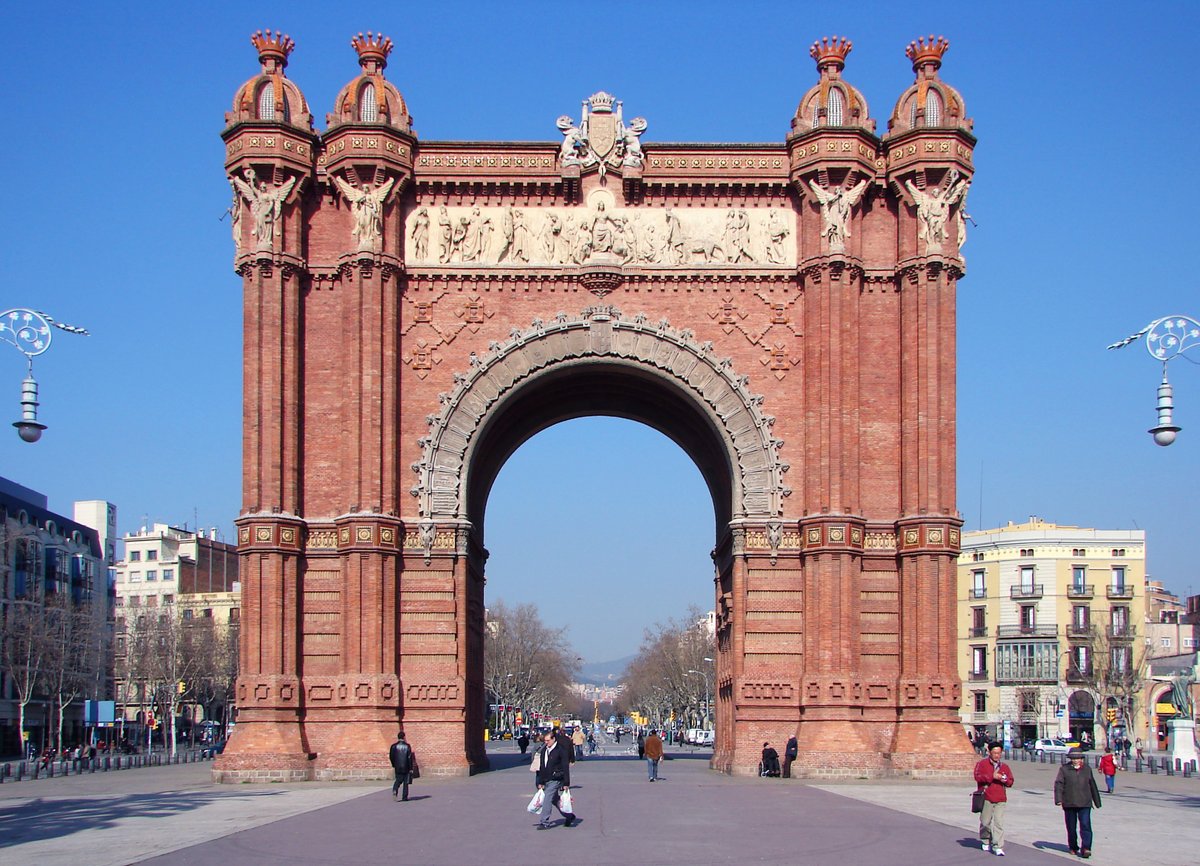
The Castle of the Three Dragons was destined to be a focal point of the 1888 Universal Exposition. It was conceived as a café-restaurant situated at the terminus of the boulevard stretching from the Arc de Triomf toward the Parc de la Ciutadella. Despite these grand intentions, construction hurdles proved immense. The structure failed to meet the April 8 inauguration date, finally opening on August 17. This delay was so profound that the architect, Lluís Domènech i Montaner, chose to resign from the project.
We can observe the bold vision of Domènech i Montaner in the castle-shaped silhouette composed of iron and brick. He pioneered an innovative transparent framework of these materials, topped with perimeter walkways and four corner towers. The facade invites closer inspection through its vibrant ceramic ornaments and the artworks of Joan Llimona and Alexandre de Riquer. One should note the intricate battlements, which feature blue-on-white shield panels depicting flora, fauna, and various alcoholic beverages.
Following the exhibition, the site shifted from a workshop for industrial arts to a Museum of history, archaeology, and biology. It functioned as the Zoology Museum of Barcelona for most of the 20th century. During this period, the building suffered some bombing damage by Francoist aviation during the Spanish Civil War.
This building stands today as a vital piece of Modernisme heritage. A major restoration occurred in the 1980s to preserve its integrity. While the old Zoology Museum collection was dismantled in 2010, those pieces found a new home at the Museum of Natural Sciences in the Forum Building.
Sources: Wikipedia, OpenStreetMap, Wikidata, Wikimedia Commons
Written by Nik Frost
Discuss this with the author and others
No comments yet. Be the first to start the conversation.