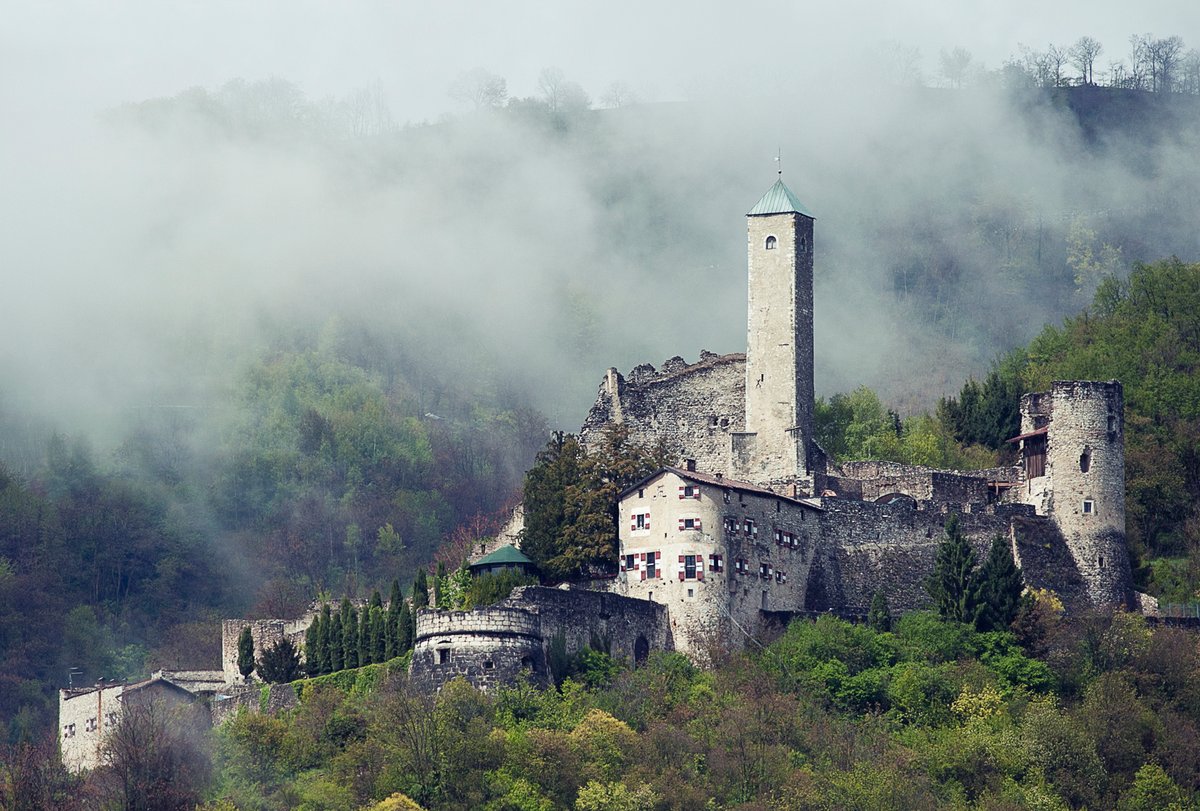

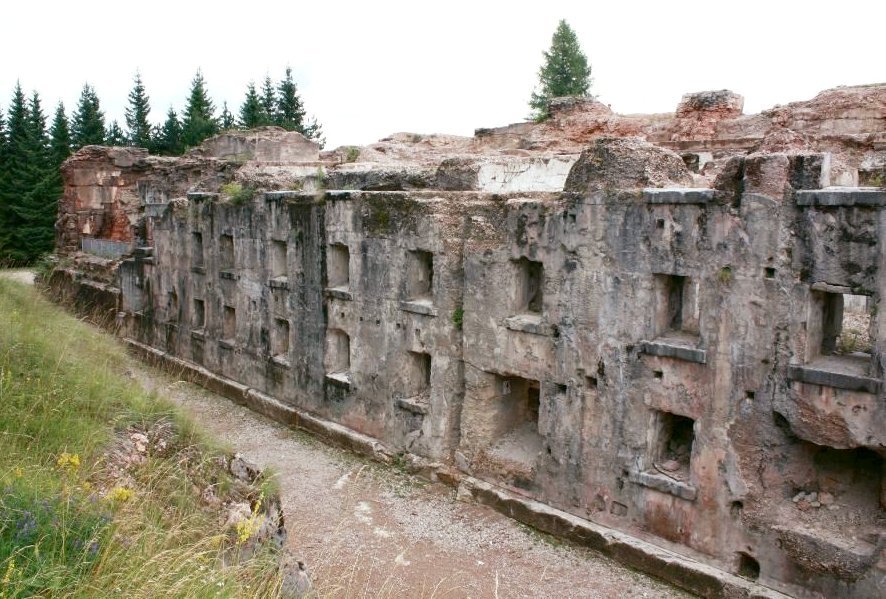
Historical records suggest that the imperial authorities ordered the dismantling of the manor once it was abandoned, contrary to popular legend which claims a mob tore it apart. While much of the structure was demolished, only a small part of what existed during its peak in the 16th and 17th centuries remains today.
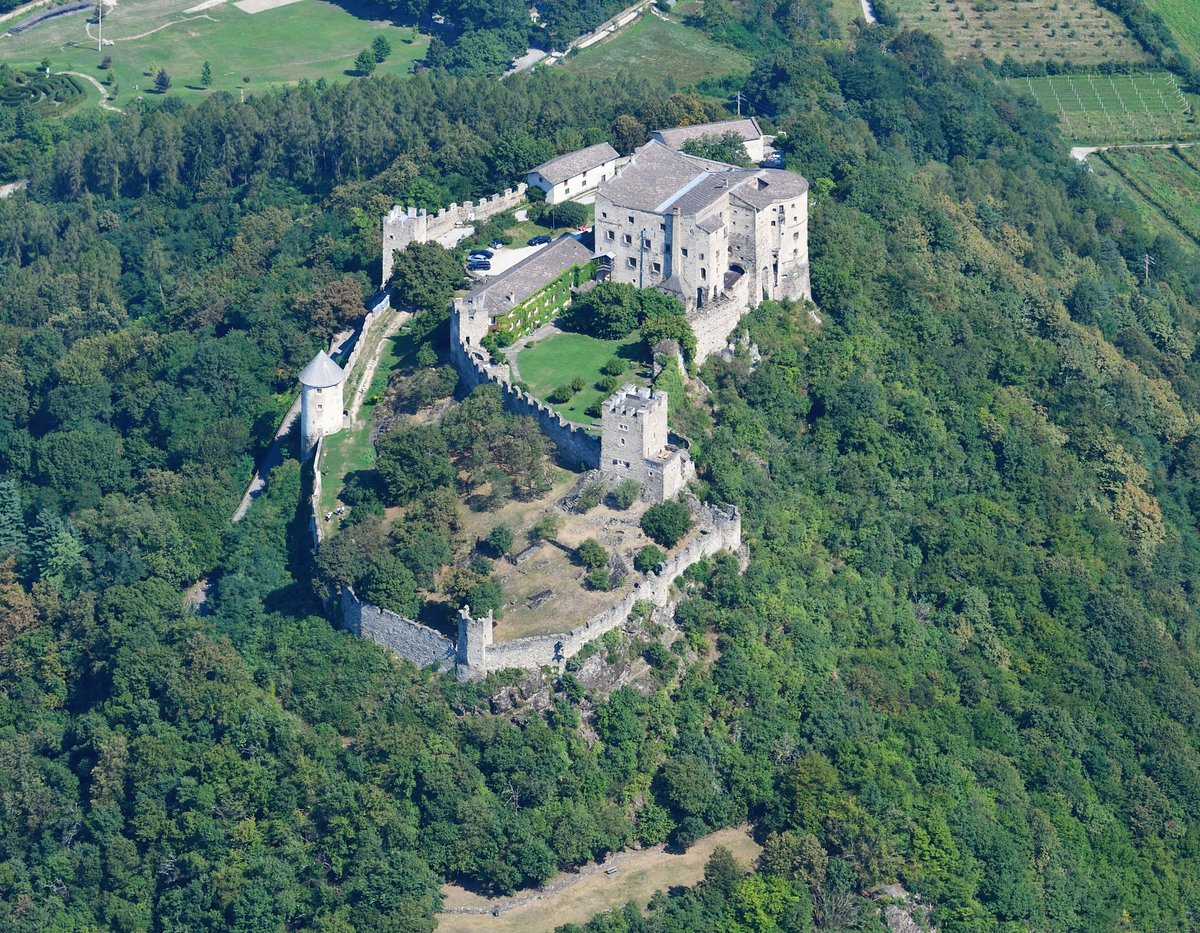
Situated on a strategic position on the slope of Mount Ciolino, the castle was used to control the Via Claudia Augusta Altinate. By the 14th century, the owner Rambaldo di Castronovo expanded the walls to create a "buffer fiefdom" in the Valsugana. He reconstructed and enlarged the castle, providing it with curtain walls over much of the hill on which it stood to secure his jurisdiction.
On the mountain to the north of Borgo Valsugana stands the core of the upper castle, which dates back to the 13th century. It features a square lookout tower 25 meters high and 5.30 meters per side, equipped with two spine buttresses. The only surviving section of the medieval walls is the northwest segment, where a buttress still stands. At the base of this wall is an arched gate from 1673. While most of the palace has vanished, the lower castle features a massive truncated tower known as the Gasperetti.
The interior of the castle is not open to visitors, but the exterior can be viewed from the outside. You can follow the perimeter of the old walls or observe the site from a position further up the ridge. The site is reachable via the "Sentiero dei Castelli," which passes in front of the castle on the way to Telve di Sopra.
Sources: Wikipedia, OpenStreetMap, Wikidata, Wikimedia Commons
Written by Nicolo Ciampini
Discuss this with the author and others
No comments yet. Be the first to start the conversation.