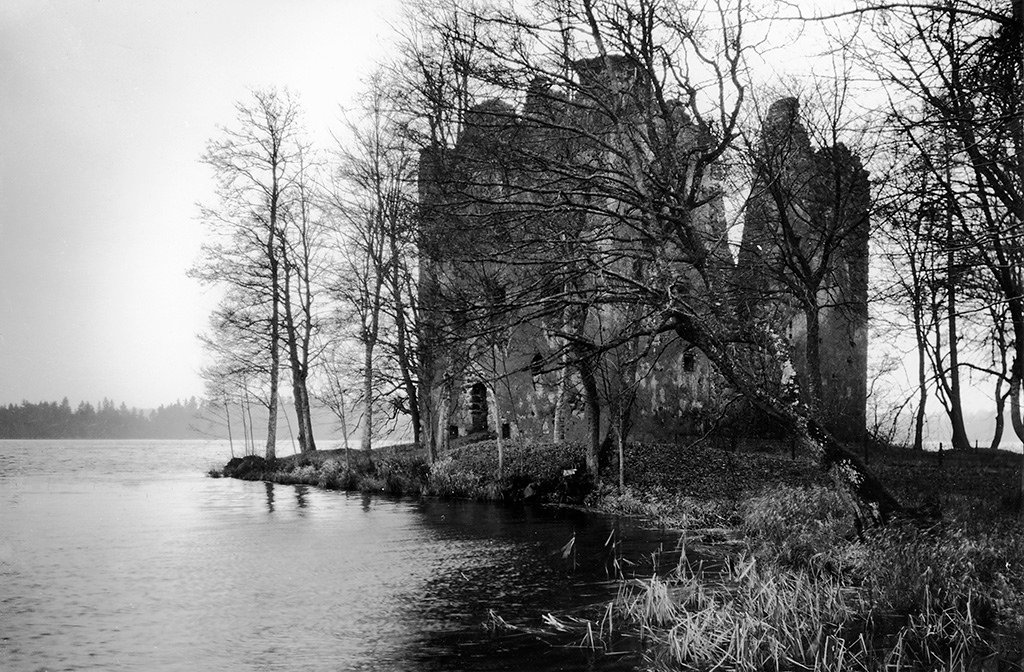

Bergkvara Castle ruins, located near Växjö, Sweden, are an important cultural and historical site <sup>[1]</sup>. Constructed in the late 16th century by the noble family of Oxenstierna, the castle served as an important military stronghold <sup>[2]</sup>.
In 1542, the castle was ransacked, plundered, and set on fire during the Dacke War (Dackefejden) <sup>[3]</sup> by the peasant revolt led by Nils Dacke, marking a pivotal moment in the conflict and demonstrating the vulnerability of noble strongholds to organized popular resistance <sup>[4]</sup>. The castle became ruined in the 18th century <sup>[5]</sup>. In the late 18th century, a new main building was constructed and finished in 1794 <sup>[3][5][6]</sup>.
Today, the ruins of the castle are an important cultural and historical site, attracting visitors interested in medieval architecture and Swedish history <sup>[1]</sup>. The ruins provide insight into the defensive design and noble lifestyles of the late medieval period <sup>[1][2]</sup>, as well as the turbulent events of the 16th century <sup>[3]</sup>.
Sources: Wikipedia, OpenStreetMap, Wikidata, Wikimedia Commons
Written by Nik Frost
Discuss this with the author and others
No comments yet. Be the first to start the conversation.