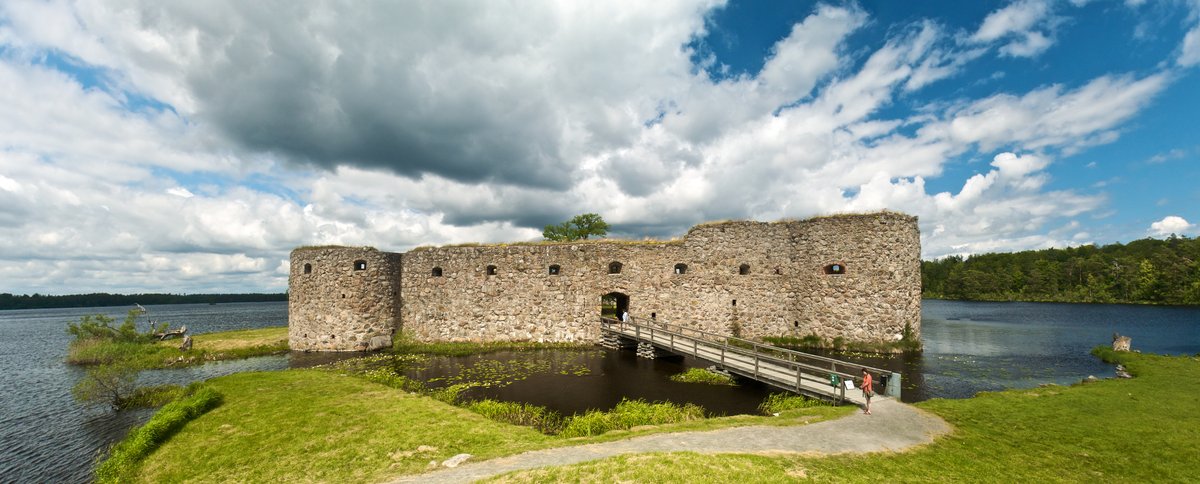

Kronoberg Castle was built on the shores of Helgasjön by the Bishop of Växjö in 1444. Throughout its long life, the site endured the Reformation and served as a center of resistance during the Dacke War in 1542. By the late 1500s, it had matured into a powerful military hub; it had great military significance during the Northern Seven Years' War (1564-70) and eventually featured at least 50 cannons.
The castle was further fortified due to its strategic location near the border between Sweden and Denmark. It served as a support point in 1568 while beating back a Danish attack, though it was successfully besieged and burned by the Danes in 1570. After being burned again in 1612, reconstruction was not started until 1616.
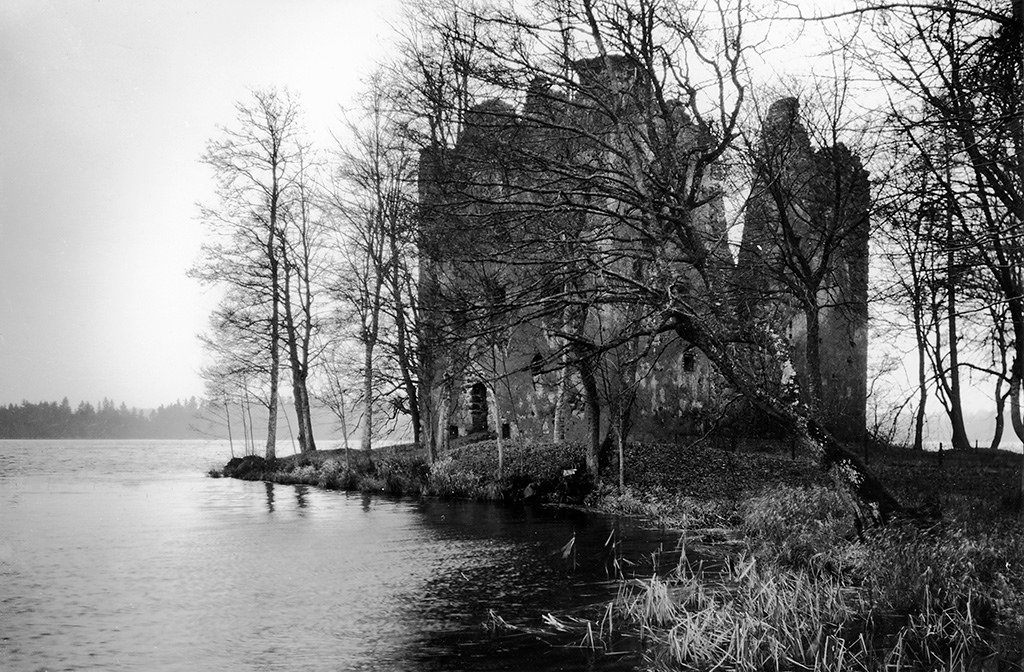
The shift in its fate came from a diplomatic change. After the Treaty of Roskilde was signed in 1658, the Swedish-Danish border was moved to Øresund, and Kronoberg castle lost its military significance. Neglected, the building began to decay and became a ruin.
We can still observe these ruins today on a small islet in Kronoberg County. Though it was once open to tourists in the summer months, the site has been permanently closed since January 2023 due to a lack of maintenance. It remains a site that shows what happens to a building when its original reason for being has vanished.
Sources: Wikipedia, OpenStreetMap, Wikidata, Wikimedia Commons
Written by Nik Frost
Discuss this with the author and others
No comments yet. Be the first to start the conversation.