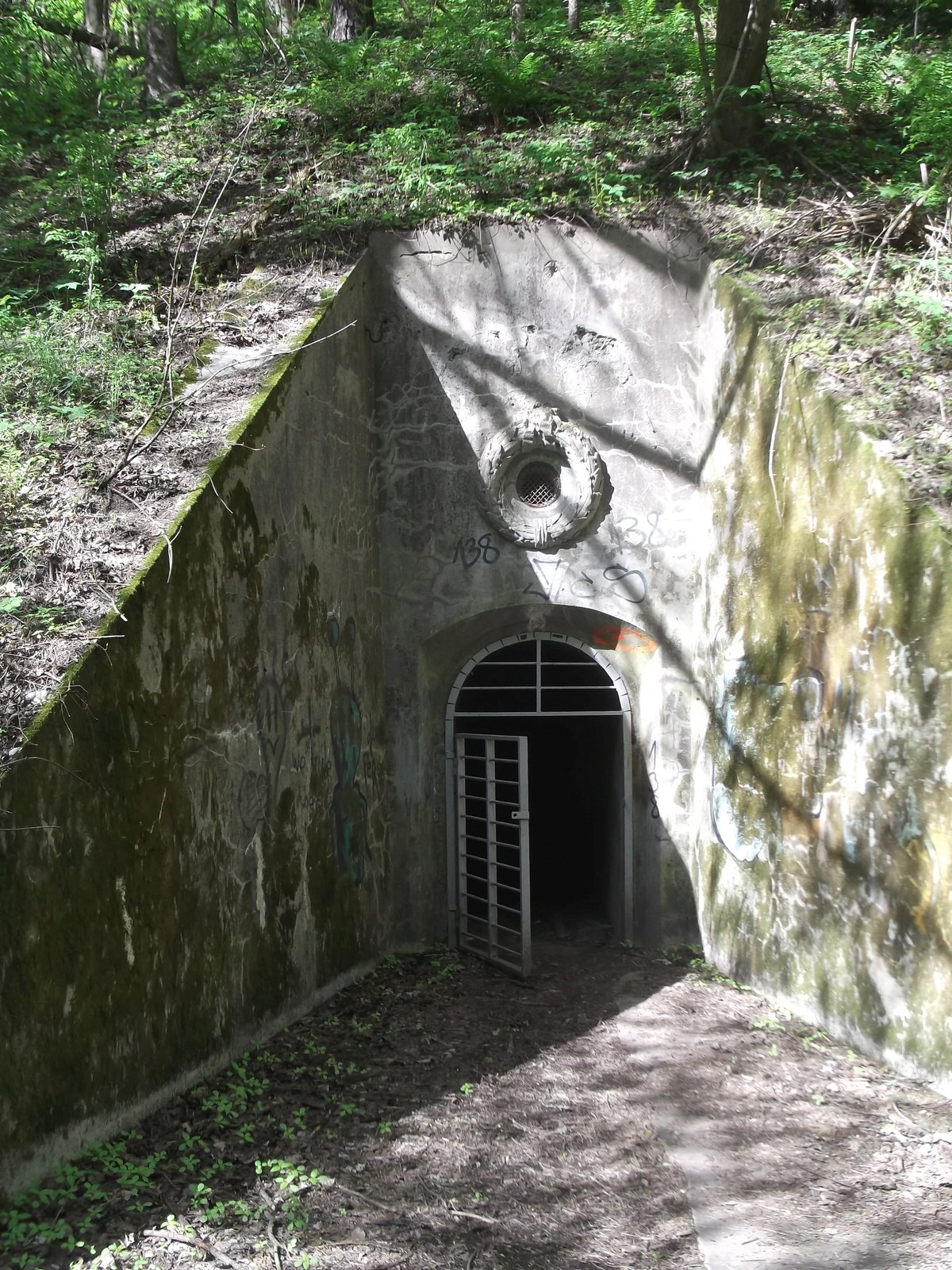

In the 1920s, the Polish army decided to turn Vilnius into a modern fortress against threats from the USSR. Construction began on the Antakalnis bunker complex in the summer of 1924, with work continuing until 1926-1927. These fortifications were built into the slopes of the Sapieginės hills to house forts, headquarters, and warehouses for ammunition, shells, and weapons.
The complex covers an area of 11.15 hectares and contains five bunkers with dozens of rooms. One of these bunkers is two stories high, featuring a shaft for lifting 100-kilogram shells. The rooms are constructed of concrete and linked by corridors, some of which are only 55 centimeters wide. The design included narrow tunnels intended to soften the blast wave of accidental explosions and a complex ventilation system.
Today, the site is recognized as a cultural heritage object and a protected area for animal habitats. It is one of the largest hibernation sites for bats in Lithuania, specifically providing a home for the European free-tailed bat, which is listed in the Lithuanian Red Book. Other species, including the Brandt's bat, also reside in the dry rooms and ventilation shafts.
Visitors can see the ruins, which include the foundations of old guardhouses and a 320-meter stone path. To protect the bats from disturbance during their hibernation, access to the bunkers is restricted from September to April. The site also features a special room in one of the central two-story bunkers used for public nature education.
Sources: Wikipedia, OpenStreetMap, Wikidata, Wikimedia Commons





Written by Nicolo Ciampini
Discuss this with the author and others
No comments yet. Be the first to start the conversation.