

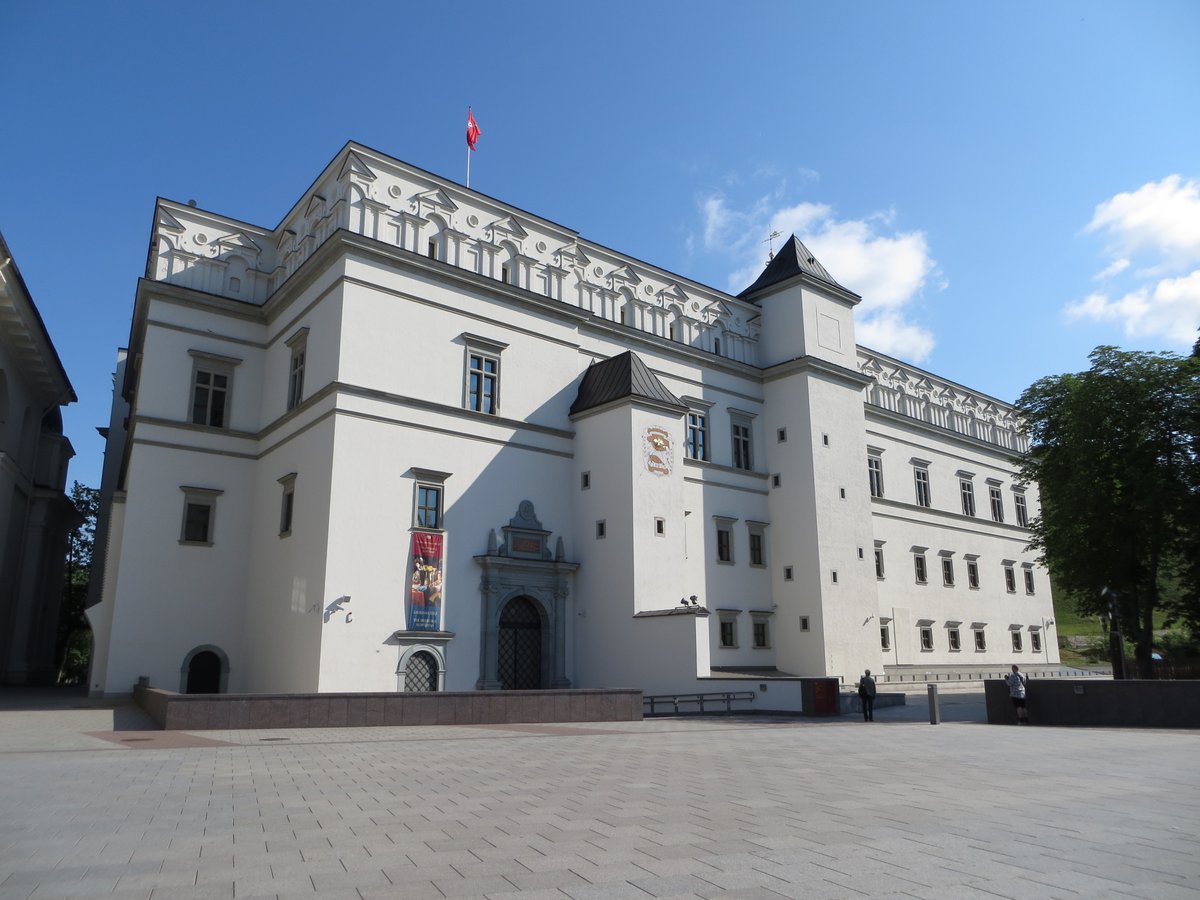
Tuskulėnai Manor, a neoclassical manor in Vilnius, Lithuania, has a hidden dark past. Known for being a burial ground for victims of Soviet repressions, this manor was reconstructed after Lithuania regained independence in 1990, transforming its park into a memorial to the victims. The current Tuskulėnai Manor was built in 1825, designed by Karol Podczaszyński in the neoclassical style, under the watch of Governor General Alexander Rimsky-Korsakov. The manor consists of the palace, a storage house, and several adjacent buildings, including a small eclectic chapel of St. Theresa. The palace, the prime architectural accent of the ensemble, shows Palladian influence. Three sculptures, Diana, Juno, and Venus, once stood on the front of the palace, being restored in 2007. The interior was decorated with works of Dutch painters, including Isaac van Ostade, Adriaen van Ostade, and Gerard Dou.
Numerous frescoes have been discovered and restored in the palace. Tuskulėnai Manor was under various noble families and high-ranking state officials during the Russian Empire of the 19th century. Julian Titius transformed the main palace into a guesthouse in the mid-19th century, making it a cultural center in Vilnius, frequented by Stanisław Moniuszko and Józef Ignacy Kraszewski. Julia Safranovich owned the manor in 1886, while the Melentjevy family held it until World War II.
The manor was nationalized in 1940. It was used as KGB officers' apartments and as a kindergarten. The Soviet secret police carried out 767 death sentences (18 Latvians, 9 Ukrainians, 38 Germans, and 559 Lithuanians) in the basement cells of the NKVD/MVD prison between 1944 and 1947. During exhumations between 1994 and 1996, the remains of 706 bodies were found in the manor's territory. 40 of the found bodies were identified. The remains from the mass grave were placed in a columbarium built underground, beneath an artificial hill, and consecrated in 2004.
Sources: Wikipedia, OpenStreetMap, Wikidata, Wikimedia Commons


Written by Nicolo Ciampini
Discuss this with the author and others
No comments yet. Be the first to start the conversation.