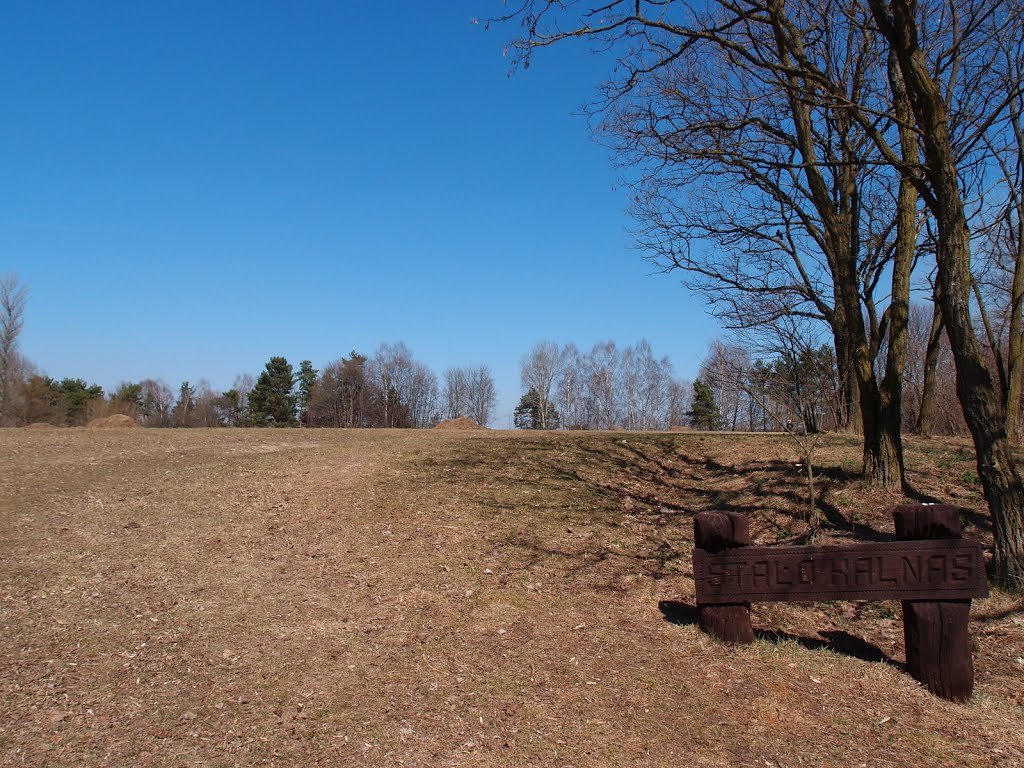

Table Hill is located in the center of Vilnius within the Kalnų park territory. It is an archaeological site and a hill fort with an elevation of 164.6 meters. The hill gets its name from its shape, which is as flat as a table at the top. The site features an open-air stage where various concerts and festivals are held during the summer.
The site underwent significant changes during the 19th and 20th centuries. In 1831, the construction of the customs fortress began, involving land leveling and the excavation of ditches. During this period, many hills were leveled, leaving only Kreivojo hill prominent in the general plans. Before these works, the hill was higher by at least 2 to 4.5 meters and featured trenches. Some remains of these trenches can still be seen today. Records from the late 18th and early 19th centuries show the old relief of the hill, which was divided into two parts by a 45-meter-wide trench.
Historical research and literature suggest that Table Hill served a defensive function for the Kreivojo town, also referred to as Curvum castrum. In 1955, the top of the hill was leveled by bulldozers to create the Dainų slėnis open-air stage, which impacted the cultural layer. Archaeological research in 1995 identified a cultural layer up to 1.8 meters thick containing pottery and other artifacts. Football historian Gediminas Kalinauskas notes that the first football matches in Vilnius took place on Table Hill.
Sources: Wikipedia, OpenStreetMap, Wikidata, Wikimedia Commons



Written by Nicolo Ciampini
Discuss this with the author and others
No comments yet. Be the first to start the conversation.