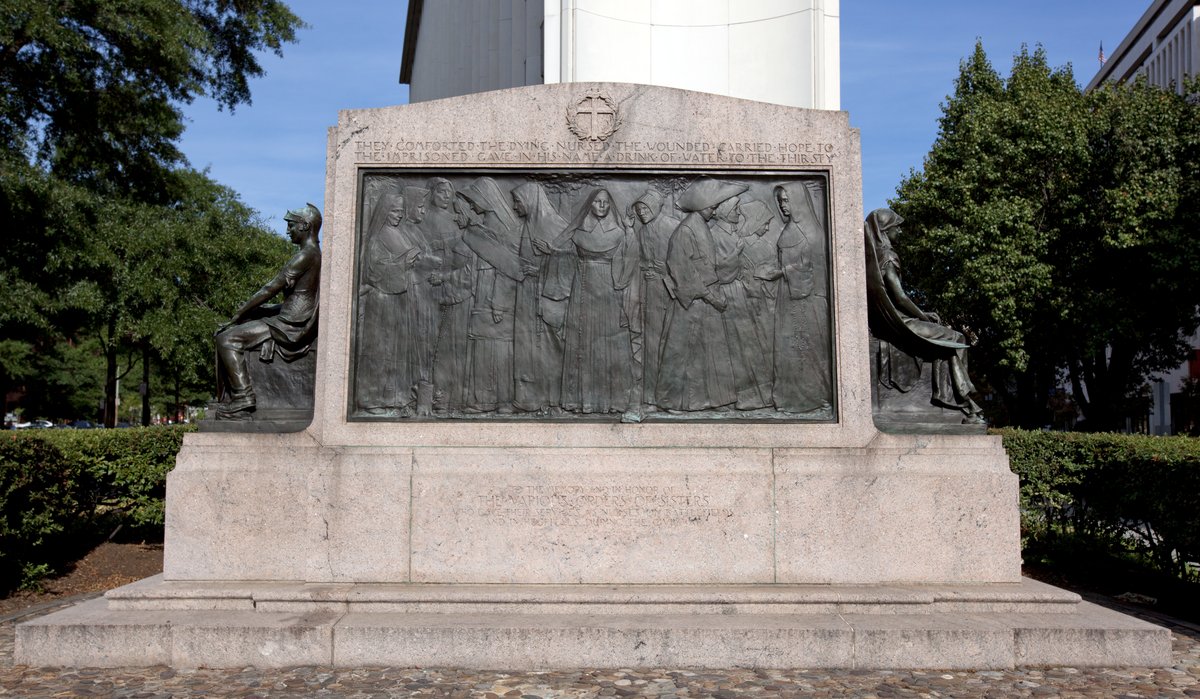
More than 600 nuns served as nurses for soldiers of both the Union Army and the Confederate States Army during the American Civil War. These sisters provided comfort to the dying, nursed the wounded, carried hope to the imprisoned, and gave a drink of water to the thirsty. The monument stands as a tribute to their service as nurses on battlefields.
The monument is the result of long-term determination by Ellen Jolly, president of the women's auxiliary branch of the Ancient Order of Hibernians. After hearing stories of battlefield tales told by nuns, she spent ten years gathering evidence of their service. She finally presented this evidence to Congress in 1918, leading to the authorization of the memorial. The Ancient Order of the Hibernians raised $50,000 to fund the project, commissioning the Irish-Catholic artist Jerome Connor.
Connor's sculpture features a large bronze relief panel showing 12 nuns dressed in traditional habits. On a rectangular granite slab, two winged figures sit at the ends. One figure, representing patriotism, holds a shield and a scroll; she is weaponless to represent peace. On the other side, a winged figure represents the angel of Peace, sitting with her hands folded in her lap. Connor, whose father was a stonemason, grew up carving figures into rocks using his father's chisels.
Located at the intersection of Rhode Island Avenue NW, M Street, and Connecticut Avenue NW, the sculpture was dedicated on September 20, 1924. The dedication included a weekend-long meeting of over 5,000 Catholics. During the event, a living veteran, Sister Magdeline of the Sisters of Mercy, received a thunderous applause. The ceremony concluded with the release of white pigeons and signal flags spelling out faith, hope and charity.
Sources: Wikipedia, OpenStreetMap, Wikidata, Wikimedia Commons
Written by No Other
Discuss this with the author and others
No comments yet. Be the first to start the conversation.