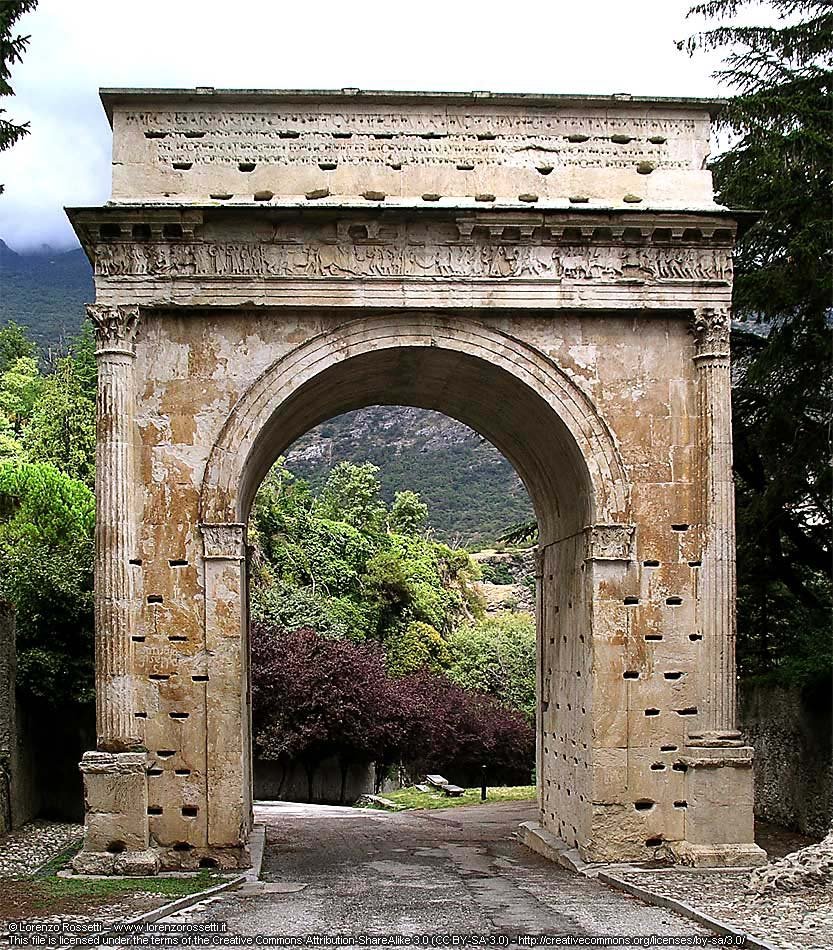

The Arch of Augustus, located in Susa, was constructed in 9–8 BC. This monument was built to record the renewed alliance between Emperor Augustus and Marcus Julius Cottius, a Celto-Ligurian ruler who had been made king and Roman prefect of the Cottian Alps. The arch, together with other remains from the period, such as the Roman amphitheatre and a Roman aqueduct, underscores the importance that the city of Susa had during the Roman period.
The arch, using white marble sourced from nearby quarries at Foresto and Tre Piloni, has a unique arcade in which the archivolt is supported by pilasters. The entablature rests on four Corinthian columns placed at the extremities of each corner, such that a quarter of each drum is embedded in the monument. The lowest architrave is composed of three bands of which the lowest band is thicker than the middle band, and this in turn is thicker than the top band.
Above the architrave, a frieze composed of a bass relief stretches around all four sides. The cornice has twenty-two corbels on each face and twelve on each side of the arch, with the corbels' panels decorated with roses. On top of that rests the attic, which displays an inscription on both faces, likely originally set with bronze letters. The inscriptions were likely updated later to include the honorific title of Pater Patriae on the north-facing side.
Sources: Wikipedia, OpenStreetMap, Wikidata, Wikimedia Commons
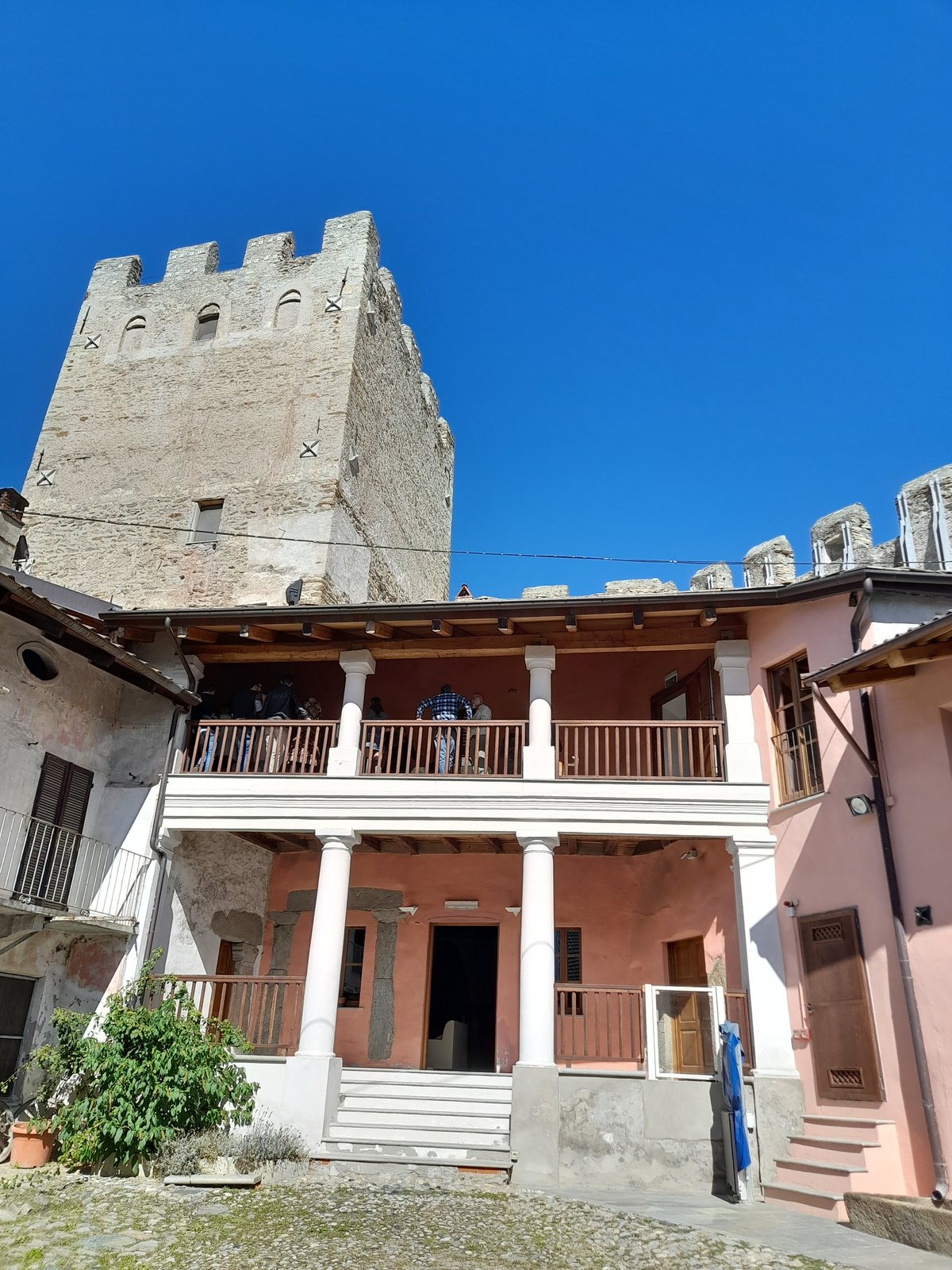
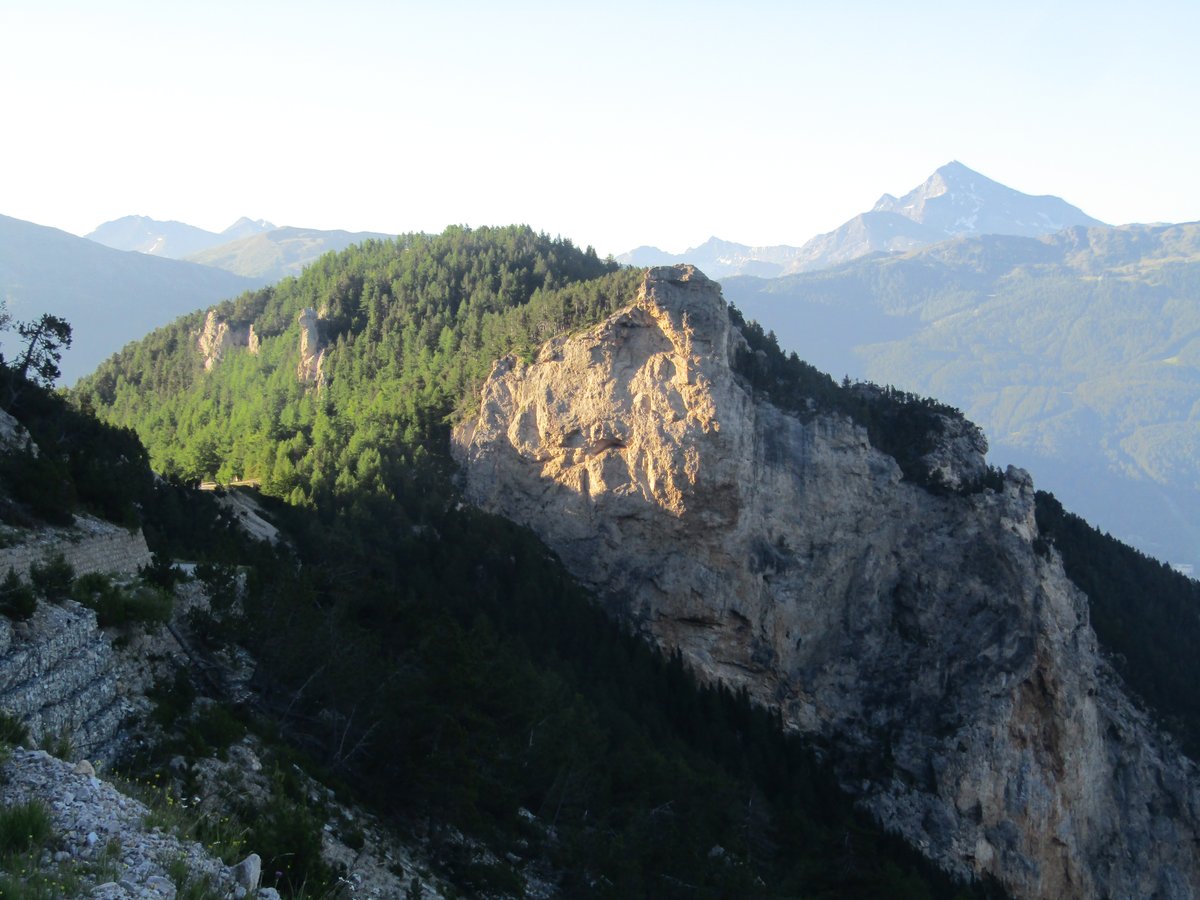
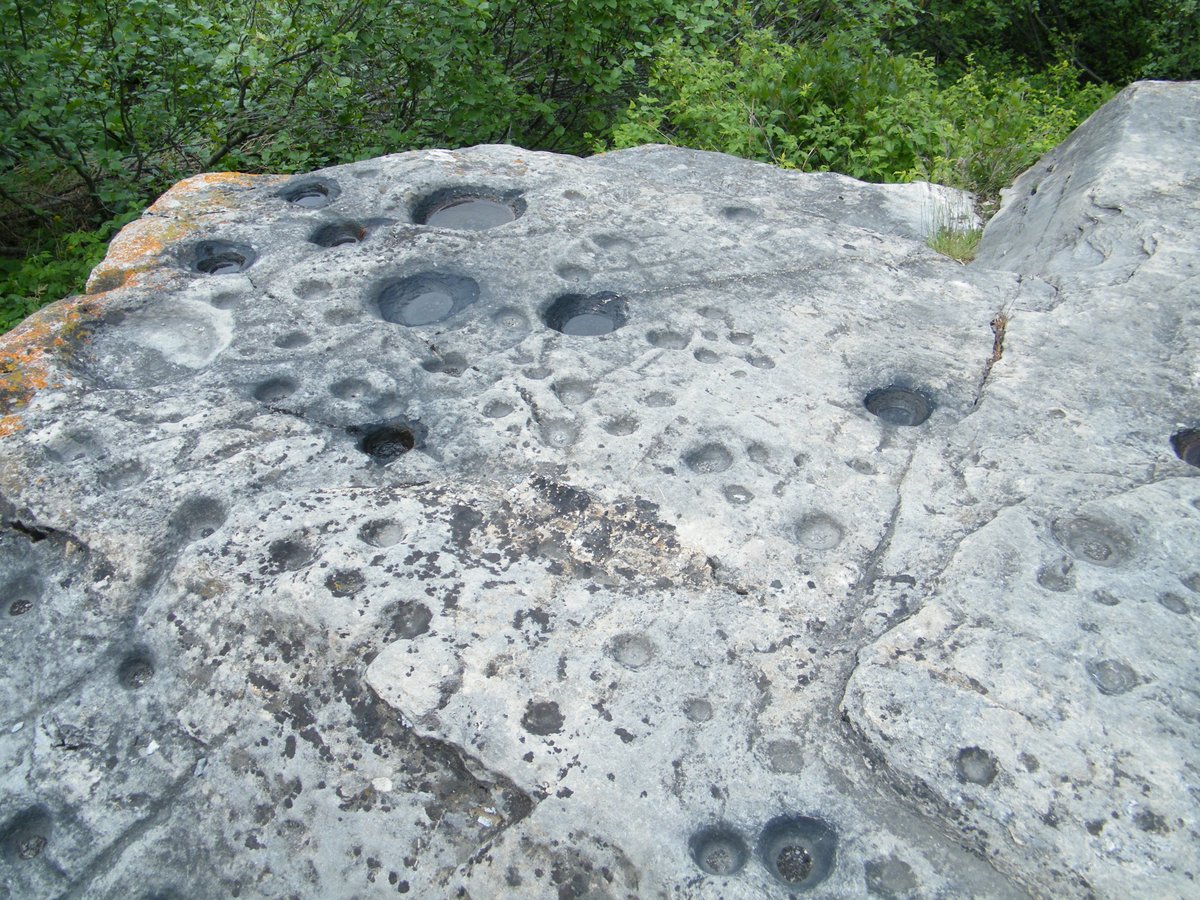
Written by Nicolo Ciampini
Discuss this with the author and others
No comments yet. Be the first to start the conversation.