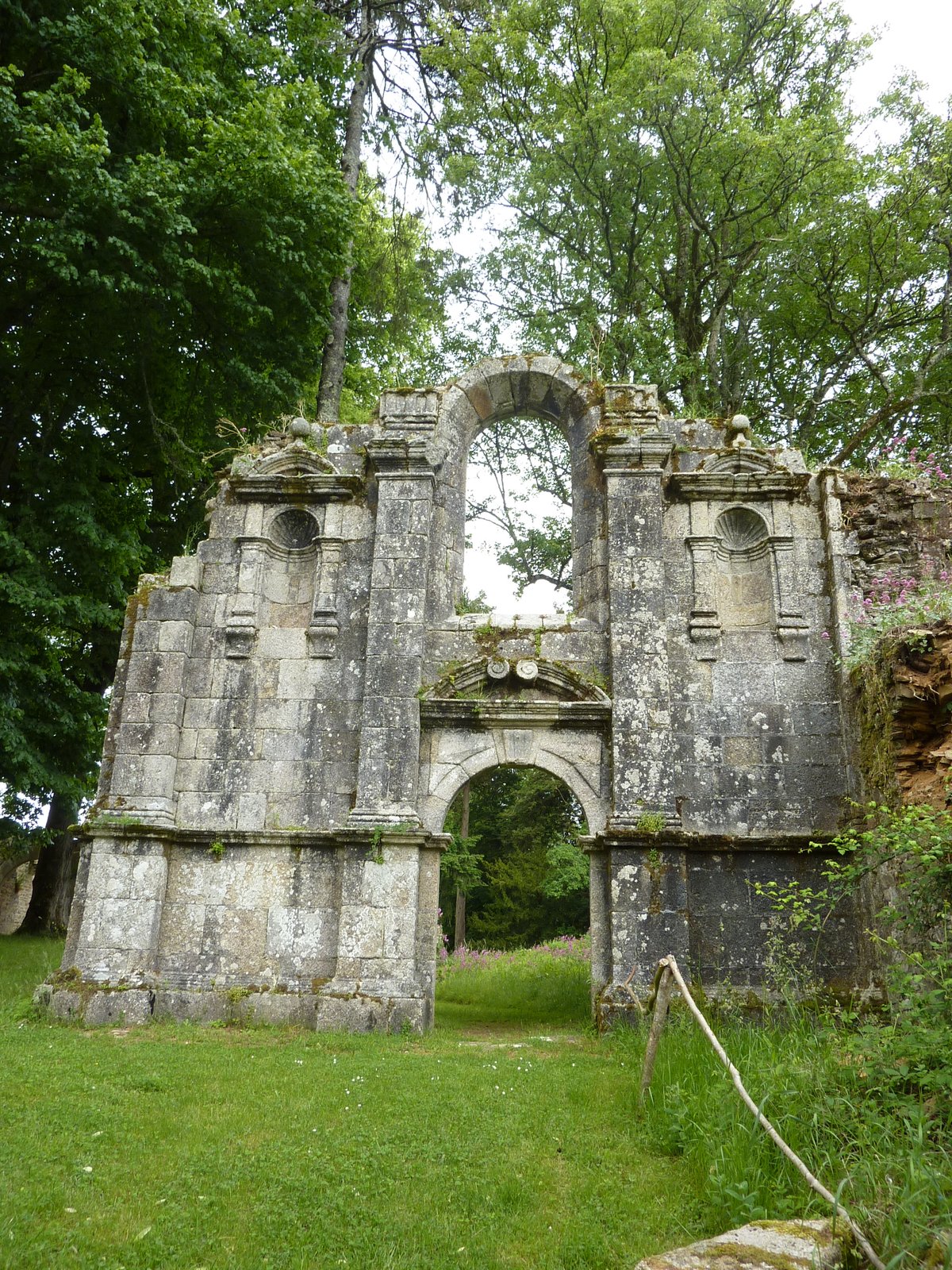

Located on the right bank of Ria de Laïta, near Quimperlé, Abbaye Notre-Dame de Carnoët is a Cistercian abbey with interesting architectural elements. Originally established in 1170 by Saint Maurice de Carnoët, it was a Roman Catholic monastery for the Cistercian monks. The abbey suffered damage during the French Revolution and was later affected during World War II. In 1991, it was acquired by the Conservatoire du littoral along with its 118-hectare domain.
The salle capitulaire, a 13th-century vestige, is a historical monument. The entire property and site were inscribed as historical monuments in 1995. Today, the abbey site covers 123 hectares and is a popular place for walking due to its wooded banks along the Laïta. It is also home to a colony of bats, particularly the great rhinos (Rhinolophus ferrumequinum). However, the site is partially threatened by the rise of water due to climate change, with an additional meter potentially submerging the salle capitulaire.
Sources: Wikipedia, OpenStreetMap, Wikidata, Wikimedia Commons
Written by Nicolo Ciampini
Discuss this with the author and others
No comments yet. Be the first to start the conversation.