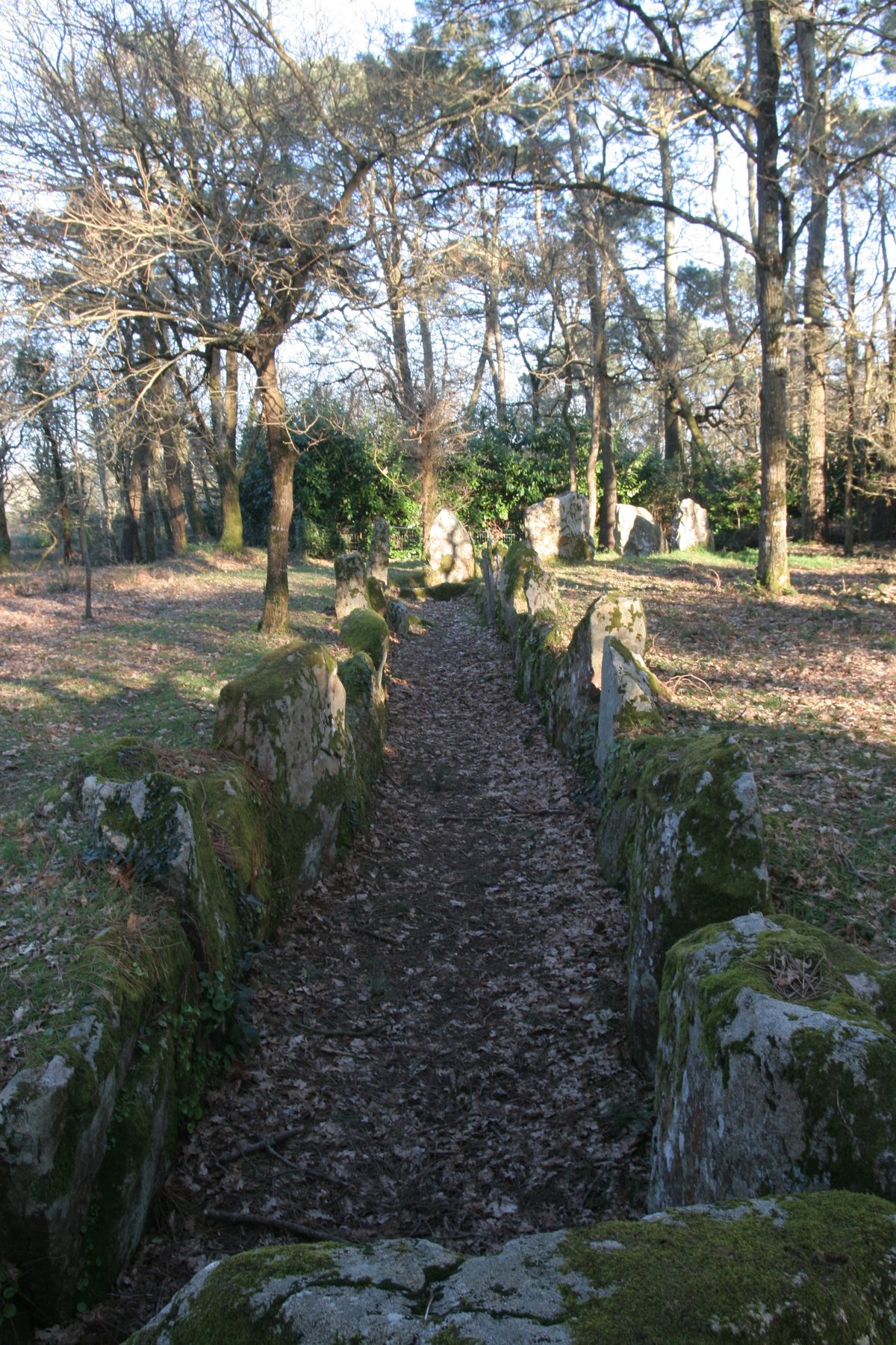

The Luffang Cephalopod Tomb, an archaeological site dating back to the Neolithic age (circa 3000 BCE), is found in Crach, Morbihan, France. While it's known as an 'allée couverte' (covered alley), this term is not explicitly defined as a Neolithic tomb in the sources, but it likely serves that purpose. The tomb is constructed from nineteen orthostates (11 on the left, 7 on the right, and 1 at the back), with various findings recovered during excavations, including numerous vessels, a small stone toolkit, and decorative elements such as a spiral of bronze and wooden belt fragments. Three upright slabs bear carvings, including the ninth and tenth supports on the left side and the third support at the bend, which features a cephalopod engraving.
Sources: Wikipedia, OpenStreetMap, Wikidata, Wikimedia Commons
Written by Nicolo Ciampini
Discuss this with the author and others
No comments yet. Be the first to start the conversation.