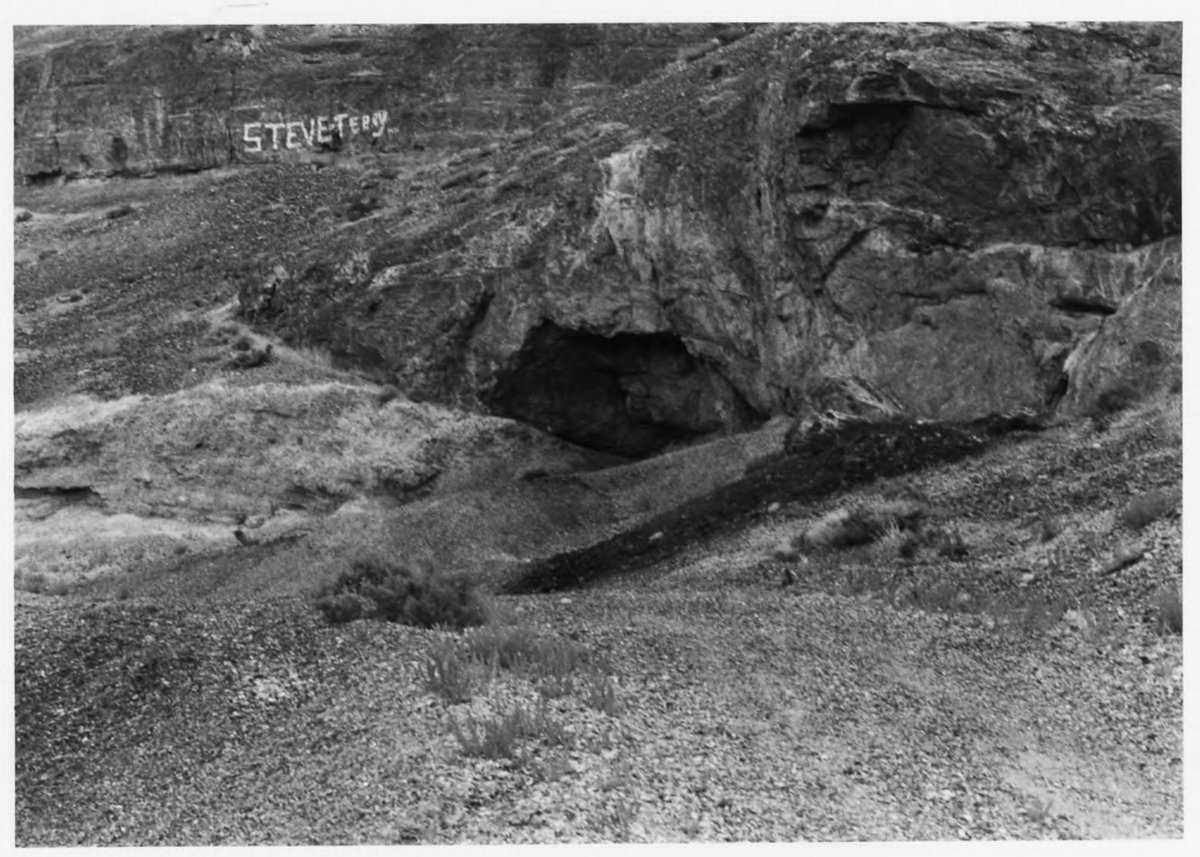

Welcome to Danger Cave, a National Historic Landmark nestled in the Bonneville Basin of western Utah. This archaeological site features artifacts of the Desert Culture from c. 9000 BC until c. 500 AD. Carbon-14 dating shows very little evidence of human life in the area around 11,000 BP, but much evidence of human life by 9000 BP, along with the bones of many species of animals.
Excavations led by Elmer Smith and Jesse D. Jennings in the 1930s and 1950s unearthed intriguing finds such as beetle wings, textiles, human paleofeces, and over 2,500 chipped-stone artifacts. The extremely dry cave created an ideal storage condition that helped preserve these treasures from the elements.
In addition to the artifacts, the excavation yielded identifiable fragments of 68 plant species that still grow today within ten miles of the cave. These findings contribute to our understanding of the environment and the people who lived there.
The data gathered suggests that the Desert Culture likely consisted of small social units, numbering no more than 25 to 30 people, focusing on survival rather than building permanent structures or amassing extensive personal property.
Though the living conditions were harsh, the Desert Culture persisted for thousands of years and eventually became the basis for other early Utah cultures such as the Fremont. Unfortunately, on 11 May 2019, the site was looted and many ancient artifacts were stolen.
Sources: Wikipedia, OpenStreetMap, Wikidata, Wikimedia Commons


Written by Friendly Jane
Discuss this with the author and others
No comments yet. Be the first to start the conversation.