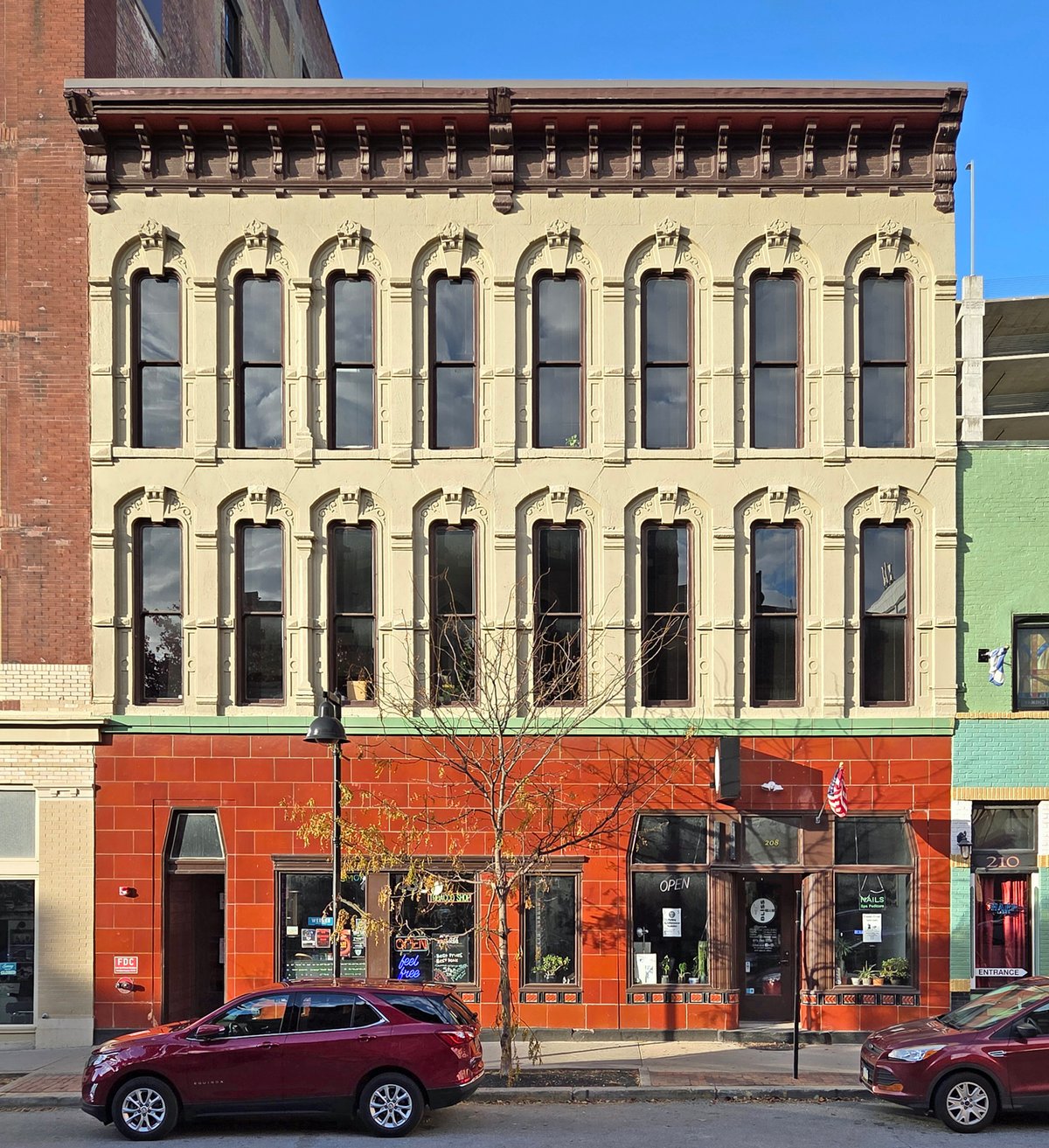
In 1856, Conrad Youngerman moved to Iowa from Wichdorf, Germany, where he had apprenticed as a stonecutter. He became a prominent local stonemason, participating in the construction of the original Polk County Courthouse in 1861 and establishing a brickmaking business. His materials business expanded into the production of "asbestine", an artificial building stone that could be used in lieu of natural stone, which was expensive and scarce in central Iowa.
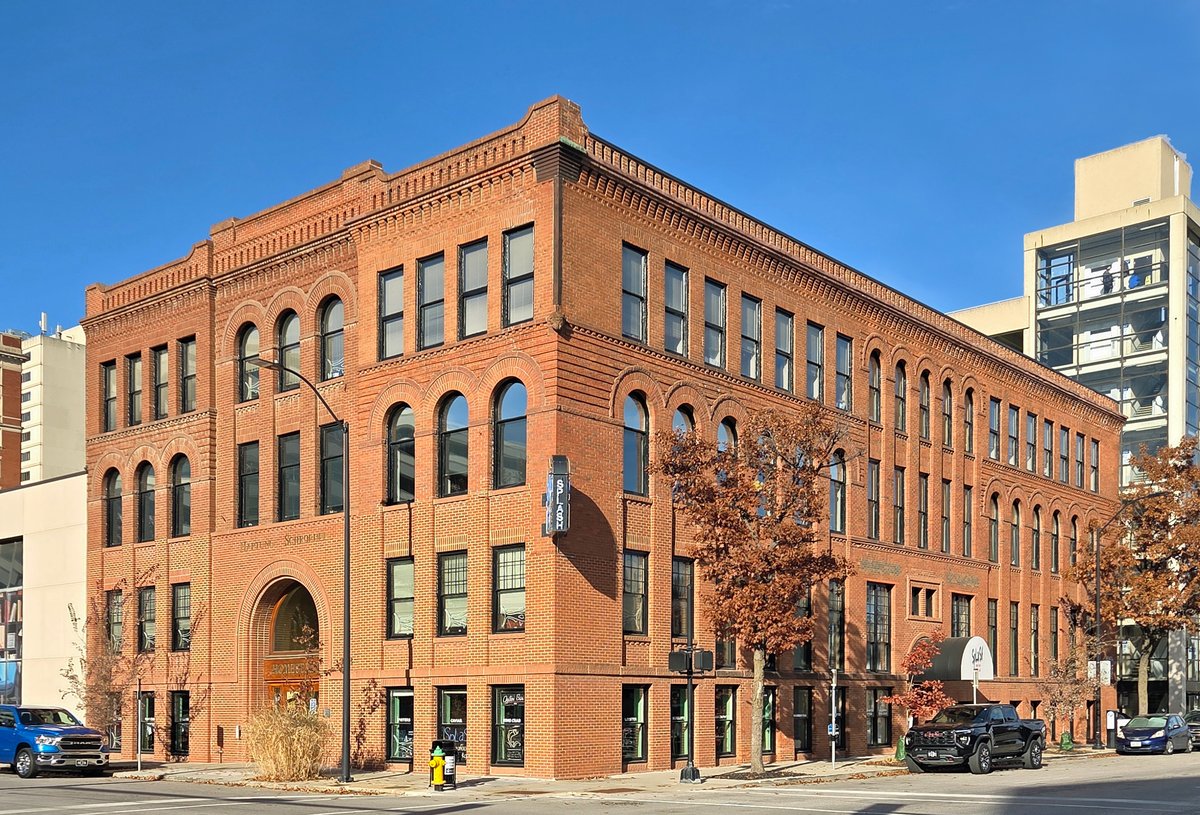
In 1876, architect William Foster designed the Youngerman Block for Youngerman. The three-story commercial building incorporates Italianate architecture with later alterations that introduced Art Deco detailing. The upper levels are faced with "asbestine" made by Youngerman's manufacturing operation. The ground-floor storefront was remodeled in 1935 using new masonry and red ceramic tile block, creating a notable example of the Art Deco style in Des Moines.
Youngerman served three terms as a city alderman and was a trustee of two banks. He erected many of the large public business and manufacturing buildings, as well as many of the fine residences, churches, and school-houses of Des Moines. After his death in 1901, his legacy remained in the city, and the Youngerman Block was eventually listed on the National Register of Historic Places on June 10, 2009.
Sources: Wikipedia, OpenStreetMap, Wikidata, Wikimedia Commons
Written by No Other
Discuss this with the author and others
No comments yet. Be the first to start the conversation.