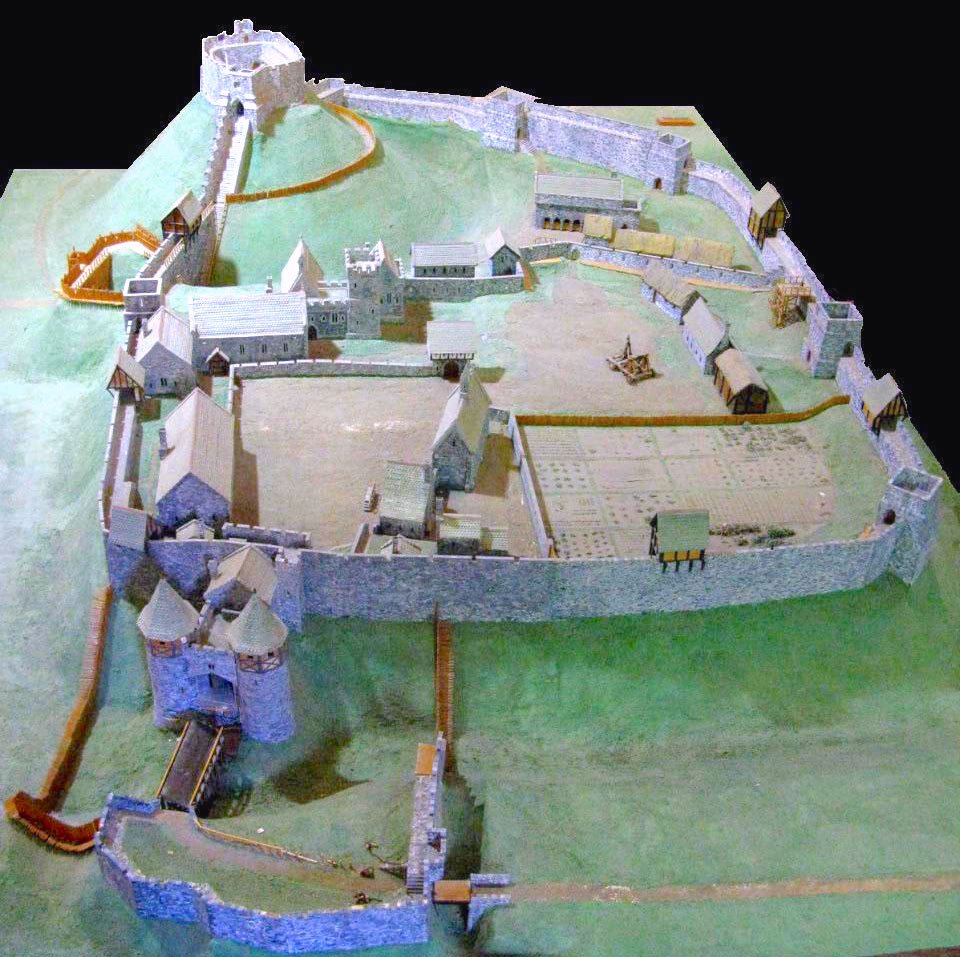
Carisbrooke Castle, located on the Isle of Wight, England, stands above Carisbrooke village centre. It's a centuries-old sentinel with a rich and storied past, but it’s what you can’t see that’s most surprising. From pre-Roman times to the present day, this motte-and-bailey castle has been a witness, a refuge, and an occasional prison. The Vikings were likely the first to take up temporary residence here, back in the 10th century. But it was the Normans who brought medieval grandeur to its walls, in the form of William FitzOsbern.
He was granted the Isle of Wight after the conquest and likely developed the Saxon burh at Carisbrooke, turning it into a key fortress for the new kingdom. The castle's fame continued to grow over the centuries, with ownership passing through the hands of several powerful families. Among them was the de Redvers clan, who held the castle until 1293, when all their lands were confiscated by Edward I. One particularly notable resident was King Charles I, who was imprisoned here in the months leading up to his trial.
Today, the castle stands as a testament to its storied past. Its tower and walls offer a glimpse into a time long gone, while its tennis court and café prove that even the oldest structures can still be a part of modern life. But it's the secrets hidden within its stones that make Carisbrooke Castle truly unique.
Sources: Wikipedia, OpenStreetMap, Wikidata, Wikimedia Commons
Written by Nicolo Ciampini
Discuss this with the author and others
No comments yet. Be the first to start the conversation.