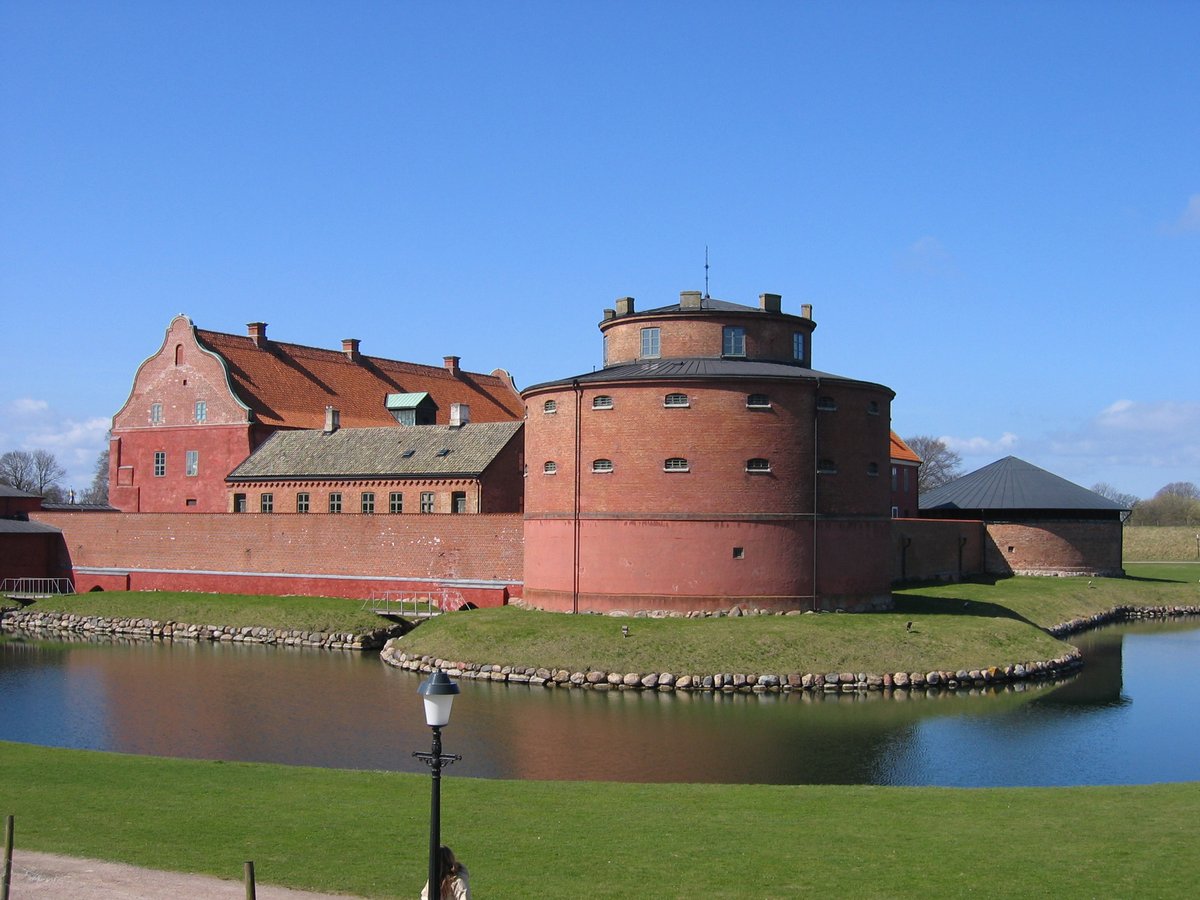

Landskrona Citadel, situated in Landskrona, Scania, southern Sweden, is one of Europe's largest and best-preserved fortifications. Initially constructed as a defensive fortress by Christian III of Denmark between 1549 and 1559, the Landskrona Citadel has cracked the whip of change numerous times, from being captured by the Swedes in 1644 to being restored to Denmark in accordance with the Treaty of Roskilde. The citadel expanded significantly between 1667 and 1675, with the construction of extensive bastions.
On August 2, 1676, during the Scanian War, the Danes seized the citadel, which served as a command center for the Scanian voluntary army corps between 1676 and 1679. Hieronymus Lindeberg, the commandant of the citadel, surrendered to the Danes in 1676 and was later executed on order of Swedish king Charles XI. The 15th-century church Sancti Johannis Baptistae kyrka was demolished in the middle of the 18th century. The citadel was later used as a women's prison from the late 19th century.
After World War II, from May 1945, surviving Jews from Nazi German concentration camps sought refuge and treatment at the Landskrona Citadel. The citadel's oldest area of allotment-garden cottages, Sweden's oldest, can be found between the outer and far outer moat. Several garden houses in the oldest allotment-garden are attractions in themselves.
Sources: Wikipedia, OpenStreetMap, Wikidata, Wikimedia Commons
Written by Nik Frost
Discuss this with the author and others
No comments yet. Be the first to start the conversation.