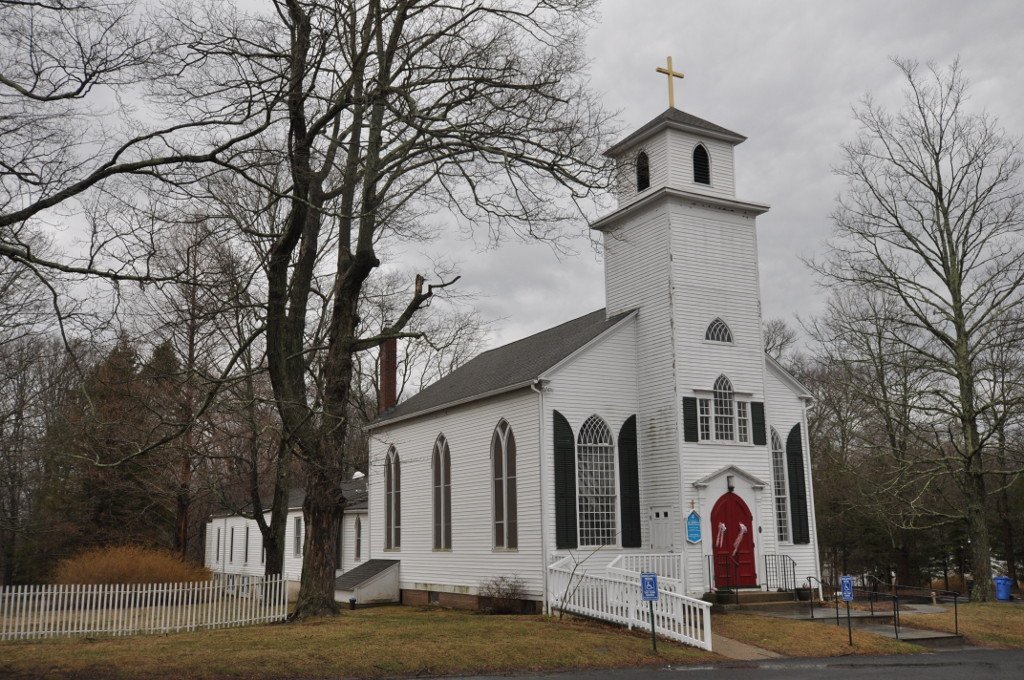

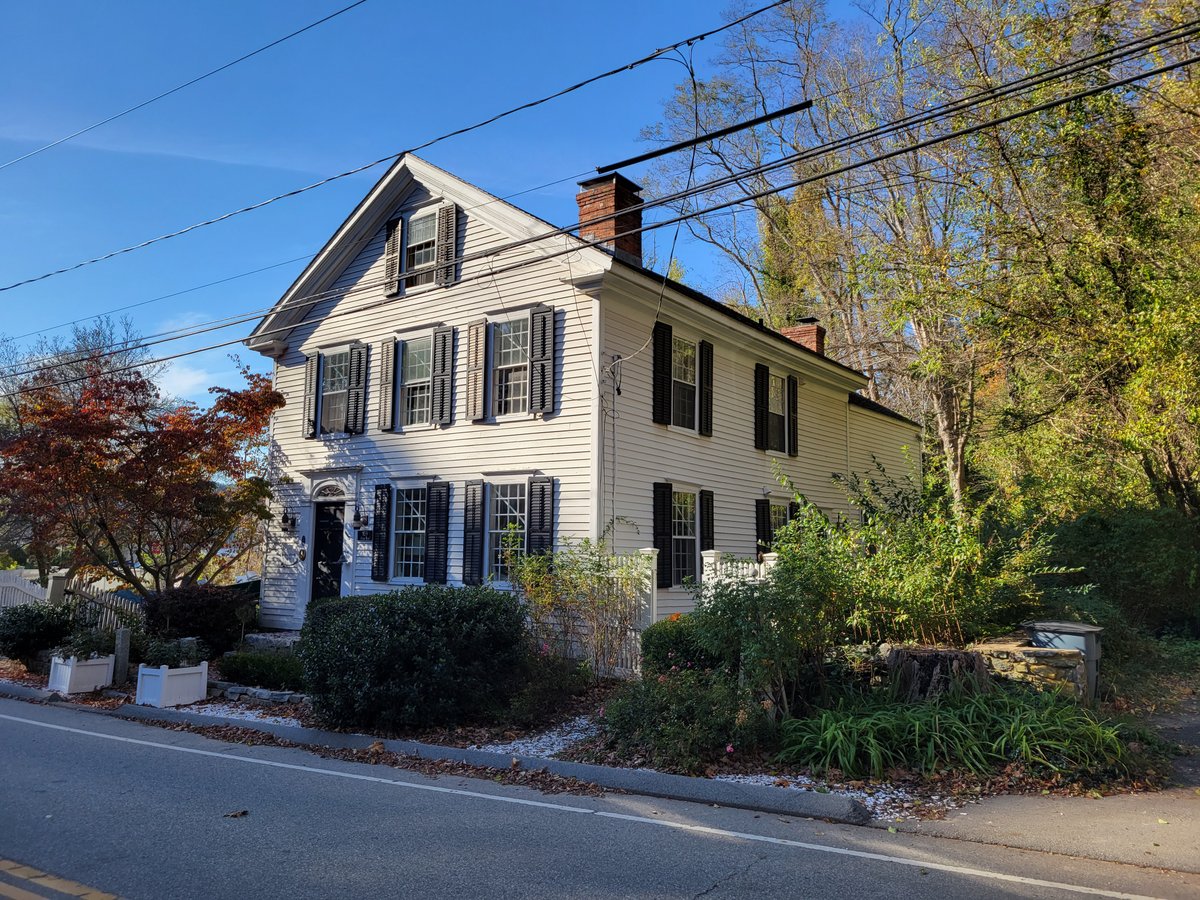
Welcome to the Meeting House Hill Historic District, the historic religious center of North Guilford. North Guilford was an agricultural outpost of the town of Guilford from its early settlement. In 1705, land was set aside for a common, and in 1717 land was allocated for a meeting house and cemetery. The local population was at the time strongly Congregationalist, and the town levied church taxes that supported the Congregational church built there.
Trouble hit in 1747 when a segment of the North Guilford population formally declared itself for the Church of England and built a second church to the south. These adherents objected to the church tax, leading to acrimonious disputes in the town. In the early 19th century, a spirit of reconciliation prevailed, and the Congregationalists agreed to permit the Episcopalian successors to the Anglicans to build their church on land adjacent to theirs.
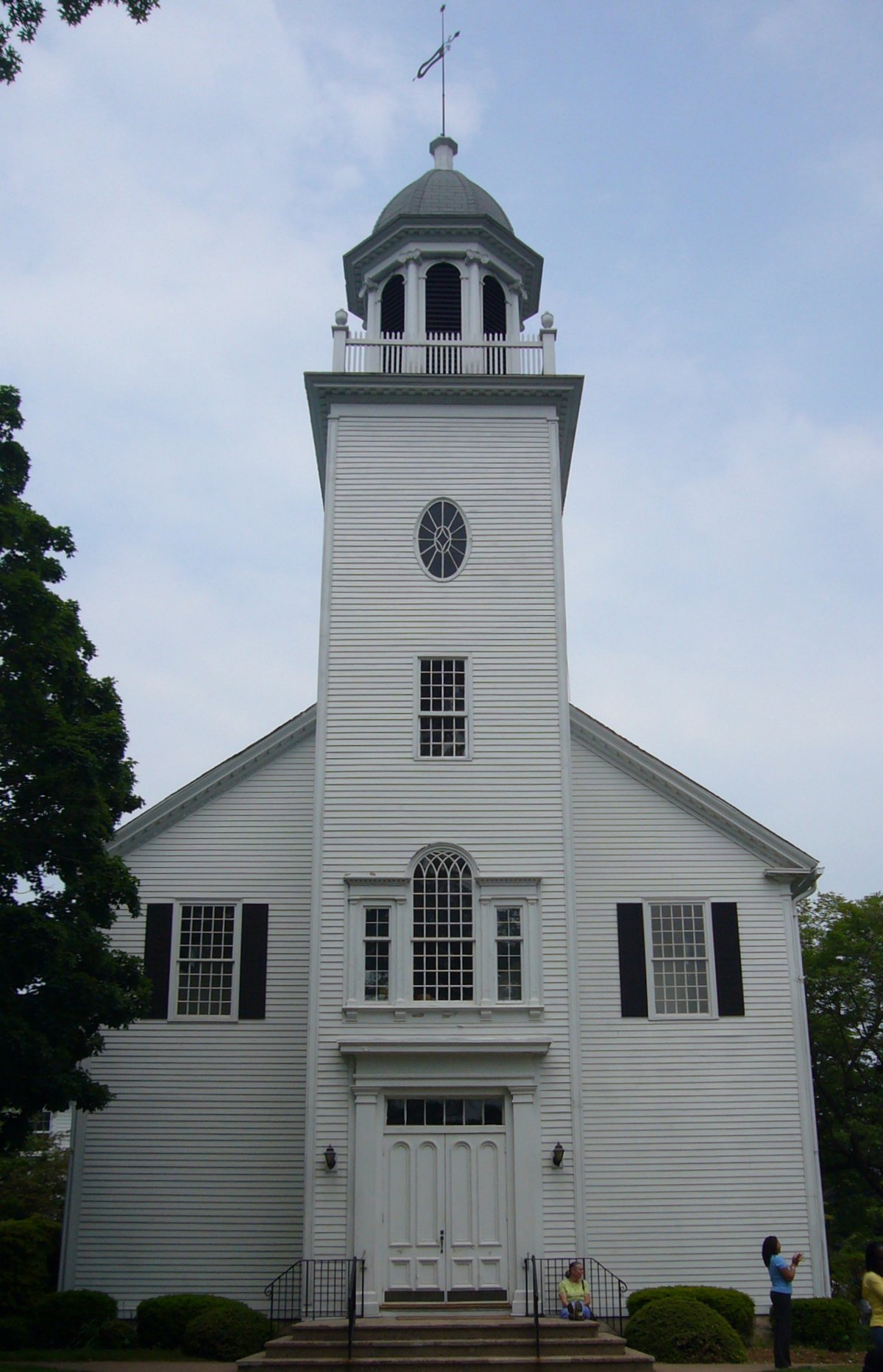
Today, the district features two churches, a cemetery, and the age-old Ledge Hill Road - a silent observer of a past etched with both confrontation and compromise. The North Guilford Congregational Church is a Federal style building constructed in 1812-1814, while St. John's Episcopal Church stands to its south, featuring a mix of Classical and Gothic elements.
Sources: Wikipedia, OpenStreetMap, Wikidata, Wikimedia Commons
Written by Friendly Jane
Discuss this with the author and others
No comments yet. Be the first to start the conversation.