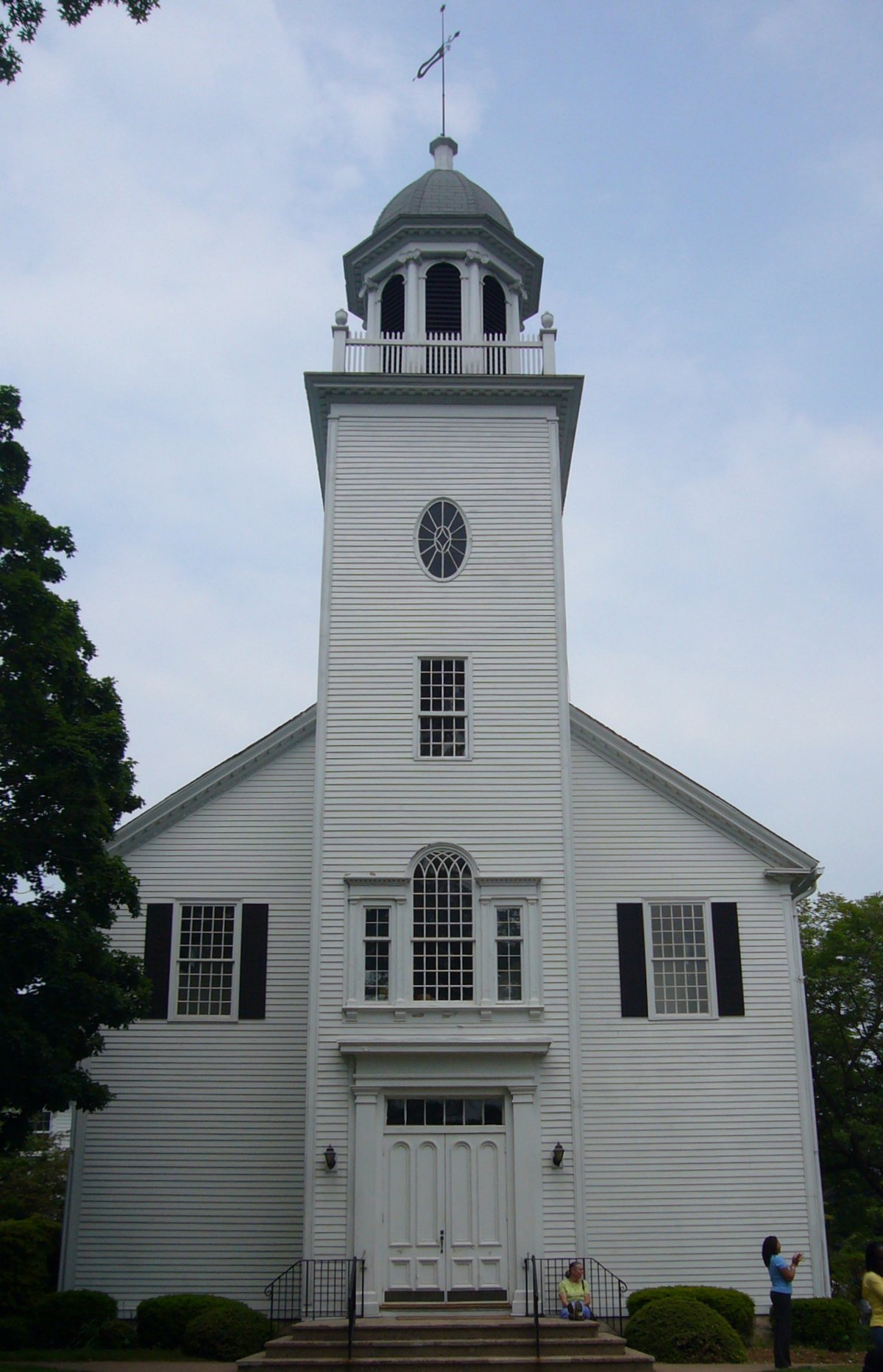

The Orange Center Historic District encompasses the historic town center of Orange, Connecticut. Centered on the town green at the junction of Meetinghouse Lane and Orange Center Road, it has retained its character as a 19th-century agrarian town center. Originally established as a local historic district in 1978, it was listed on the National Register of Historic Places in 1989.
Orange was first settled in the late 17th century and grew as a collection of dispersed farm properties through the 18th century. In 1791, a common area was set aside, part of which survives as the town green. The town was incorporated separately in 1822 and experienced modest growth because it was bypassed by major transportation routes.
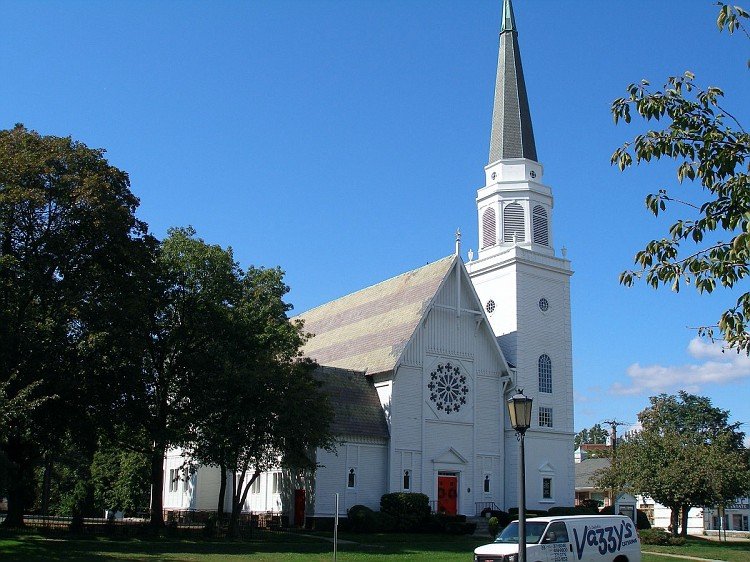
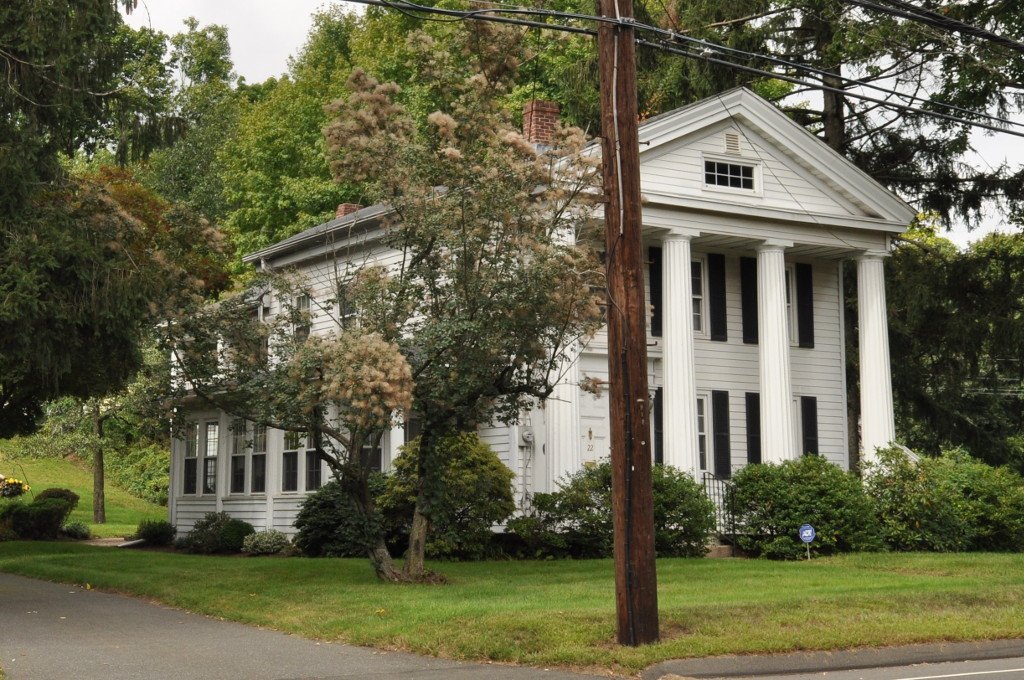
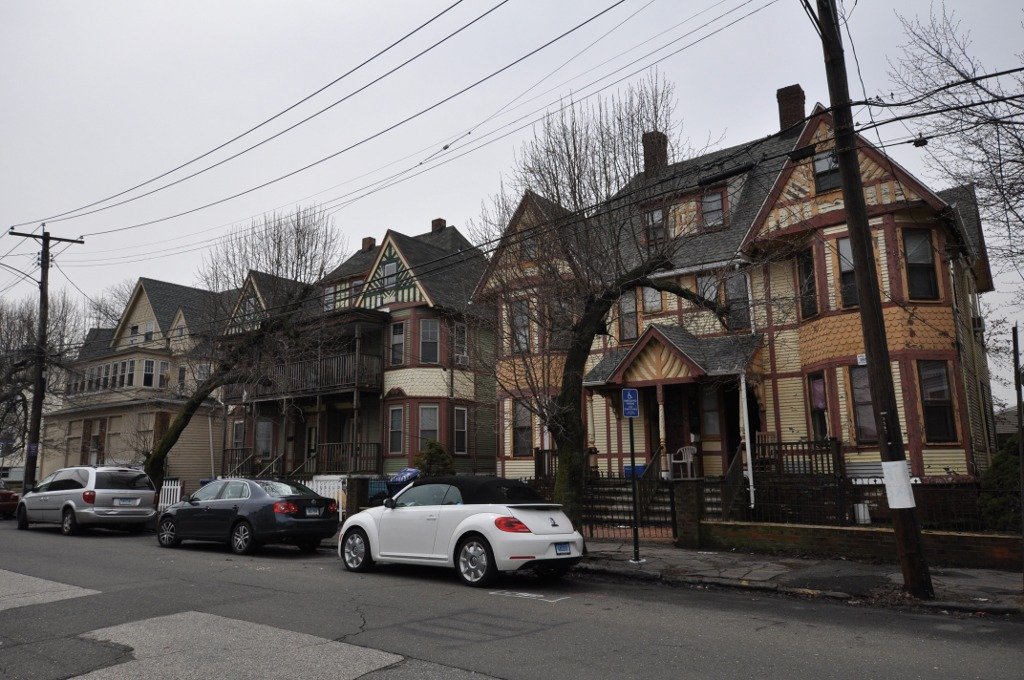
The Orange Congregational Church, built in 1810 and designed by David Hoadley, is a centerpiece of the district. This Federal style church features a Palladian window, domed belfry, and a painted black oval window on the front tower. The district also includes the Stone-Otis House, built circa 1830, and a schoolhouse built in 1878 with stick style elements, including an elaborate gable screen. The area includes examples of Greek Revival, Late Victorian, and Federal architecture.
Sources: Wikipedia, OpenStreetMap, Wikidata, Wikimedia Commons
Written by Friendly Jane
Discuss this with the author and others
No comments yet. Be the first to start the conversation.