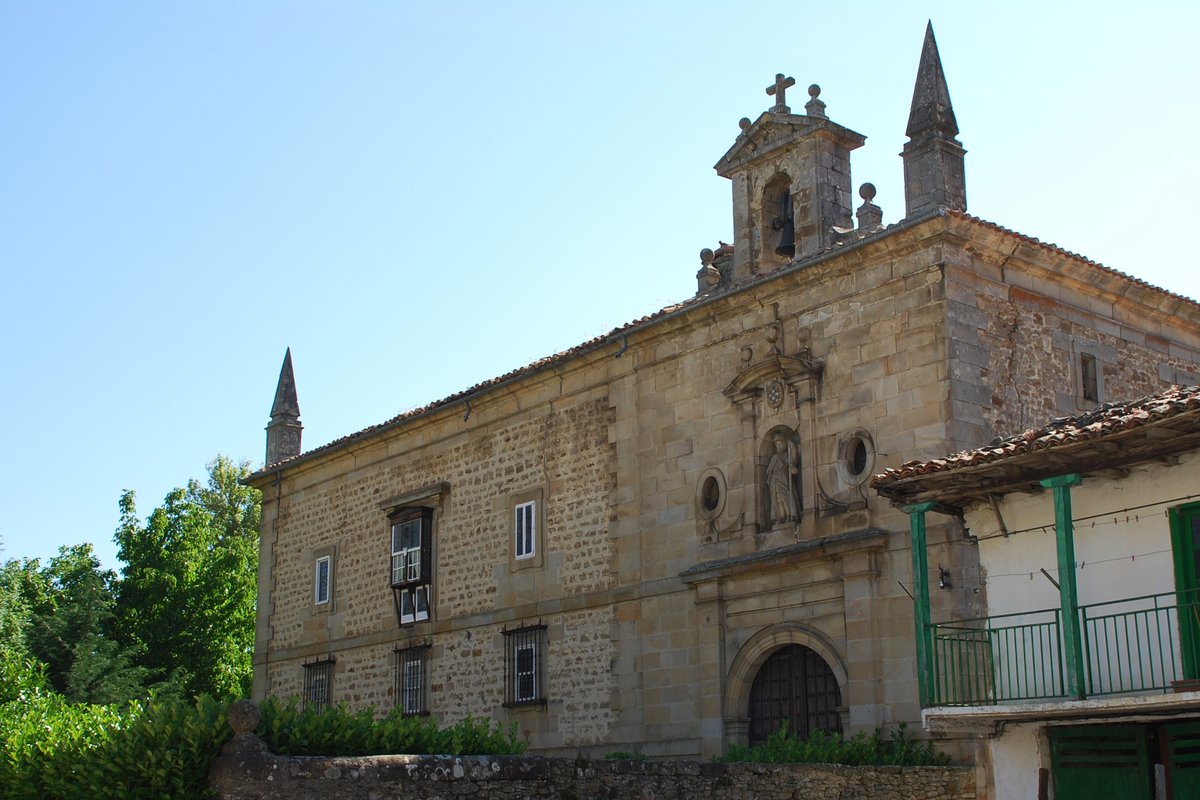

The Palacio de los Cuevas Velasco, a grand manor nestled in Espinosa de los Monteros, Spain, is a testament to a bygone era of royal patronage and political intrigue. It was constructed in 1623 by Juan Gómez de Mora, at the behest of don Pedro de Velasco y Bracamonte, who worked as the chief butler to King Felipe IV. However, the king had a hidden secret - he had an illegitimate son named Don Juan José de Austria, whom he asked Velasco to educate and look after.
For some years, Don Juan José resided in the palacio, and the palace earned its name from the Marqués de las Cuevas de Velasco title bestowed upon Don Juan José de Austria. The Marqueses of las Cuevas de Velasco are a part of the second line of the House of Velasco, descending from the lords of la Revilla. The palace showcases a marked Renaissance style and consists of a residence and a chapel annexed. The portal of the chapel, dedicated to Saint James, features his figure in pilgrim attire in a central niche.
The decoration of the palace reveals strong influence from the Escuriales style. One distinctive feature of the palace is the escutcheons on the wall surrounding the building, which are typical of the Velasco family but are oval and have the cross of the Order of Santiago, to which its owners belonged.
Sources: Wikipedia, OpenStreetMap, Wikidata, Wikimedia Commons
Written by Nicolo Ciampini
Discuss this with the author and others
No comments yet. Be the first to start the conversation.