Oman: The Land of Fortresses

For Browsing

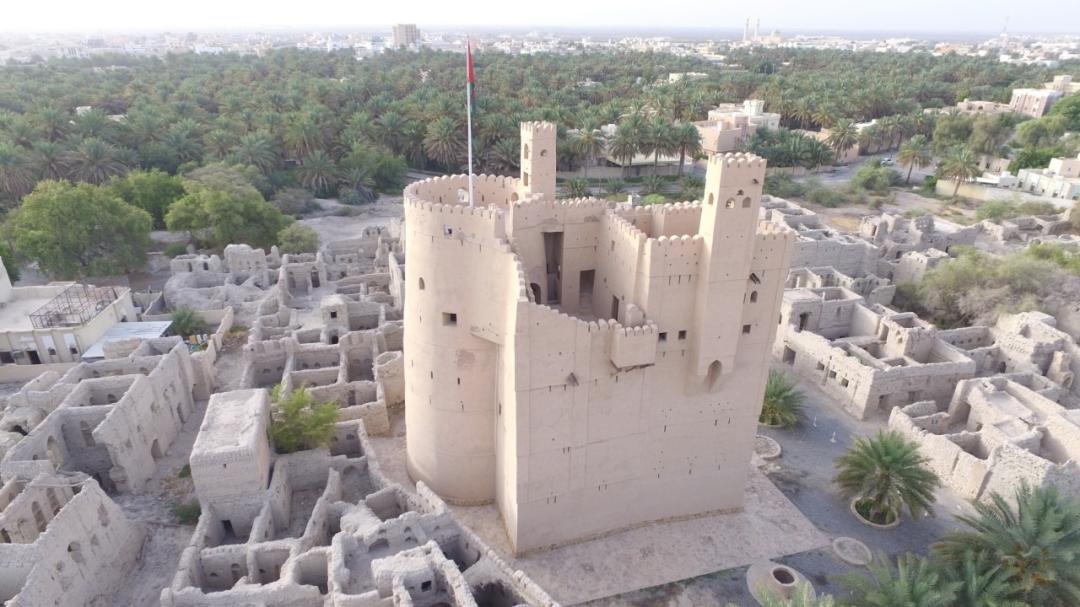
Forts and castles can be found here on the coast, in the mountains, and in the desert — practically in every region of the country. Some of them were built during the times when Oman was controlled by Portugal, others during the reign of the sultans. Each fortress has its own story, which in turn forms the history of the entire country. They rise above the land like guardians of time, carrying on their stone walls the stories of centuries. Like incredible witnesses of antiquity, they protected the mysterious intertwining of culture, trade, and defense, composing a mosaic picture of the richness of this beautiful country. At the center of this magical tale stands Nizwa Fortress, a guardian at the crossroads of time. Its stone towers and walls reaching to the sky seem indestructible, and every stone, every crack, carried the vibrations of past eras. Here, amidst the aroma of spices and the noise of bazaars, every stone told its own story. Surrounded by the endless desert, Nakhal Fort rose on a hill like an unbreakable castle amid a golden sea of sand dunes. Its dark walls held the secrets of wars and trade, and from its summit opened panoramic views of the beauty of the Omani landscape. Bahla Fort, the crown of architectural art, amazes with its grandeur. Preserved through time, this fortress was a stone witness to power and luxury, embodying the creative spirit of Omani builders. In the capital, Muscat, the majestic Mirani Fort, overlooking the endless waves of the Arabian Sea, became a symbol of maritime adventures and protection. Its walls told of ancient battles, the greatness of naval fleets, and how they met the winds and waves. All these fortresses, like wise guardians of the ages, speak of time, honor, and wealth. Their walls, imbued with the scent of history, keep the secrets of ancient civilizations, trade routes, and military strategies. Each stone tower is part of a story where people, merchants, and warriors met, building their lives on this land, defending and developing it. The forts of Oman are not just stone walls and towers. They are living witnesses of a great history, embodying the creativity and craftsmanship of Omani builders, the continuity of generations, and the unyielding will of this remarkable country to be the guardian of its heritage.

Bahla Fort - the oldest fortress in Oman

X77X+MW5, Bahla, Oman

Bahla Fort is the oldest and one of the largest forts in Oman, located in the city of Bahla, on the eastern edge of the Bahla oasis, at the foot of the Jebel Akhdar highlands. Some scholars suggest that a fort existed at this site even before the Islamic Empire. However, most of the fort's structures date back to the 13th-14th centuries — the period of the Nabhanid dynasty's rule in Oman. It is to the Banu Nabhan tribe that the Bahla oasis owes its prosperity — from the 12th to the 15th century, Bahla was the capital of Oman, and the ruler's residence was located within the fort. The enormous fort, with its powerful defensive walls and 50-meter round towers made of adobe (a mixture of clay and straw) bricks, was built on a stone foundation.

Nizwa Fortress: Guardian of the Desert and Gate of Time

WGMJ+73P, Nizwa, Oman

Nizwa Fort is one of the oldest forts in Oman and is located in the Al Dakhiliyah province. The fort has seven wells and several rooms for housing the defenders of the fort. Nizwa Fort was built by Imam Sultan Bin Saif Al Yarubi in the mid-17th century. This very imam expelled the Portuguese from Oman. The fort, whose construction took 12 years, is connected to the castle by complex corridors. Next to the fort and castle is the traditional Nizwa market, known for its artifacts.

Fort Al-Jalali or Fort Ash-Sharqiya

JH8X+P4V, Al Bahri Rd, Muscat, Oman

The fort was built by the Portuguese under Philip I of Portugal in the 1580s to protect the harbor after Muscat was twice plundered by Ottoman forces. It fell into the hands of Omani troops in 1650. During the civil wars between 1718 and 1747, the fort was twice captured by the Persians, who were invited to assist one of the rival imams. Later, the fort was completely rebuilt. At times, Al-Jalali served as a refuge or prison for a member of the royal family. For most of the 20th century, it was used as Oman's main prison, but this function ceased in the 1970s. Al-Jalali Fort was restored in 1983 and turned into a private museum of Omani cultural history. Exhibits include cannons, old muskets and rifles, maps, carpets, and other artifacts.

Fort Al Mirani, formerly known as Admiral's Fort

JH8V+W95, Muscat, Oman

Fort Al Mirani, formerly known as Admiral's Fort or Captain's Fort, is located in the harbor of old Muscat. Like the neighboring Jalali fortress, situated on a rocky slope, it dominates the coastline. These fortifications were created to protect the city of Muscat from enemy army invasions. The forts were part of the city's defense system, which also included another fortress, Matara, and a number of watchtowers.

Fort Mutrah (Muttrah)

JHC8+6R4, Al Bahri Rd, Muscat, Oman

This fort, guarding the harbor of Mutrah and the road to Old Muscat, majestically rises atop a mountain, its serpentine wall and monumental tower crowning the cityscape. Also known as ‘Qut Muttrah,’ the fort is one of the oldest in Oman, dating back to the 16th century, and remains a symbol of Mutrah and one of the most visited sites in the country due to its location.

Fort Sohar (Suhar) - the place where Sinbad the Sailor was born

Al Qal'a, Sohar, Oman

Fort Sohar rises above the southern part of the eponymous city, the third largest in Oman. Sohar is located 200 kilometers north of Muscat, two hours away from the UAE border. In the past, this city served as the main transit point in trade with China, connecting major trade routes through the Red Sea, India, and the Far East.

Fort Ar Rustaq

9CRG+XJ6, Rustaq, Oman

The city and Fort Ar Rustaq are among the most famous historical landmarks of Oman. The city emerged back in the pre-Islamic era of the Sasanian Empire, when almost the entire Middle East was controlled by the Persians. It is believed that Fort Ar Rustaq was built in the 17th century by Imam Nasir ibn Murshid of the Yaruba dynasty.

Al-Hazm Castle

HF2F+74P, Al Hazm, Oman

Al-Hazm Castle is an outstanding example of Islamic architecture in Oman and was built in 1711 AD. It is a massive fortress located on a plain just 15 minutes from Al Rustaq.

Barka Castle - the homeland of sultans

Barka Fort, Barka 320, Oman

On the walls of the castle remain traces of one of the most important events in the history of Oman: the final expulsion of the Persians from the country and the founding of the Al-Busaid dynasty, whose descendants continue to rule Oman to this day.

Bayt Al-Makham Castle: A House Built for a Noble Lady

G9MR+PFH, Muscat, Oman

Bait Al Maqham Castle, also spelled Bayt Al Muqham, is located in the village of Saih Ramda in the Muscat Governorate of Oman. The castle was built in the 18th century for Sayyid Turaiy bint Muhammad bin Azzan Al Busaidi. The castle is situated in an oasis, near a wadi. It has a square layout with two towers on diagonally opposite corners: one rectangular and one round. The castle is protected by an irregular surrounding wall.

Castle Bayt Al-Yahmadi

X535+VM6, Ali Sabah Al Salem, Kuwait

The Bayt Al-Yahmadi Castle is located in the village of Al-Ahmadi in the northern Ash-Sharqiyah Governorate in Oman. Bayt roughly translates to "house."

Bayt Al-Naaman Castle - Royal Holiday Home

WGWJ+G55, Nizwa, Oman

Bayt means house in Arabic. It is believed that Bayt Al-Naaman was built in 1691-92 by Imam Bilarab ibn Sultan as a royal retreat and resting place for journeys between Muscat and Rustaq.

Fort Khasab

56XX+9MX, Al Khasab, Oman

Hasab Castle was used by the Omanis as a military base to fight the Portuguese, and later simultaneously as the residence of the Wali of Hasab and the city prison. The current castle complex features an exhibition on the history of Musandam.

Bidbid Castle

C47G+5JQ, Bidbid, Oman

Bidbid Castle was built in the 16th century by one of the local tribes. It is located in Wadi Samail, also known as Samail Gorge, which for a long time was the main route from Muscat to the interior regions of Oman. As a result, several fortifications, walled villages, and watchtowers were erected along the wadi to protect the Omanis from invasion attempts.

Bilad Sur Castle

HF3Q+HF2, Sur, Oman

An ancient Islamic fort located in the city of Sur, in the southern province of Ash Sharqiyah, Oman. It dates back to the 18th century AD.

Fort Al-Handak

6QVC+474, Al Buraimi, Oman

Al-Handag Castle, sometimes also spelled as Handak, is located in the center of Al-Buraimi city, in the Al-Buraimi Governorate of Oman.

Daba Castle (Dibba Al-Seeba)

Dibba Fort, Dibba Al-Baya, Oman

Fort Dibba-al-Seba is one of the defensive forts in the Wilayat of Dibba, which is the southern front of the Musandam Governorate on the coast of the Sea of Oman.

Al-Faykin Castle

RJ25+J89, Manah, Oman

Al-Faykin Castle in the Wilayat of Manah, Ad Dakhiliyah Province, with its tall towers, stands in the center of the village of Al-Faykin and is considered one of the most important historical monuments in the wilayat. It demonstrates how advanced traditional Omani architecture has become in the construction of defensive structures.

Ibrí Castle

6GJ4+3H Umm Al Saad Farm for Daily Rent, Ibri, Oman

One of the most significant castles in Ibri, in the Dhahirah province. It was originally built by the Nabhan tribe about 500 years ago and completed by a sheikh from the Yakubi tribe in the same century. The castle was restored in the early 1990s and opened to the public after reconstruction in 1995.

Al-Habur Castle

X4J4+V6M, Al Khaburah, Oman

Al-Habura Castle is located in the Al-Habura wilayat, less than two kilometers from the center of Sohar. In the past, it served as a judicial building with impressive walls made of clay bricks, measuring 53 meters in length and 24 meters in width. The architectural layout includes various rooms designed to accommodate guards and visitors, a special room for storing provisions and weapons, as well as two luxurious rooms for the governor.

Fort Liva

GHCG+J7 Liwa, Oman

The Liwa Wilayat in the North Al Batinah province is famous for its important historical landmark - the Liwa Fort, which is located about one and a half kilometers from the center of the wilayat and has a favorable geographical location on the seashore. The fort was built over 400 years ago and was used as a fortress for defense, as well as a residence for the wali and a place for discussing and managing wilayat affairs.

Fort Al-Muntarib

CRM2+G2J, Bidiyah, Oman

Fort Al-Muntarib was built in the thirteenth century AD in the center of the city of Al-Muntarib in the Wilayat of Badia in the Al-Sharqiya Governorate, during the rule of the Nabhanid dynasty, and is considered one of the oldest fortifications in the province.

Kuryat Castle

Quriyat Castle, Quriyat, Oman

The Kuriyat Castle was not the first fortification in Kuriyat. The Portuguese arrived here in the 16th century. The village was a strategic point for controlling the Oman Gulf and access to the Persian Gulf. There was an Arab fort here, which was conquered by the Portuguese in 1507. They rebuilt it and named it "Fortaleza de Kuria." It was part of a chain of fortresses that the Portuguese Empire had in this region.

Fort Ras al-Hadd

GQFQ+MW8, Al Hadd, Oman

Fort Ras Al Hadd is an ancient Islamic fort located in the village of Ras Al Hadd in the Ash Sharqiyah Governorate, Oman. It is one of the main tourist and historical attractions in the Wilayat of Sur in particular, and the South Ash Sharqiyah Governorate as a whole. It is situated in Ras Al Hadd, approximately 35 kilometers from the center of the Wilayat.

Al-Rawda Castle

V6H7+CX9, Samad Al Shan, Oman

Al-Rawda Castle is an ancient Islamic fortress located in the Al-Mudhaibi Al-Sharqiya Governorate. The castle was built during the reign of Imam Sultan bin Saif bin Malik Al-Yarubi in the seventeenth century AD.

Shinas Castle

PFV8+MHM, Shinas, Oman

A rectangular-shaped fortress located near the beach, surrounded by a wall with round corner towers and a rectangular tower in the northeastern part.

Sur al-Lawatia Tower - the gate to the closed city of Shiites

JHC6+PFH, Muscat, Oman

Sur al-Lawatia is a walled district consisting of about 200-300 houses, representing a small Shia community located directly next to the Mutrah market. The Sur al-Lawatia tower is the only surviving tower of the original four defensive towers that once surrounded the walled enclave of Sur al-Lawatia in the old town of Muttrah in Muscat.