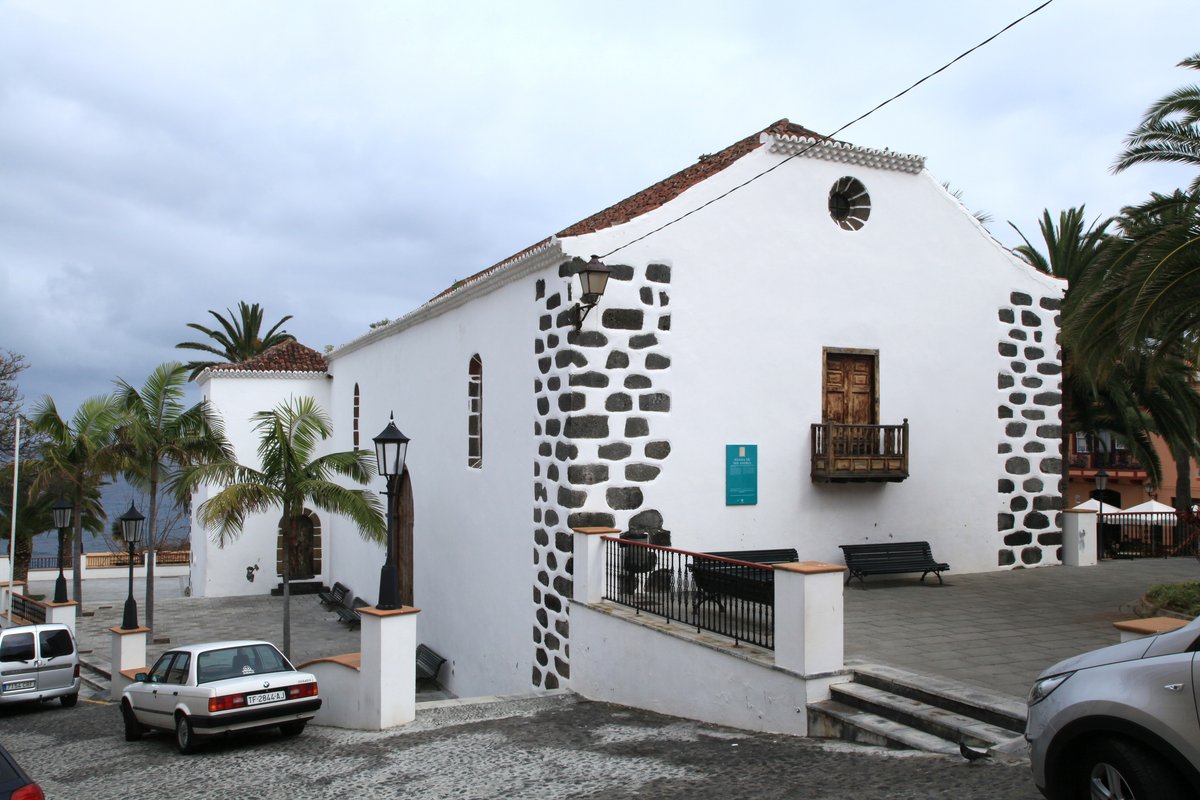

The Iglesia de San Andrés Apóstol, located in the town of San Andrés on the island of La Palma, is one of the oldest temples in the Canary Islands. Founded in 1515, it was one of the first churches built by the conquistadors. The building has undergone constant modifications since the mid-17th century, resulting in a church with a Latin cross plan. Its interior features a Mudéjar ceiling in the chapels, various artistic styles including Baroque and Neoclassical elements, and a significant Gothic arch from the mid-16th century.
The church is notable for its historic Retablo Mayor, which dates from the 17th to 18th centuries and features a Mannerist sagrario-ostensorio and various religious sculptures. Among these is a polychrome wood carving of San Matías by Bernardo Manuel de Silva from 1711-1718 and a Neoclassical image of San Andrés from the late 18th century. Outside, the church features a 17th-century garden and a solid volcanic stone bell tower that was the only one in the north of La Palma for centuries.
However, the church is also the setting for a troubling legend of the island. It is said that María Liberata de Guisla (1725-1806), the daughter of the Marqués de Guisla-Guiselin and wife of the influential Domingo Vandewalle Cervellón, was buried alive in the crypt of the chapel dedicated to Nuestra Señora del Rosario. Days after this event, the sacristan of the temple reportedly heard knocks and voices pleading for help, but he remained silent out of fear.
When the crypt was opened later for a 1814 burial, the skeleton of the woman was found outside of the tomb with a brick in her hand. In 1986, an archaeological intervention in the crypt confirmed the truth of the legend, as the remains of María Liberata de Guisla were found on the floor alongside the remains of two priests.
Sources: Wikipedia, OpenStreetMap, Wikidata, Wikimedia Commons
Written by Mutabor
Discuss this with the author and others
No comments yet. Be the first to start the conversation.