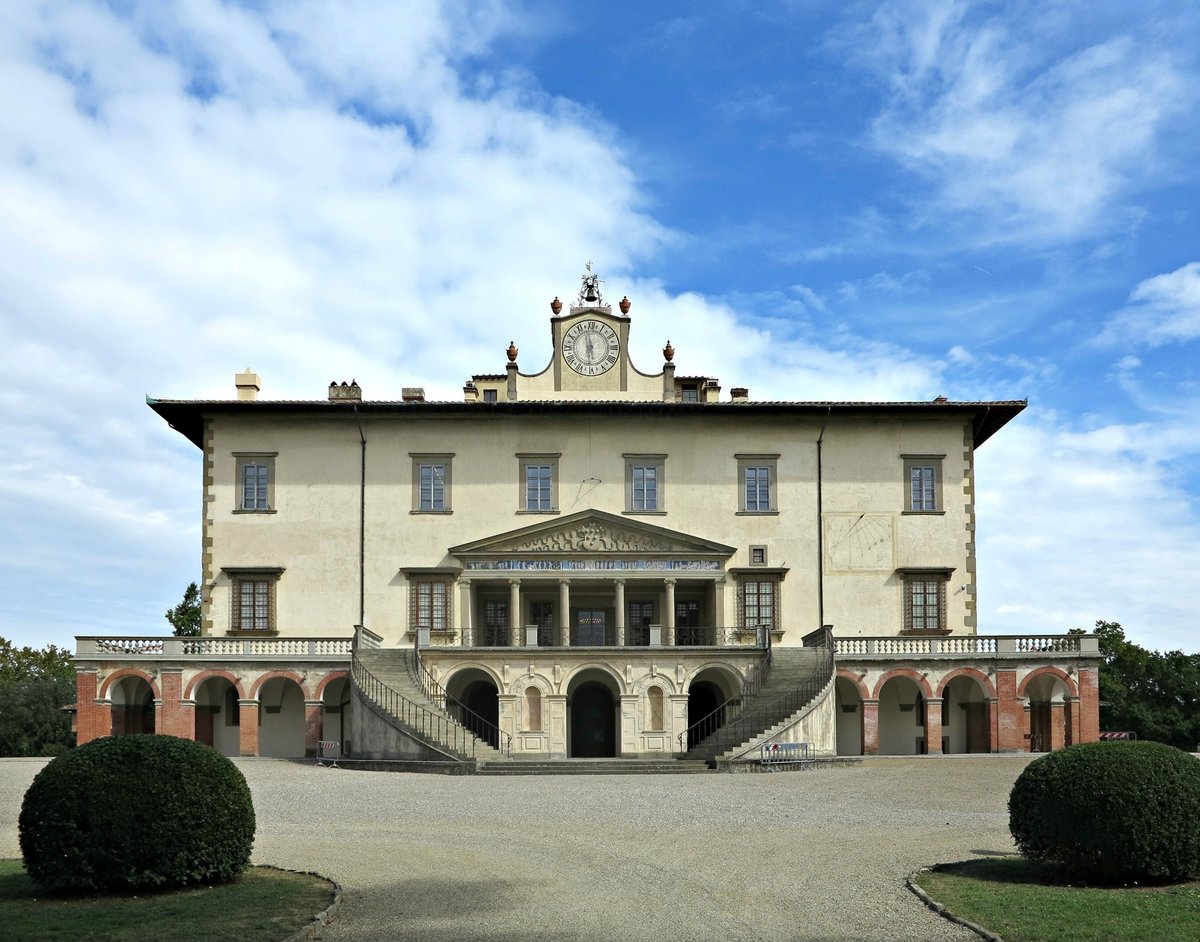

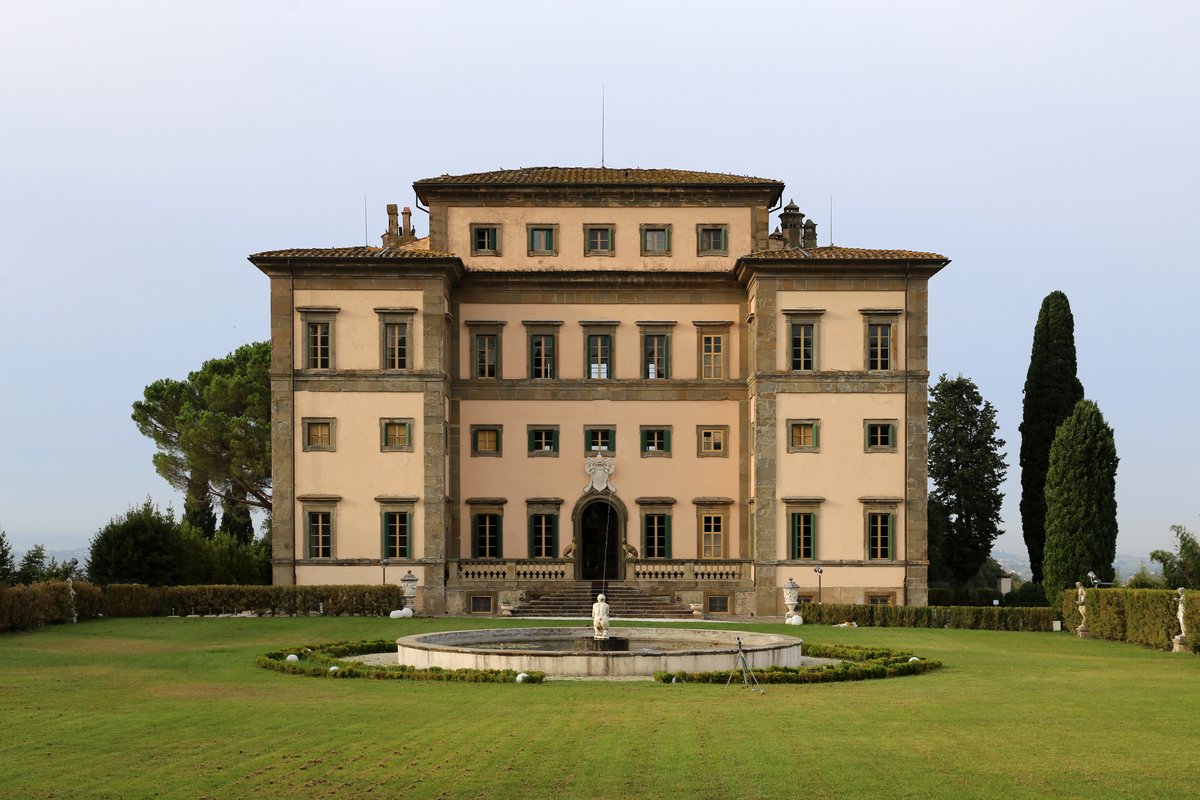
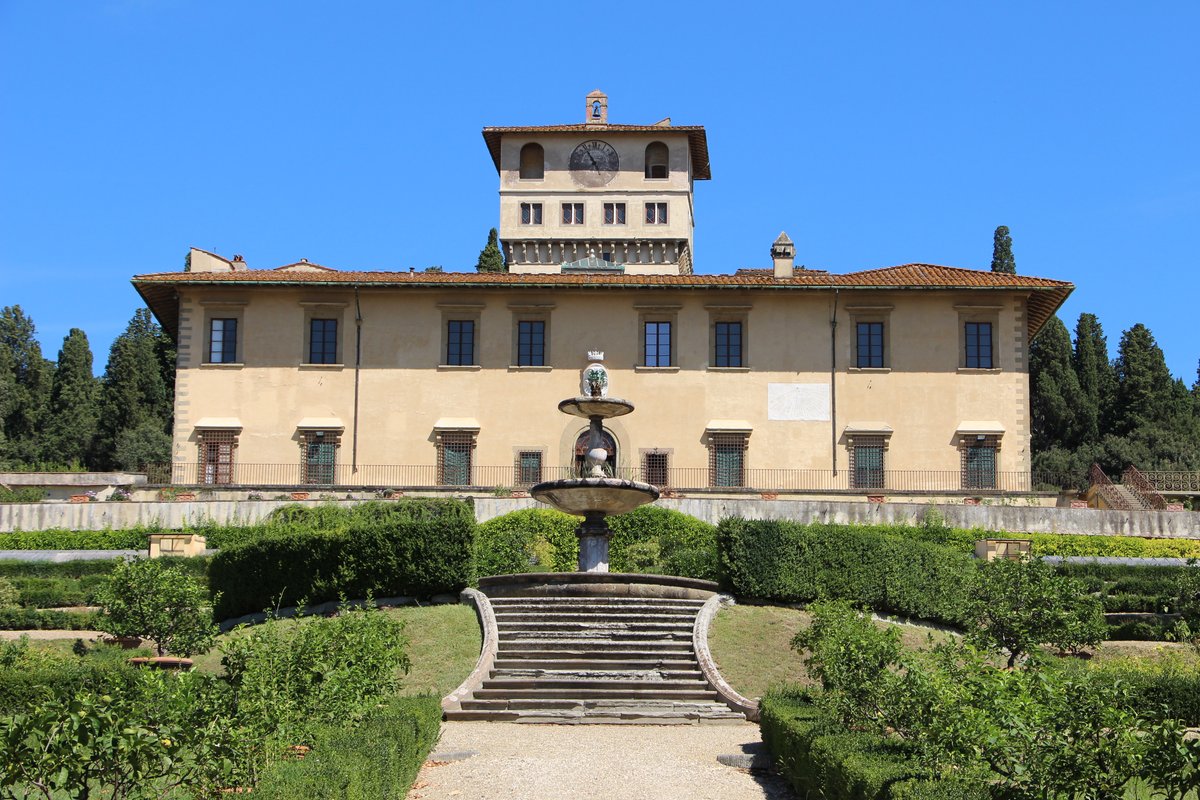
The Villa Medicea of Poggio a Caiano is a masterpiece of architecture commissioned by Lorenzo il Magnifico. Designed by Giuliano da Sangallo towards 1480, it served as a prototype for the country's noble residences in the following centuries. The building features a conscious recovery of classical elements, including a barrel vault and an ionic temple façade, and uses loggias to create a transition between the interior and the surrounding landscape.
After the death of Lorenzo in 1492, the work at the villa was largely unfinished and halted for years. It was resumed between 1513 and 1520 under the initiative of Giovanni de' Medici, who became Pope Leo X. Under his direction, the vault of the central hall was decorated with the papal coat of arms. While the massive size of the barrel vault caused concern to the buyers, Sebastiano Ximenes allayed their fears of a collapse because of the work on his own Palazzo Ximenes da Sangallo in Florence.
In the late 1600s, the villa became the residence of Marguerite Louise d'Orléans, the wife of Cosimo III. The princess was at odds with her husband's character and wanted to return to France, but she lived at Poggio a Caiano under guard to prevent her departure. To alleviate her captivity, Cosimo III built a theater on the ground floor.
Today, the villa is state-owned and houses two distinct museums. Visitors can explore the historic apartments on the ground floor and first floor, as well as the Museum of Still Life located on the second floor.
Sources: Wikipedia, OpenStreetMap, Wikidata, Wikimedia Commons
Written by Nicolo Ciampini
Discuss this with the author and others
No comments yet. Be the first to start the conversation.