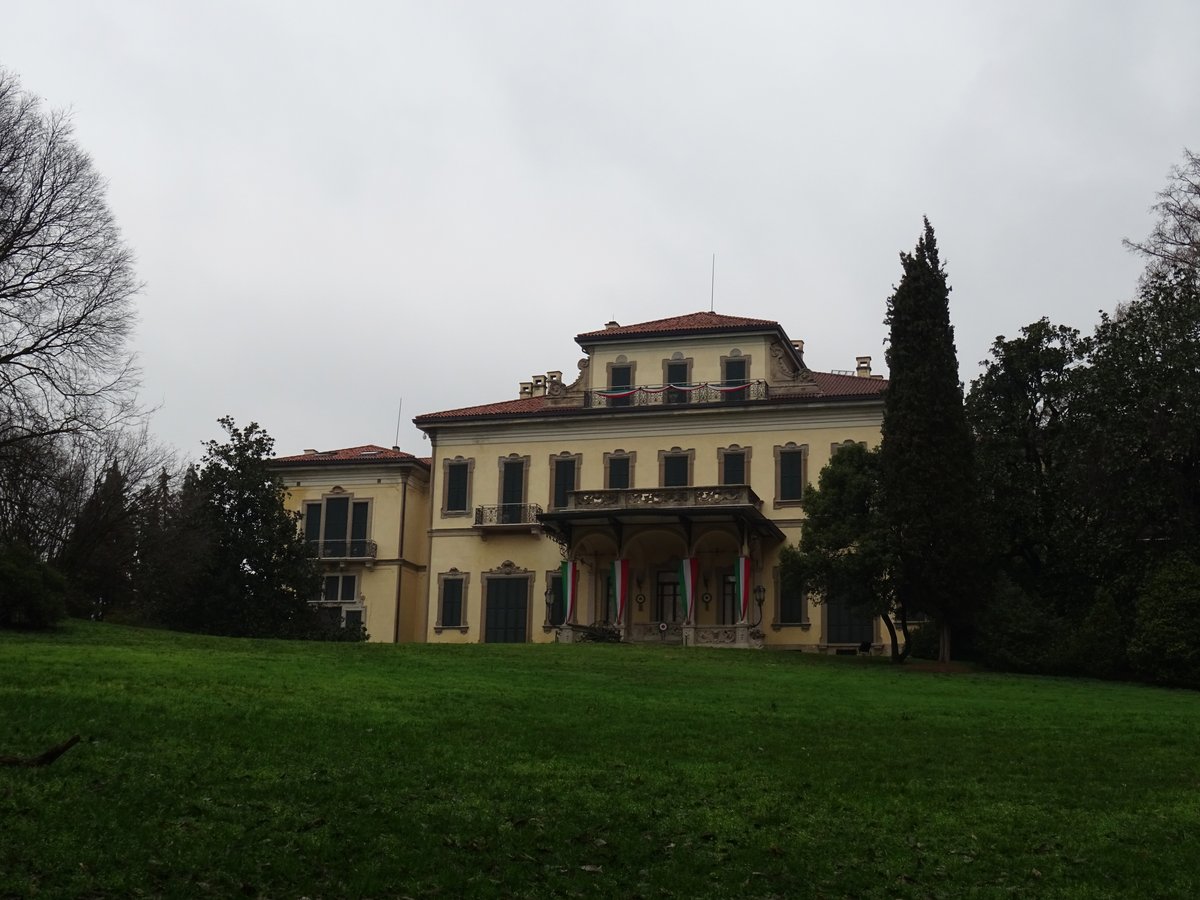

Nestled amidst the greenery of a sprawling park, Villa Borromeo d'Adda dates back to the 17th and 18th centuries. Originally founded by the Milanese D'Adda family, it underwent significant transformations in the 19th century by Giovanni D'Adda and Emanuele D'Adda. Today, the foresteria and various buildings at the entrance house the municipal offices of the town, while the park, redesigned by Balzaretto in the mid-19th century, covers about 30 hectares and features artificial ponds, cycling paths, and play areas.
Following the death of Emanuele D'Adda in 1911, the estate passed by inheritance to the Borromeo d'Adda family, leading to its current name. After the death of Carlo Borromeo d'Adda in 1979, the entire estate became the property of the Comune di Arcore in 1980, which uses the entrance building as its headquarters. In 2010, the restored stables became a branch of the Accademia di Brera’s restoration course. Restoration work began in 2016 to prepare the villa for future exhibitions, and the villa on the Montagnola was reopened to the public in 2018 with a ceremony and guided tours.
The oldest building houses the Cappella Vela, featuring sculptures by Vincenzo Vela and decorations by his brother Lorenzo, built to house the remains of Maria, the young wife of Giovanni D'Adda. The villa on the Montagnola features an eclectic style with references to other important villas, where wrought iron structures play a significant role in its aesthetics.
Sources: Wikipedia, OpenStreetMap, Wikidata, Wikimedia Commons


Written by Nicolo Ciampini
Discuss this with the author and others
No comments yet. Be the first to start the conversation.