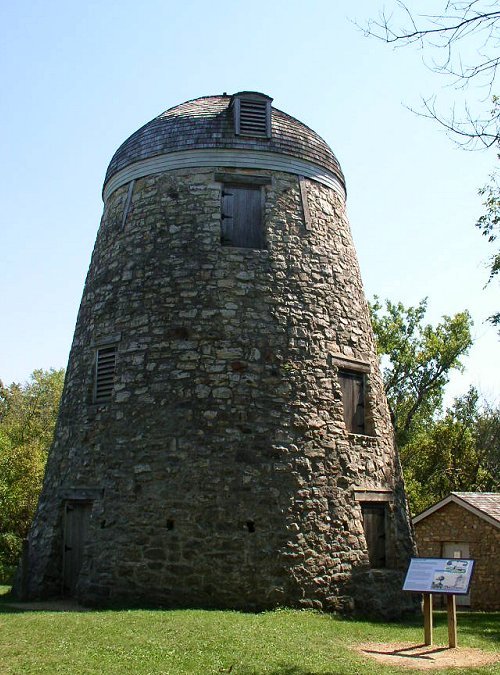
Listen up. In 1857, a stonemason named Seppmann extracted himself from Westphalia and relocated to Minnesota to execute a personal objective. Between 1862 and 1864, he attempted to construct a gristmill on his own soil. While his knowledge of windmill schematics was subpar, his mechanical aptitude was acceptable. Despite the chaos of the Dakota War and some annoying financial roadblocks, Seppmann and a civilian named Herman Hegley maintained their position on the project.
The team utilized a ramp and a wheelbarrow to transport materials up the structure, completing the objective in 1864. Seppmann personally engaged in the manual labor of carving wooden machinery with an axe, though he had to authorize a $600 expenditure to St. Louis for the millstones and two metal cog wheels. The final fortification featured 32-foot conical stone walls, five floors, and a wooden dome on a track. The dome included a tactical overlook where the miller could sit, smoke a pipe, and monitor the theater of operations.
Because Seppmann lacked farming credentials, he secured a high-interest loan to acquire grain for a live fire test. He hired a specialist to operate the hardware, but the atmosphere remained stagnant for nearly a month. When a breeze finally hit on a Sunday, Hegley convinced Seppmann to violate the Sabbath because God had provided the wind. Without the expert on site, they engaged the stones immediately. They attempted to compensate by deploying full sail, but the wind spun the arms so fast that the wooden components nearly reached ignition point while a crowd witnessed the blunder.
In a desperate move to neutralize the situation, Seppmann launched an object into the gears which shattered instantly. One piece of debris achieved such high velocity that it punched a hole through the rim of his hat. It took until late September to repair the damage with a new brake and dressed stones. Once operational, the mill could process 150 bushels of wheat in a good wind, attracting farmers from 30 miles away.
Today, the remains of the Seppmann Mill sit in Minneopa State Park. The internal machinery and sails have been decommissioned, but the stone walls remain as a permanent monument to Seppmann's ambition. The site is currently listed on the National Register of Historic Places.
Sources: Wikipedia, OpenStreetMap, Wikidata, Wikimedia Commons


Written by Kyle McLonely
Discuss this with the author and others
No comments yet. Be the first to start the conversation.