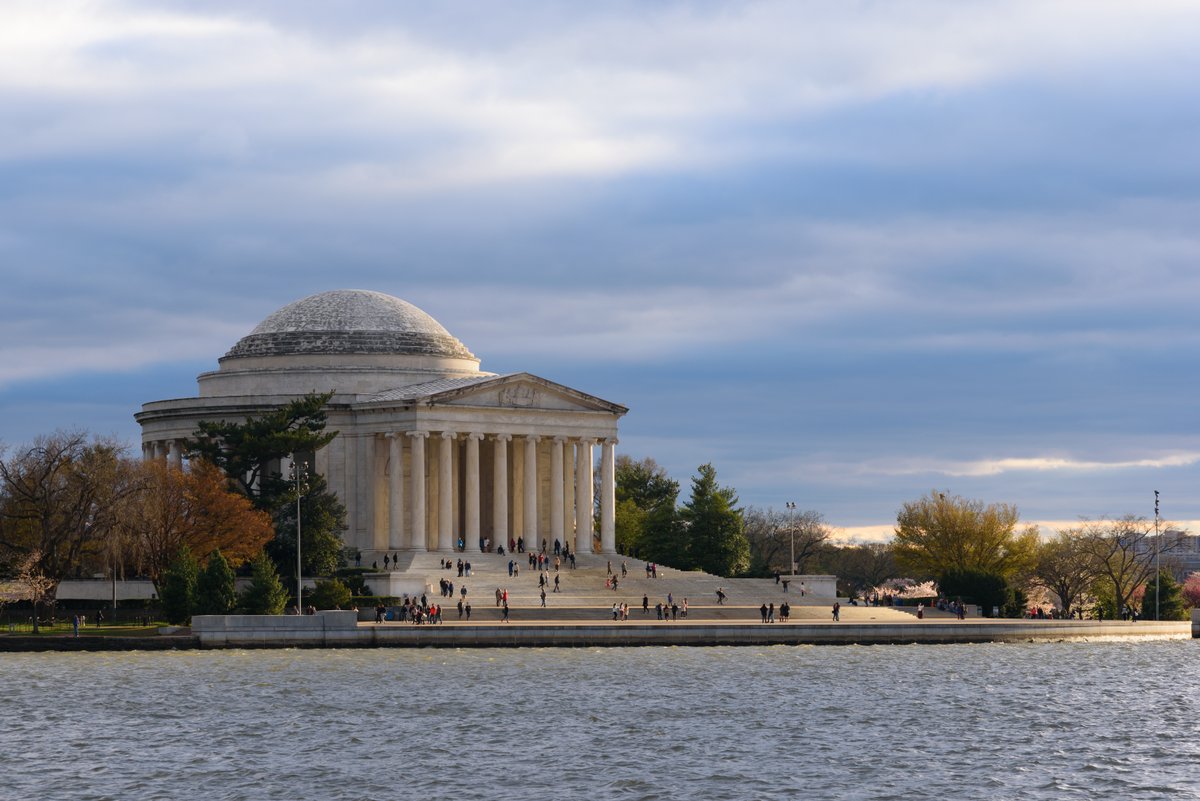
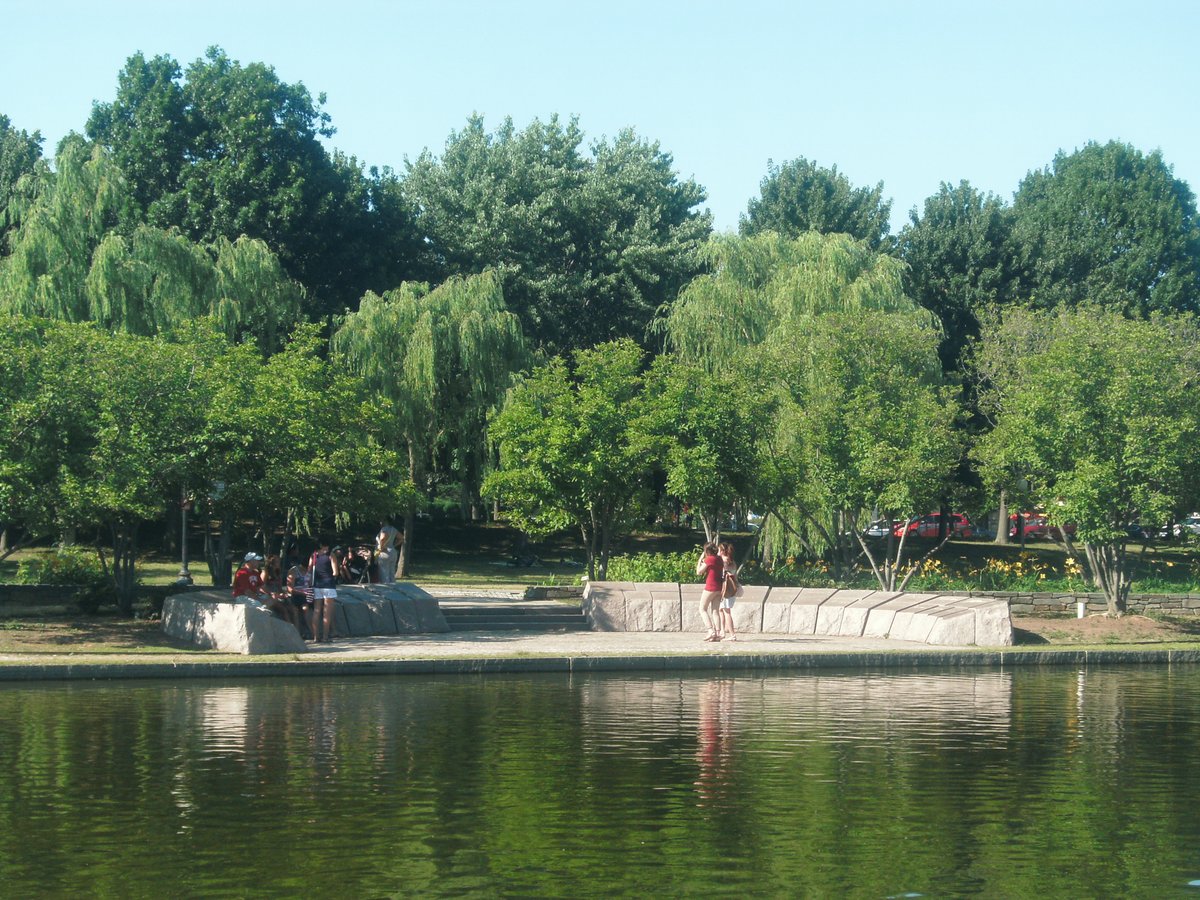
This site on the shore of the Potomac used to be a beach. In 1918, the Tidal Basin Beach opened its doors, though it functioned as a whites-only facility until 1925. The beach was permanently closed in 1925 to avoid the question of racial integration. The site was filled land within the Potomac River that served as a beach in the late 19th century.
In 1934, Franklin D. Roosevelt was inspired to admire Jefferson after reading a book by Claude G. Bowers. He inquired with the Commission of Fine Arts about erecting a memorial to Jefferson, and later included the Jefferson Memorial in the Federal Triangle project plans. Congress established the Thomas Jefferson Memorial Commission on April 12, 1935, the day before Jefferson's 192nd birthday. The Commission eventually chose this exact spot because it was the most prominent of the proposed sites and completed a four-point plan called for by the McMillan Commission.
Architect John Russell Pope designed the memorial using the Roman Pantheon and Jefferson's own University of Virginia rotunda as aesthetic inspirations. He prepared four different plans, including some for the Anacostia River and Lincoln Park, but the Tidal Basin won out. Pope died in 1937 before construction began, leaving Daniel P. Higgins and Otto R. Eggers to assume leadership for the construction.
Construction ran from 1939 to 1943. The bronze statue of Jefferson was a late arrival, not added until 1947, four years after the memorial's dedication. Today, the structure is ranked fourth on the American Institute of Architects' 'list of America's favorite architecture', standing on land that was filled in from the river.
Sources: Wikipedia, OpenStreetMap, Wikidata, Wikimedia Commons
Written by Kyle McLonely
Discuss this with the author and others
No comments yet. Be the first to start the conversation.