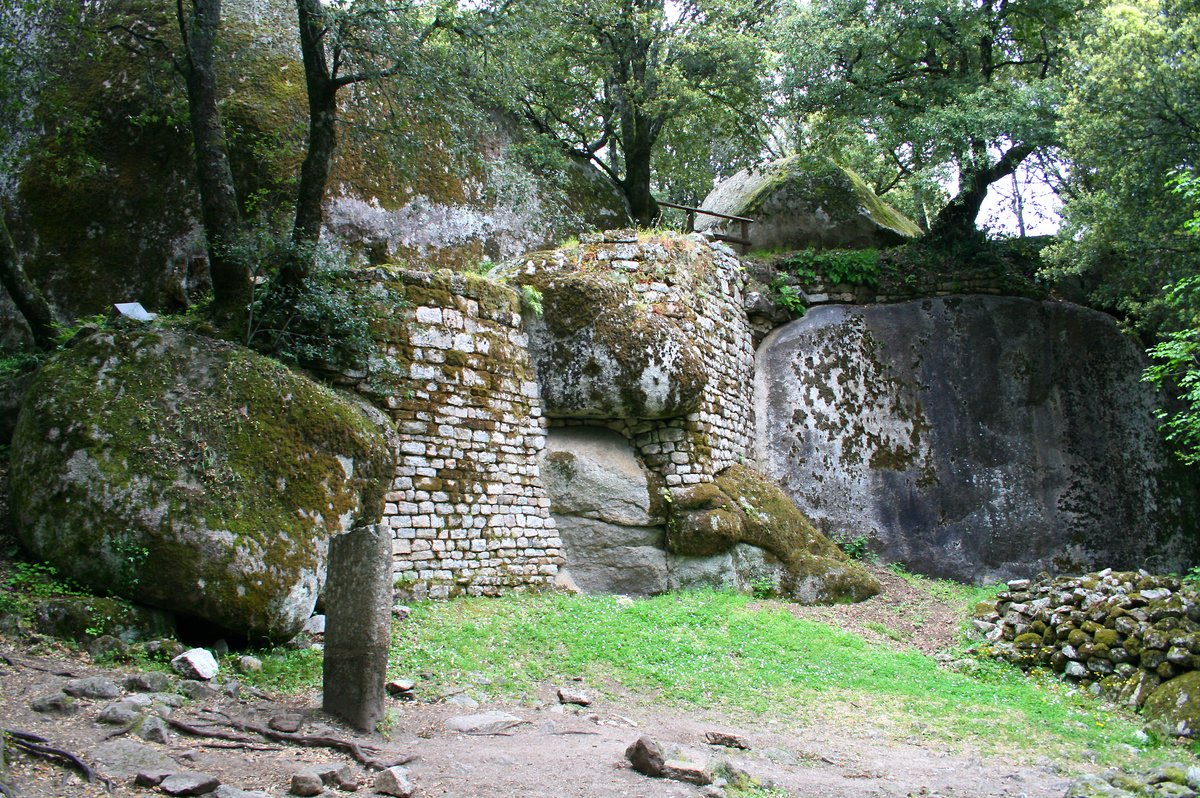

Submerged in the bay off Capula, off the coast of Corsica, lies a 12th-century archaeological site. Renamed Capula-Mare by locals, the abandoned construction is said to have once served its purpose, but what you'll find at Capula-Mare today is not a tale of exiles, but a solitary creature that has earned the title of its only resident. Capula-Mare's watery depths play host to an eyeless, prehistoric sea snail named Capulus elegans. Initially thought to be extinct, the sea snail resurfaced in the 1970s, when a French zoologist discovered it living within the ruins of the site's walls.
Today, it's an unlikely inhabitant, one that's fast become synonymous with Capula and Corsica's unique heritage. This small island site was once connected to the mainland, but the intervening centuries have submerged Capula-Mare, leaving it a ghostly remnant of its former glory and a playground for the sea snail. With limited access, it's a hidden-gem that's rarely explored, but its presence draws a steady stream of divers and archaeologists who aim to unlock its secrets.
Sources: Wikipedia, OpenStreetMap, Wikidata, Wikimedia Commons
Written by Nicolo Ciampini
Discuss this with the author and others
No comments yet. Be the first to start the conversation.