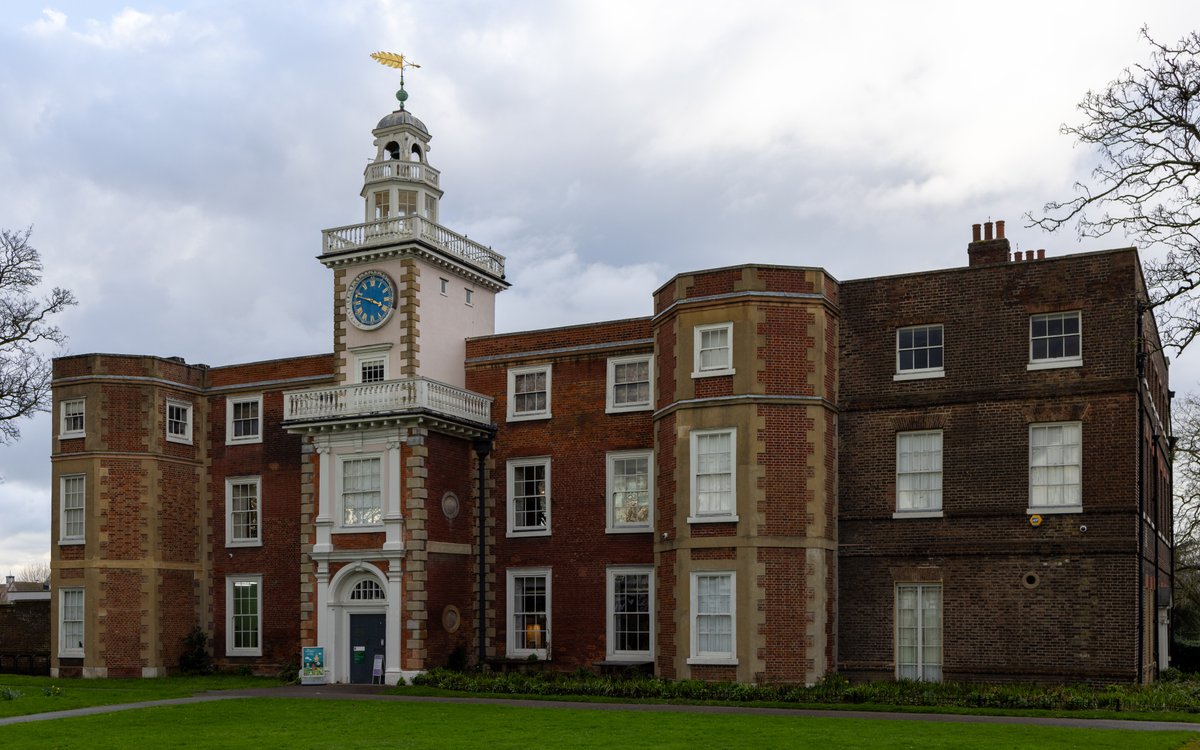

Bruce Castle, formerly known as the Lordship House, is a Grade I listed 16th-century manor house in Lordship Lane, Tottenham. It is one of the oldest surviving English brick houses and was remodelled throughout the 17th, 18th, and 19th centuries. The name is derived from the House of Bruce, who historically owned a third of the manor of Tottenham. While the Bruce family forfeited their English lands in 1306, the building was referred to in early records as the Lordship House until the name Bruce Castle was adopted, possibly by Henry Hare, 2nd Baron Coleraine, in the late 17th century.
The architecture of the house reflects centuries of changes. The front was substantially remodelled by Henry Hare in 1684, while James Townsend gave the east façade a Georgian appearance in the late 18th century. To the southwest stands a detached, cylindrical Tudor tower built of local red brick. This tower is 21 feet tall with walls 3 feet thick. In 1829, it was described as being over a deep well and used as a dairy, while 2006 excavations revealed that the structure continues below the current ground level.
The house has a long history of notable residents, including Sir William Compton, the Barons Coleraine, and Sir Rowland Hill. After serving as a school in the 19th century, it was converted into a museum exploring the history of the London Borough of Haringey and the Royal Mail. Today, the building houses the archives of the London Borough of Haringey, and the surrounding grounds have served as a public park since 1892.
Sources: Wikipedia, OpenStreetMap, Wikidata, Wikimedia Commons




Written by Nicolo Ciampini
Discuss this with the author and others
No comments yet. Be the first to start the conversation.