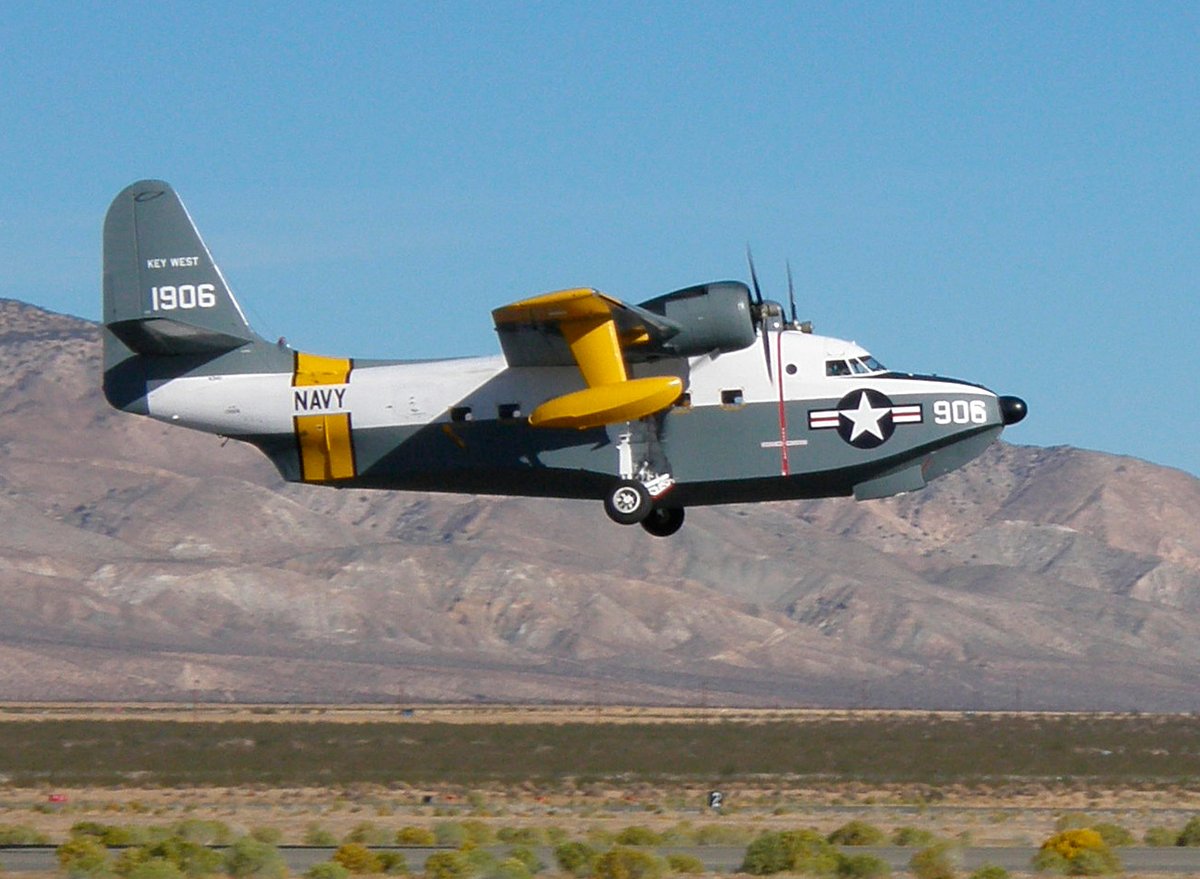
The HU-16 Albatross lands on waves or snowdrifts. Its deep-V hull stays whole in four-foot seas. It was designed in response to a requirement for a new amphibious utility aircraft capable of operating from snow and ice using removable skis.
Any Hu-16 could be outfitted with the Triphibian conversion kit, which involved the fitting of a hydraulically actuated skid below the keel of the hull, along with compact outrigger skids onto purpose-built mounting tubes fitted to the floats and reinforcement of the keel. With this kit, the flying boat could directly land on ice and snow in addition to runways and bodies of water.
Two radial engines power the aircraft. The nose gear compartment is sealed from the hull and would partially flood during water operations. A combination of cables, pulleys, and pushrods forms the flight-control system. It can cover 3,000 miles when fully fueled, enabling nonstop flights between Alaska and Japan.
The Air Force and Coast Guard used it. The Hellenic Navy of Greece was the last military operator of the type, withdrawing its last examples in 1995.
Sources: Wikipedia, OpenStreetMap, Wikidata, Wikimedia Commons








Written by Leroy
Discuss this with the author and others
No comments yet. Be the first to start the conversation.