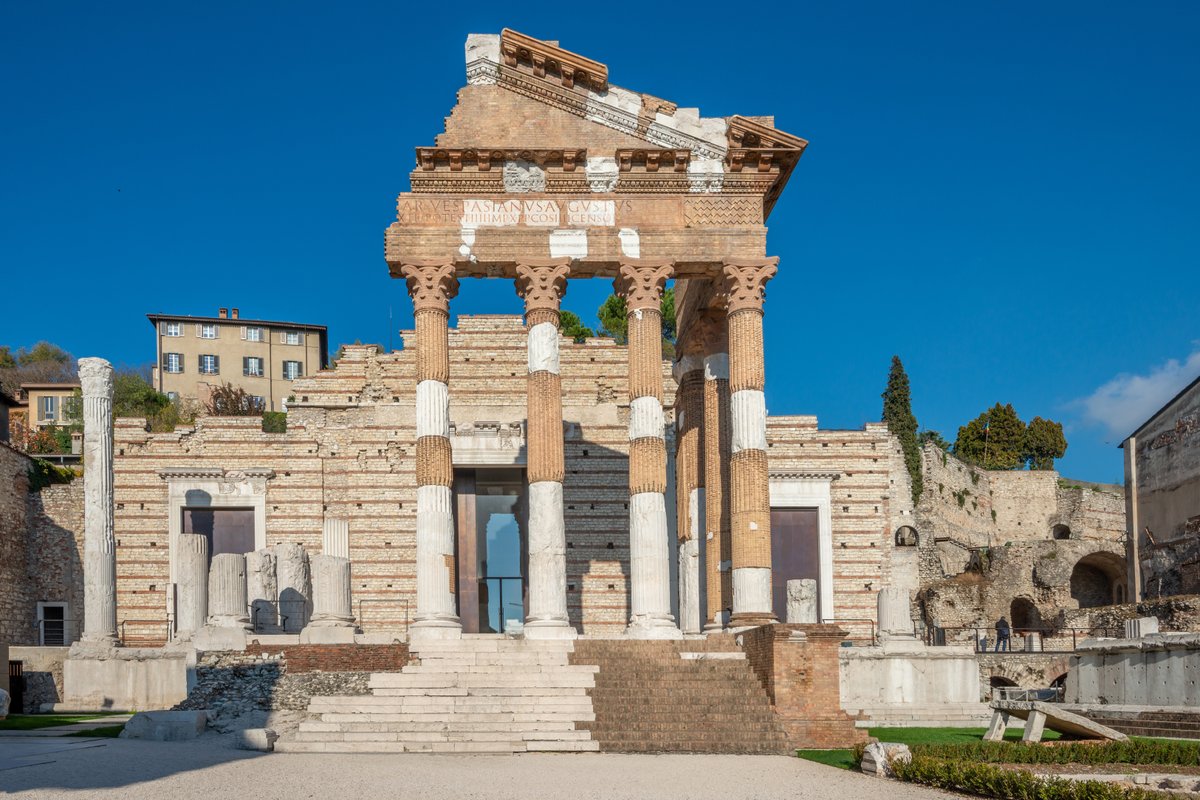

The Capitolium of Brixia, or the Temple of the Capitoline Triad in Brescia, was the main temple in the center of the Roman town. Built in AD 73 during the rule of emperor Vespasian, it replaced an earlier "Republican Sanctuary" consisting of four discrete temples erected between 75 and 90 BC. The temple was designed to represent the capitolium of the town, dedicated to the Capitoline Triad of Jupiter, Juno, and Minerva. It features three identifiable cellae, each with its own polychrome marble floor.
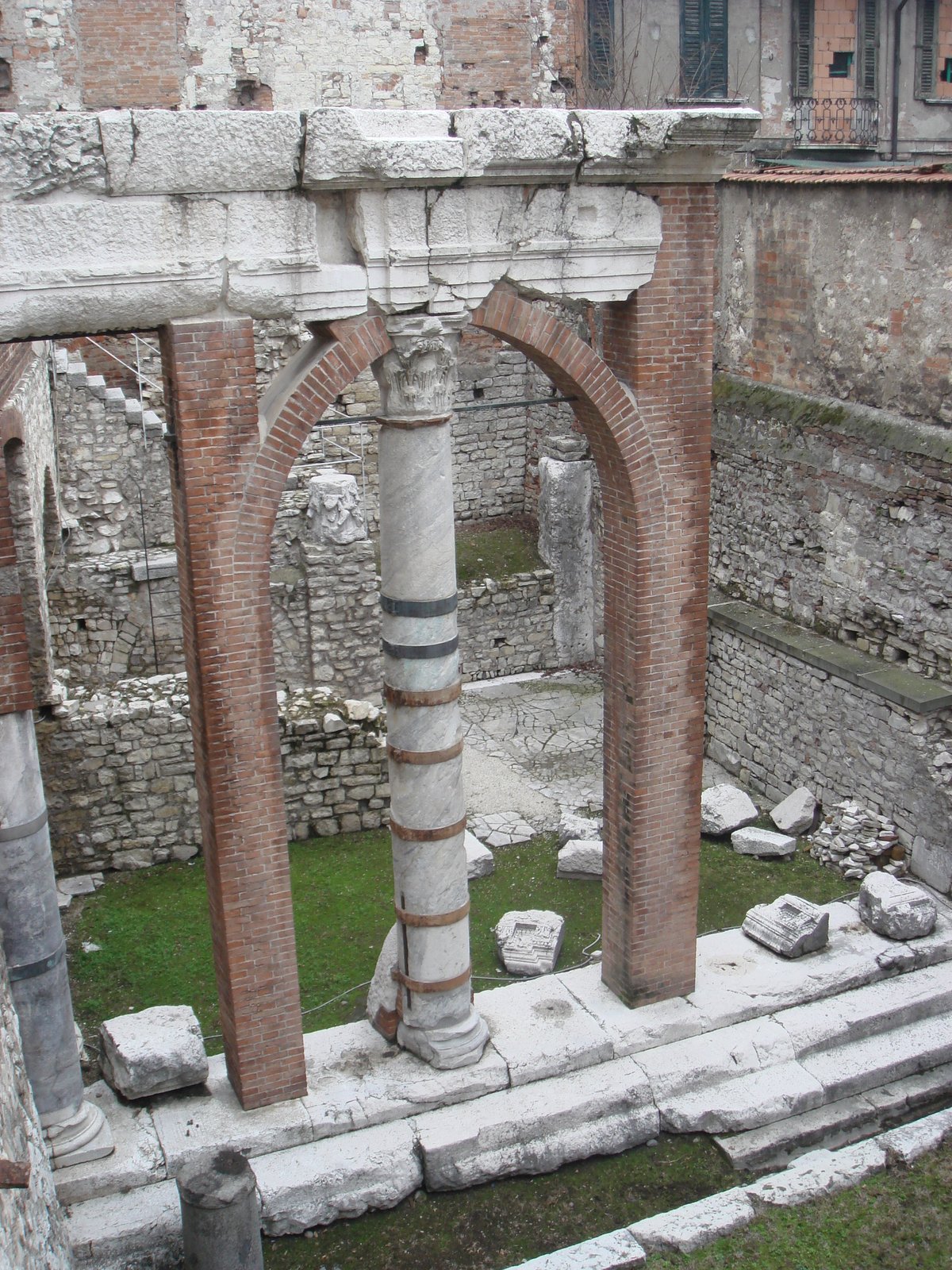
The complex is located at one end of Via dei Museii, which was once the original Decumanus Maximus of Brixia. Broad stairs rose up to a portico composed of Corinthian columns that supported a pediment with a dedication to Vespasian. Today, the walls of the left cella are used as a lapidarium to display local epigraphs found during the 19th century. The site is part of the Longobards in Italy: Places of Power (568–774 A.D.) UNESCO World Heritage Site.
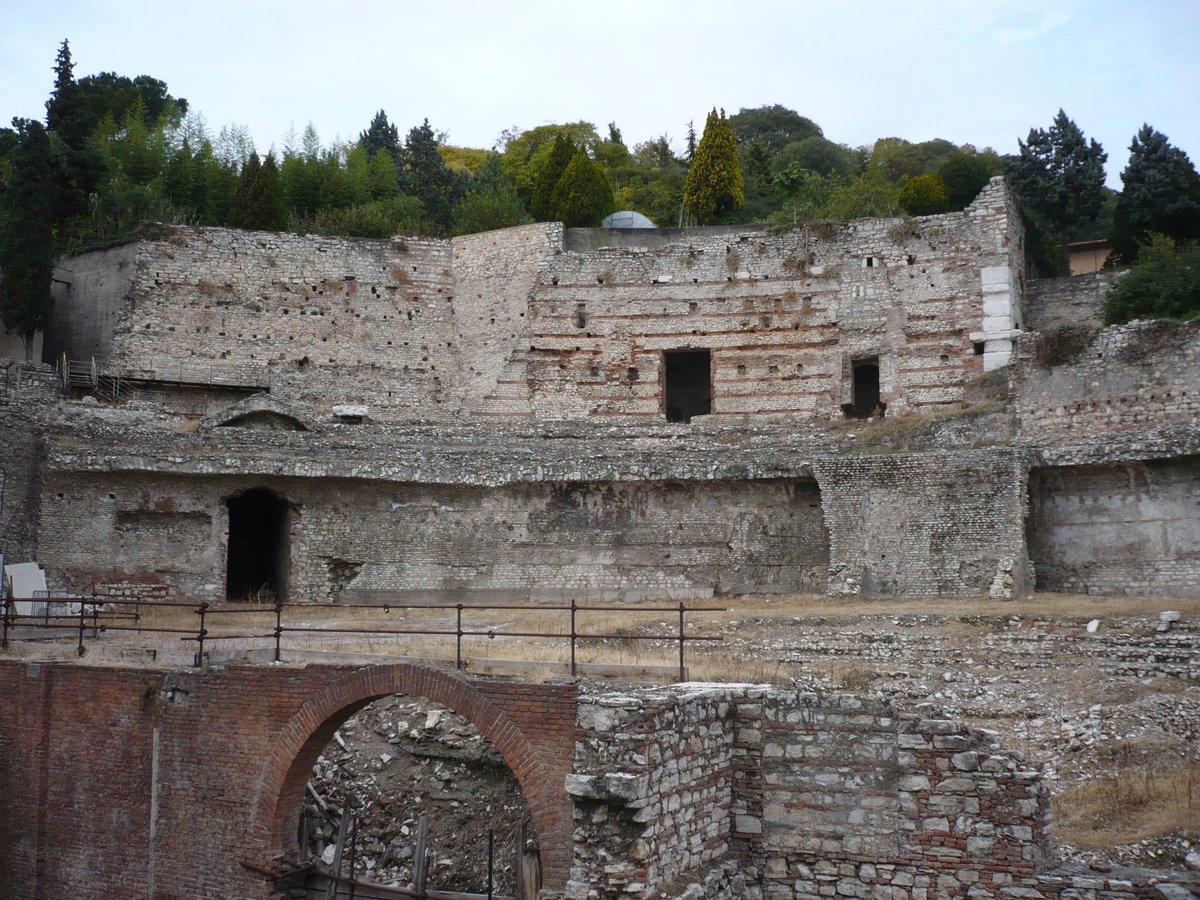
Almost entirely buried by a landslide from the Cidneo Hill, the temple was rediscovered in 1823. Reconstruction was performed soon after by Rodolfo Vantini. During excavation in 1826, a bronze statue of a winged Victory was found inside the temple, likely hidden in late antiquity to preserve it from pillage. Since 2021, this restored statue has been exhibited again in the Capitolium Archeological Area Museum.
Sources: Wikipedia, OpenStreetMap, Wikidata, Wikimedia Commons
Written by Nicolo Ciampini
Discuss this with the author and others
No comments yet. Be the first to start the conversation.