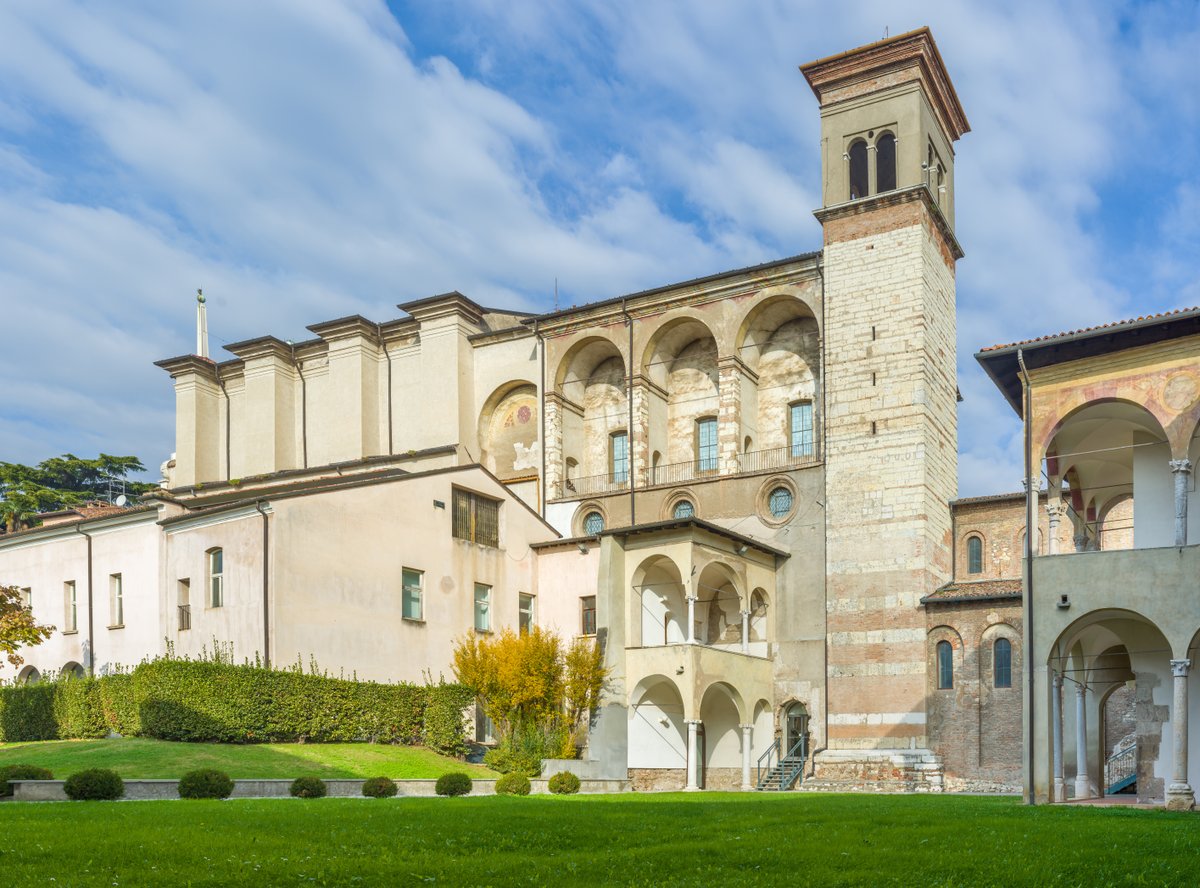

The Monastery of Santa Giulia in Brescia, Italy, dating back to the 8th century, underwent remarkable changes over time. Initially built by King Desiderio of the Lombards as a burial place for the royal family, the monastery was at the center of commercial exchange with extensive property beyond the Bresciano region. In the 12th century, the monastery underwent a major renovation, and the current structure dates from the Late Gothic period in the 15th century. The monastery's status was confirmed after an appeal to local lay authorities in the 17th century. The monastery was suppressed in 1798 due to Jacobin revolutionary laws and converted into a museum in 1882. Today, the monastery is part of the UNESCO World Heritage Site, 'Longobardi in Italy: the places of power.'
Sources: Wikipedia, OpenStreetMap, Wikidata, Wikimedia Commons
Written by Nicolo Ciampini
Discuss this with the author and others
No comments yet. Be the first to start the conversation.