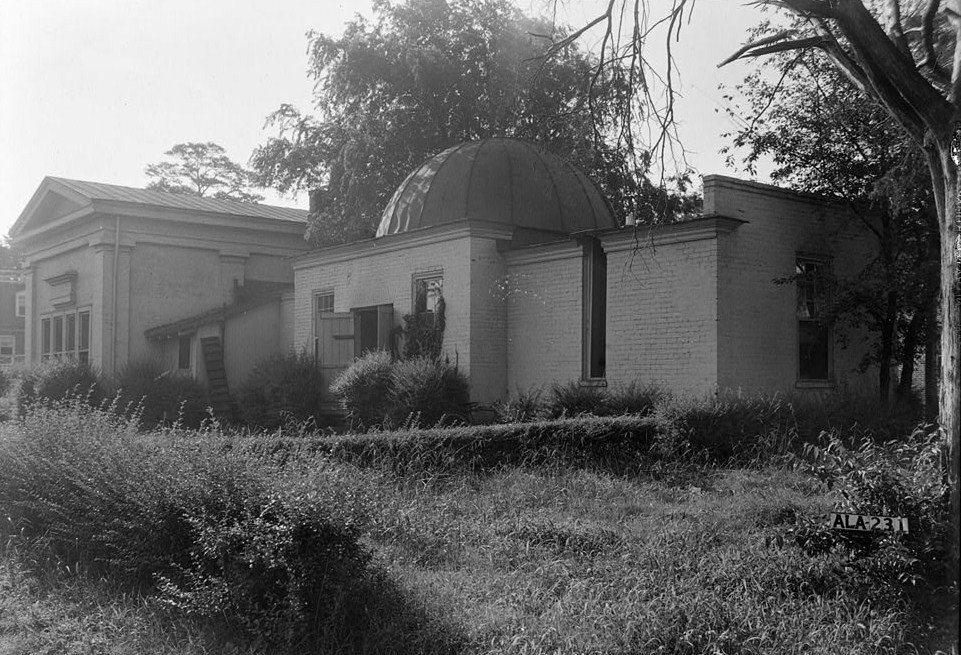
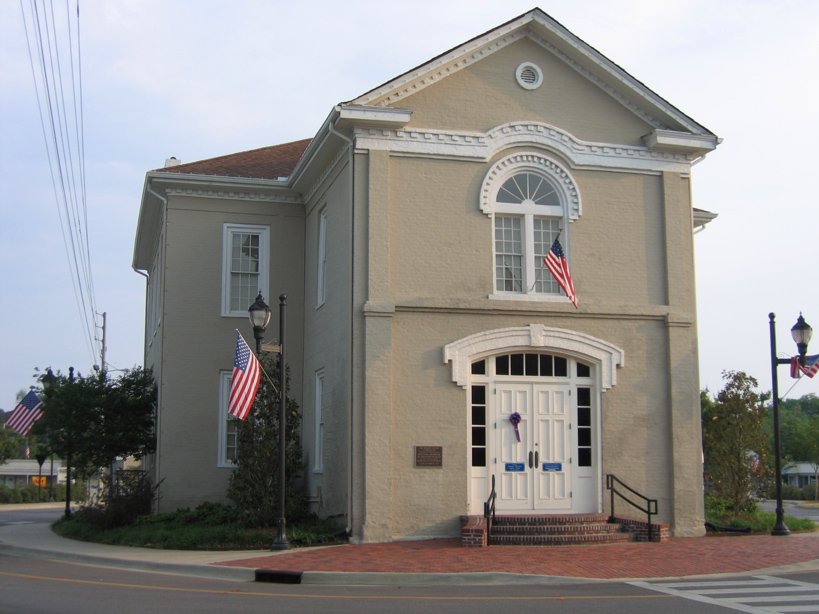
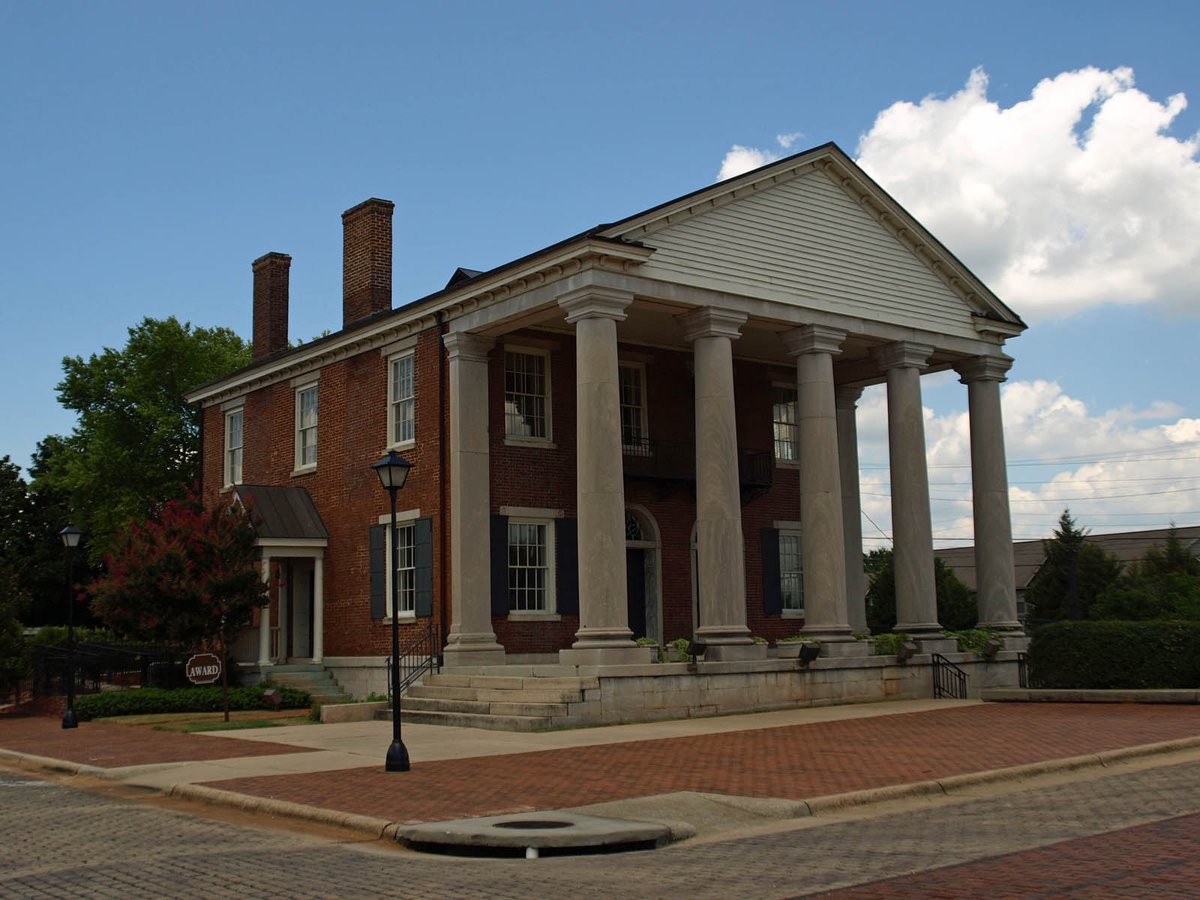
This Greek Revival building was completed in 1844 to house serious astronomical gear. By 1849, it held a Troughton & Simms 8-inch refracting telescope. The layout was strictly functional: a revolving 18-foot dome for the main scope and a transit room at the west end with a north-south slit in the roof for precise tracking. It was built for science, but it ended up serving as a lucky survivor.
During a Federal raid on April 4, 1865, General John Croxton led troops onto the campus. The military converted the university into a base and decided to burn most of the buildings to the ground. This observatory was one of seven to stay standing. It took a hit, but the lens was sent to Bryce Hospital for safekeeping during the raid. Some of the troops, however, decided to take parts of the telescope as trophies.
Even with the souvenir-hunting and the fire damage, the place stayed functional for teaching until the 1890s. The university eventually moved the primary operations to a new site in 1949. The building was eventually renamed Frederick R. Maxwell Hall in 1985 to honor the engineer who fought to keep these 1800s ruins from being demolished.
Today, the building sits on Stadium Drive and houses the Collaborative Arts Research Initiative. It is a long way from tracking arc seconds in the night sky, but at least it is still standing.
Sources: Wikipedia, OpenStreetMap, Wikidata, Wikimedia Commons

Written by Kyle McLonely
Discuss this with the author and others
No comments yet. Be the first to start the conversation.