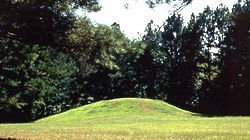

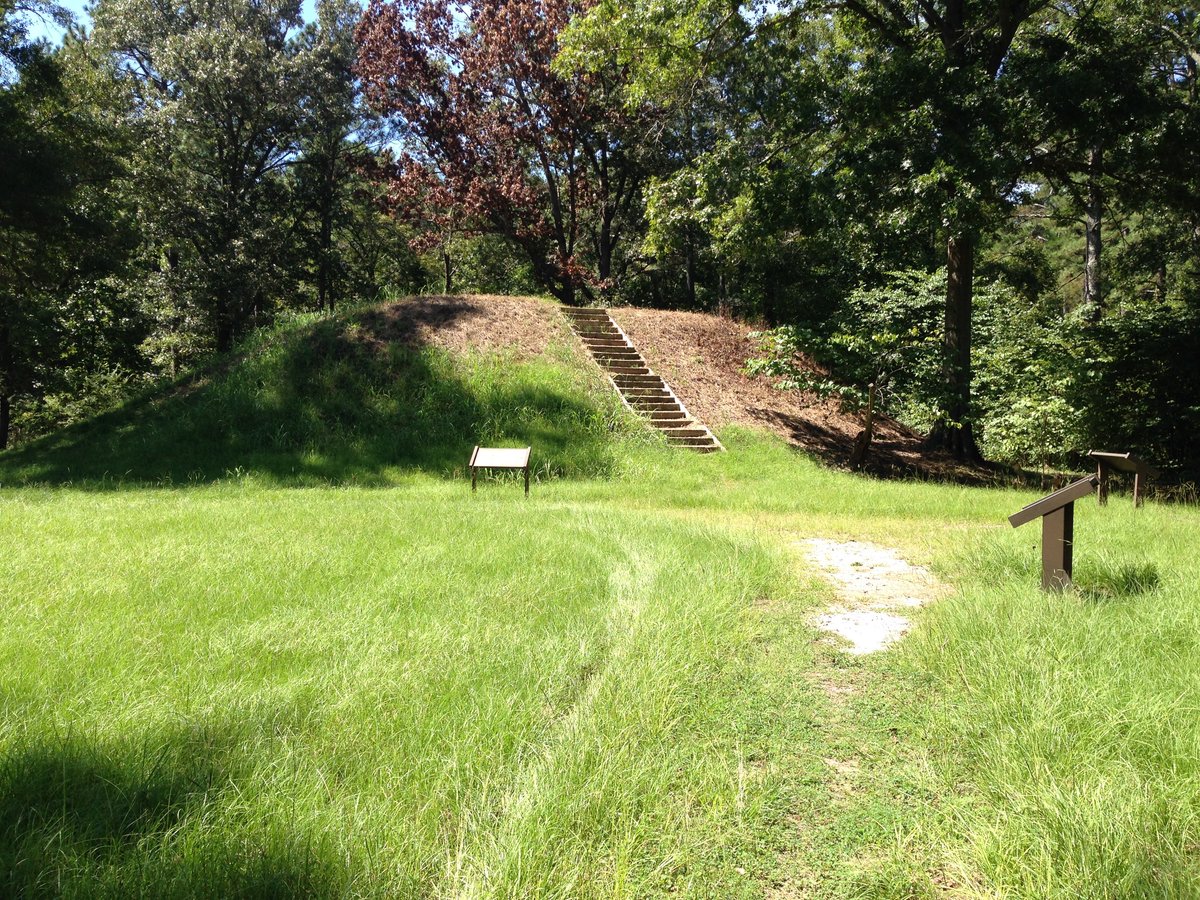
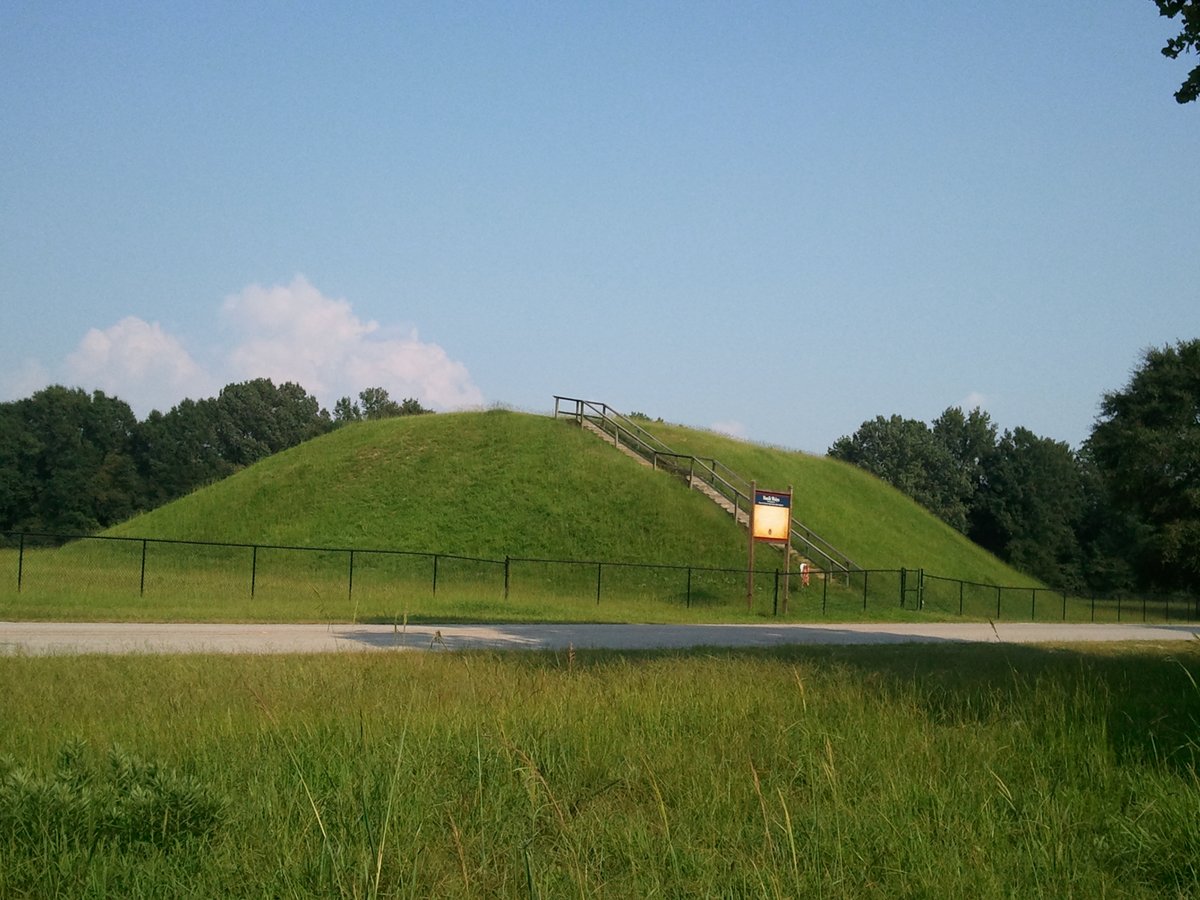
Located near Houston in Chickasaw County, Mississippi, the Bynum Mound and Village Site is a 6-hectare complex constructed between 100 BC and 100 AD. The site features six conical burial mounds ranging in height from 5 feet to 14 feet. In the 1940s, archaeologists with the National Park Service excavated five of these mounds, and the two largest remain restored today for the public to see.
Excavations of Mound A revealed the remains of a woman who had been placed between two parallel burned oak logs at the base of the mound. She was adorned with ornamental copper spools at each of her wrists. Archaeologists also found the remains of two adult males and a child within the same mound.
In the largest mound, Mound B, researchers discovered a log-lined crematory pit. Inside, they found human remains, some cremated and others unburned, along with twenty-nine polished greenstone celts arranged in an L-shaped pattern. These findings, along with exotic items like copper ear-spools and chert projectile points, indicate the local people were involved in a long-distance religious network and the Hopewell exchange system.
Sources: Wikipedia, OpenStreetMap, Wikidata, Wikimedia Commons

Written by Friendly Jane
Discuss this with the author and others
No comments yet. Be the first to start the conversation.