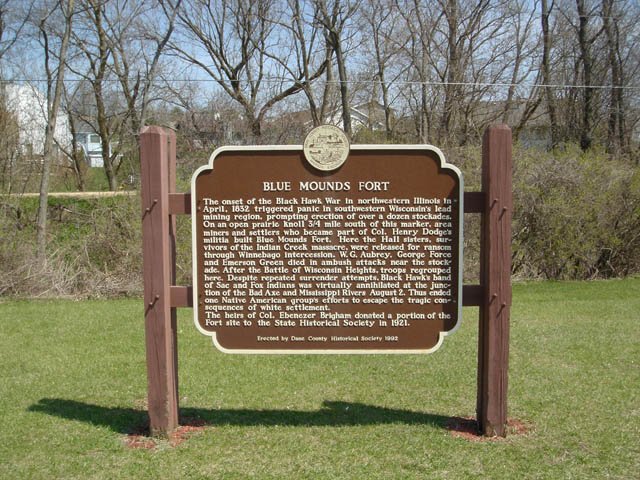

You haven't seen a construction deadline until you've seen the settlers of Blue Mounds in 1832. When news broke that Chief Black Hawk was moving through, they didn't have time for a slow build. Led by Ebenezer Brigham, the residents started construction on the highest part of the open prairie. They needed a clear view of the east, south, and west, with the mound bounding the northern side of the fort.
They actually pulled it off in about two weeks. Word had quickly arrived of an engagement where the Illinois militia were defeated by the Indians at the Battle of Stillman's Run. This, along with the closeness of the Ho-Chunk tribe, brought fear to the settlers. They built a picket fence style setup using oak trees planted about 17 feet high with about 3 feet of the trunk in the ground. To keep things functional, they added two 20-foot square blockhouses at the corners and a central log building for sleeping and storage. It was a sturdy layout that was very similar to one at Apple River in Illinois.
From May 20 to September 20, 1832, the settlers and miners joined General Henry Dodge's Michigan Territory Militia. The fort saw a fair amount of action, including the death of the first commander, James Aubrey, on June 6. The site stayed with the Brigham family for a while before it was donated to the Wisconsin Historical Society and dedicated as a state historical site in 1921.
If you visit today, you won't see any standing timber or blockhouses. There is a marker on a chert boulder marking the spot, but the site itself isn't open to the public. It is just a quiet, grassy space now, but it used to be a very busy and very stressed-out construction site.
Sources: Wikipedia, OpenStreetMap, Wikidata, Wikimedia Commons
Written by Friendly Jane
Discuss this with the author and others
No comments yet. Be the first to start the conversation.