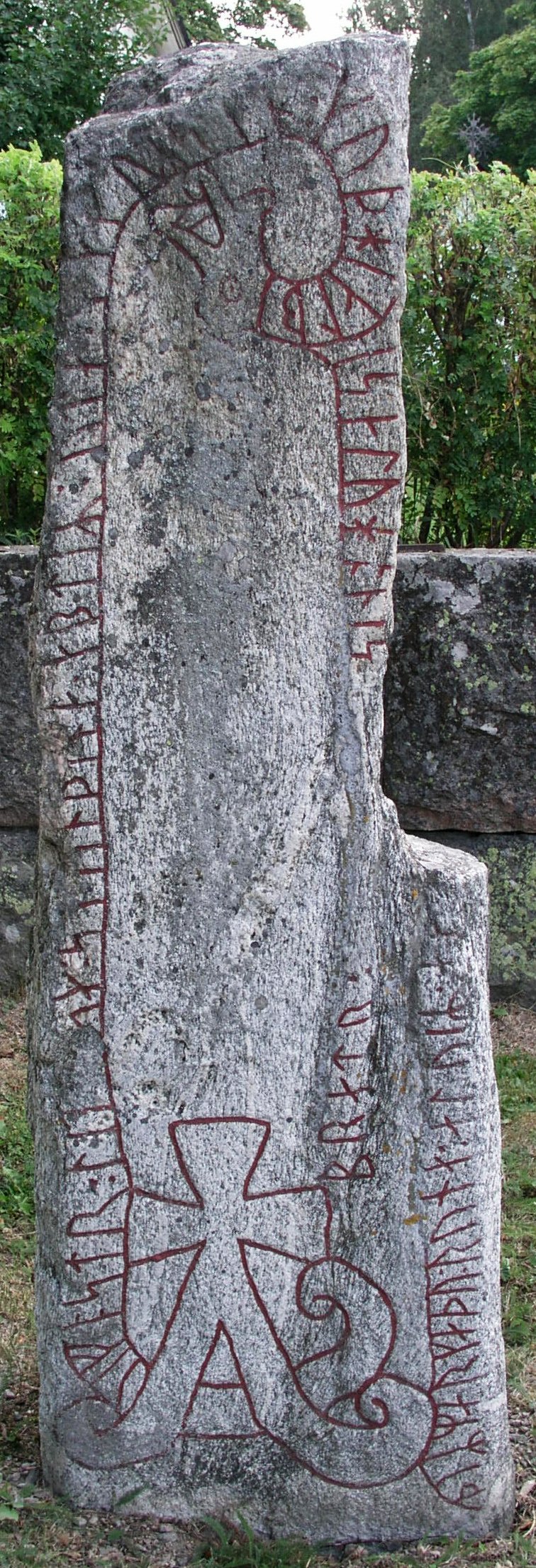

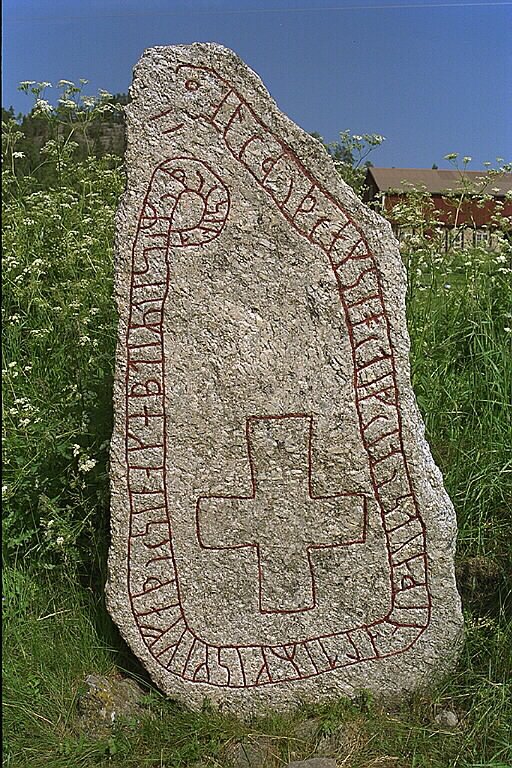
Standing near Högs kyrka in Hudiksvalls kommun i Hälsingland, the runestone known as Hs 11 tells a story of memory and faith. The light grey granite monolith is decorated with a runsnake winding along its outer edge. In its lower section, a Christian cross stands on a double crossfoot, marking a transition of spiritual styles.
The stone was discovered in 1702, built into the east wall of the church. It remained part of the structure until it was released and erected in its current location in 1951. While it bears a crack on its left side, the inscription remains a clear testament to its origins in the 1000s AD.
According to the runes, Vifast commissioned the stone in memory of his father, Udde. The text asks for God to help his soul. The inscription also identifies the carvers of the runes as Alver and Brand, preserving their names alongside the tribute to Vifast's father.
Sources: Wikipedia, OpenStreetMap, Wikidata, Wikimedia Commons
Written by Nik Frost
Discuss this with the author and others
No comments yet. Be the first to start the conversation.