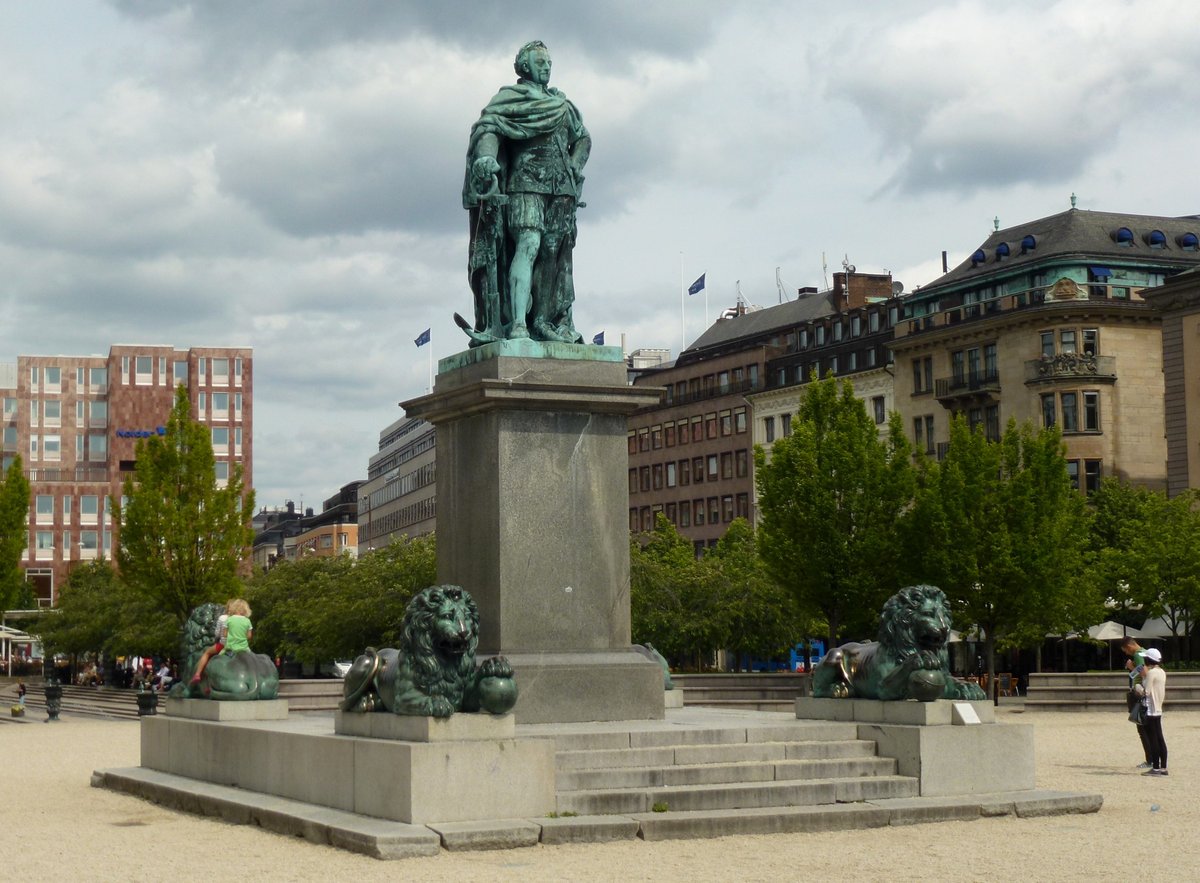

In Stockholm's Kungsträdgården, the bronze figure of Karl XIII stands as a monument commissioned by Karl XIV Johan at his own expense. The statue was unveiled on 5 November 1821, marking the anniversary of the adoption of Karl XIV Johan by Karl XIII. The craftsmanship originated from the Carbonneau foundry in Paris, depicting the monarch in attire with a mantle and a laurel wreath. His right arm rests on an anchor, referring to his naval past as a storamiral from his youth.
The statue stands on a pedestal of black marble atop a granite base designed as steps with four corners. These corners feature four lions created by Bengt Erland Fogelberg and installed in 1824. The lions symbolize royal power; two hold globes with three crowns, while the other two hold a war axe. These symbols represent the rule of Karl XIII over both lands from 1814 until his death in 1818. In the early years, a guard was stationed at the site to prevent children from riding on the lions.
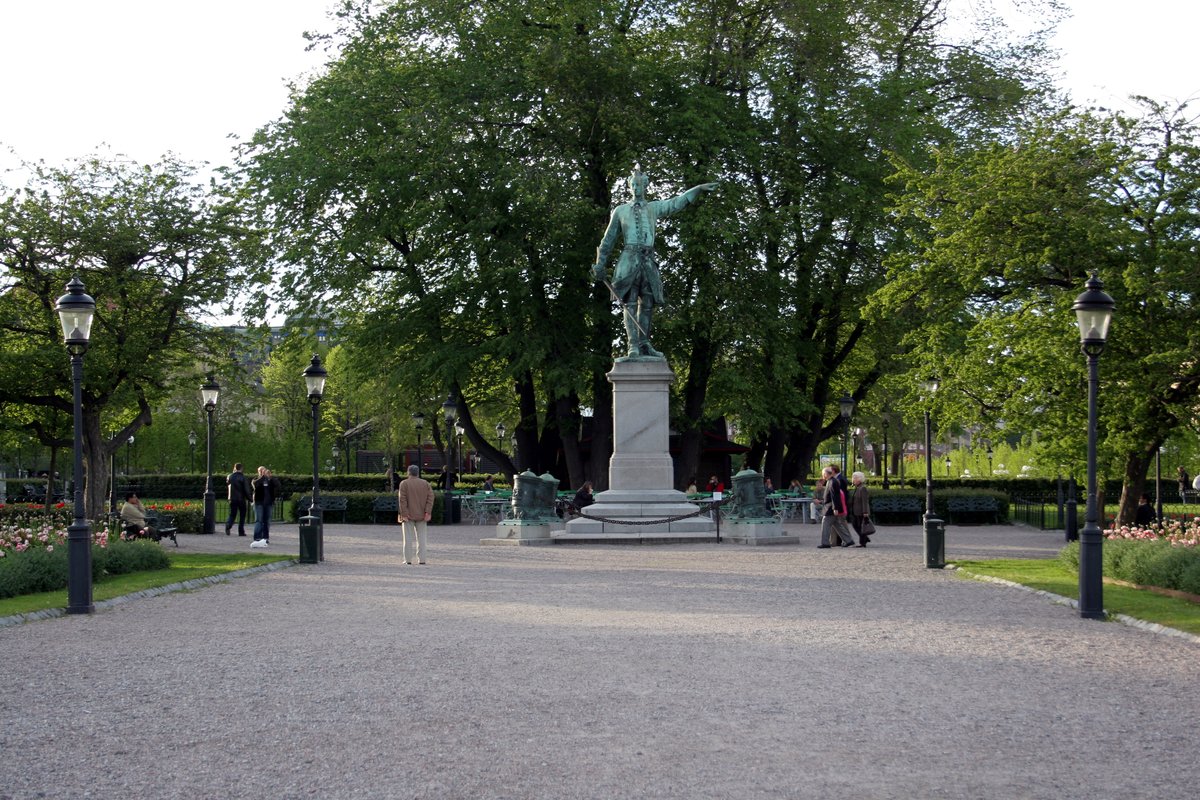
Statens fastighetsverk manages the landmark today. While the statue was once mocked by the public as a gardener without a garden because it stood in an open gravel square, it remains a central part of the area. The surrounding area was renamed Karl XIII:s torg by a Royal Letter on 26 March 1822.
Sources: Wikipedia, OpenStreetMap, Wikidata, Wikimedia Commons



Written by Nik Frost
Discuss this with the author and others
No comments yet. Be the first to start the conversation.