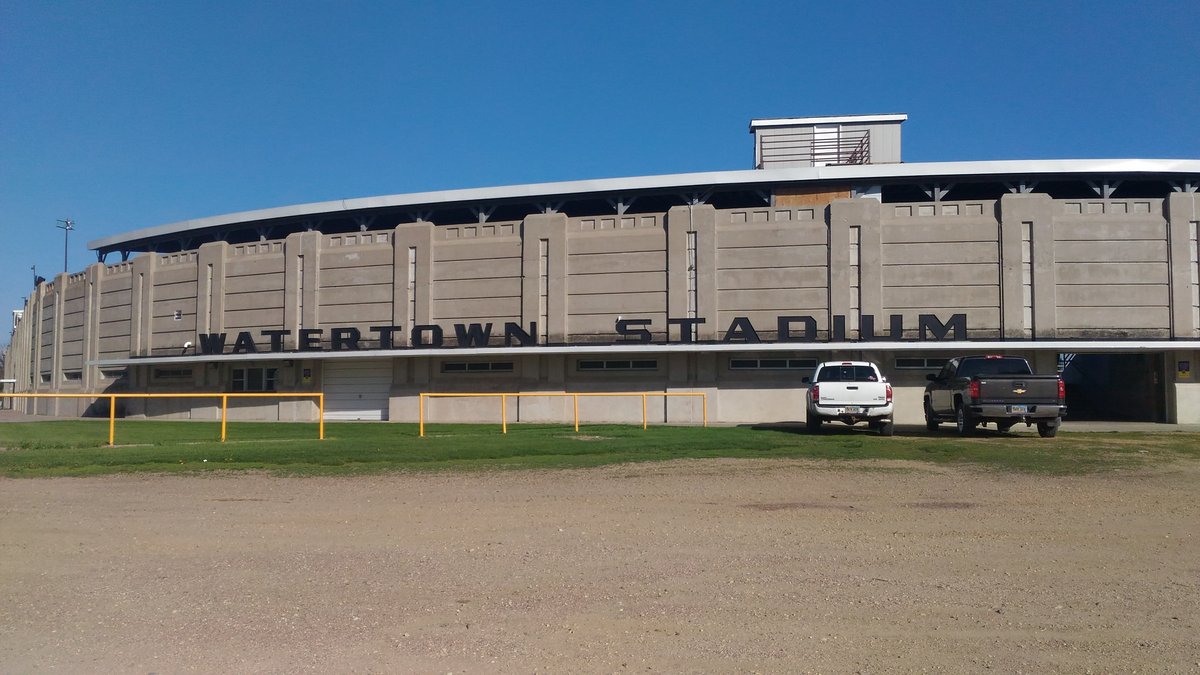
The Watertown Stadium has a bit of an identity crisis built into its reinforced concrete. It stands as a prime example of federal relief projects that were executed with enough enthusiasm to create something lasting.
In the 1930s, the Works Progress Administration had Project 4265 on the books. The stadium opened in 1940 and was built to host baseball and American football. It was a massive undertaking for the time, and the ballpark has a capacity of 5,000 people.
There is a persistent local rumor that the WPA had a different plan for the concrete. The story goes that the structure was initially intended to be a band shelter as part of a music project. According to local lore, the structure was built in phases and initially looked more like a bandshell. It was then allegedly modified for athletic use during the last phase of construction.
Whether the band shell plans were a formal design shift or just a rumor, the result is a significant piece of South Dakota history. The stadium served as a home for the Watertown Expos of the Northern League until around 1970. Since then, it has been the home of the Watertown Arrows and the home turf for Watertown High School athletics.
The building is now a listed site on the National Register of Historic Places. It serves as a physical reminder of the era of unprecedented government aid for community improvements. While the high school moved its football games to the Allen Mitchell Athletic Complex for the 2025 season, the stadium remains a staple of the town's landscape.
If you visit today, you can still see the original plaque dedicated to the structure. To the east of the field, a 2005 addition provides the modern necessities the WPA couldn't provide: restrooms, a concession stand, and locker rooms for the Varsity and Sophomore teams. It is a solid, enduring piece of infrastructure that still does the job it was modified to do.
Sources: Wikipedia, OpenStreetMap, Wikidata, Wikimedia Commons
Written by Kyle McLonely
Discuss this with the author and others
No comments yet. Be the first to start the conversation.