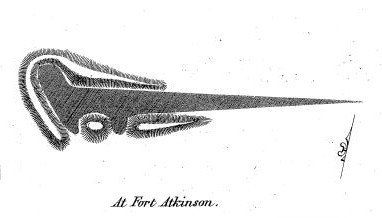

Nestled in the picturesque cheese heartland of Wisconsin, you'll stumble upon the Panther Intaglio Effigy Mound – a historical archaeological site that's not your typical tabby cat. Carved between 700 and 1200 A.D, this ancient marvel's managed to stay afloat in Jefferson County despite the stormy seas of time. Most of its buddies from yesteryear have gone the way of the dinosaur, but not this cat. It was unearthed by the sharp-witted state geologist, the one and only Increase A.
Lapham, who nicknamed it a 'lizard' because of its elongated, irregular shape. Just remember, Lapham's lizard label's got nothing to do with tasty burritos. Later archaeologists settled on 'panther' or 'water sprite'. What sets this furball apart is its aquatic nature. You're probably asking 'Why's it got the dip? The reason for the water filling the depression and forming the panther lies in its special construction. During Lapham's dig in 1850, he found it to be an intaglio mound – a ground depression mimicking the figure it represents.
In this case, the water formed the figure of the panther within the mound. Only two bear-shaped intaglios from Baraboo, discovered in the 1800s, share this distinction. By 1910, the remaining intaglio mounds were in danger, so they were saved and put in a cozy city park. This panther's resting on the Northern shore of the Rock River, and got added to the National Register of Historic Places in 1970.
Sources: Wikipedia, OpenStreetMap, Wikidata, Wikimedia Commons
Written by Friendly Jane
Discuss this with the author and others
No comments yet. Be the first to start the conversation.