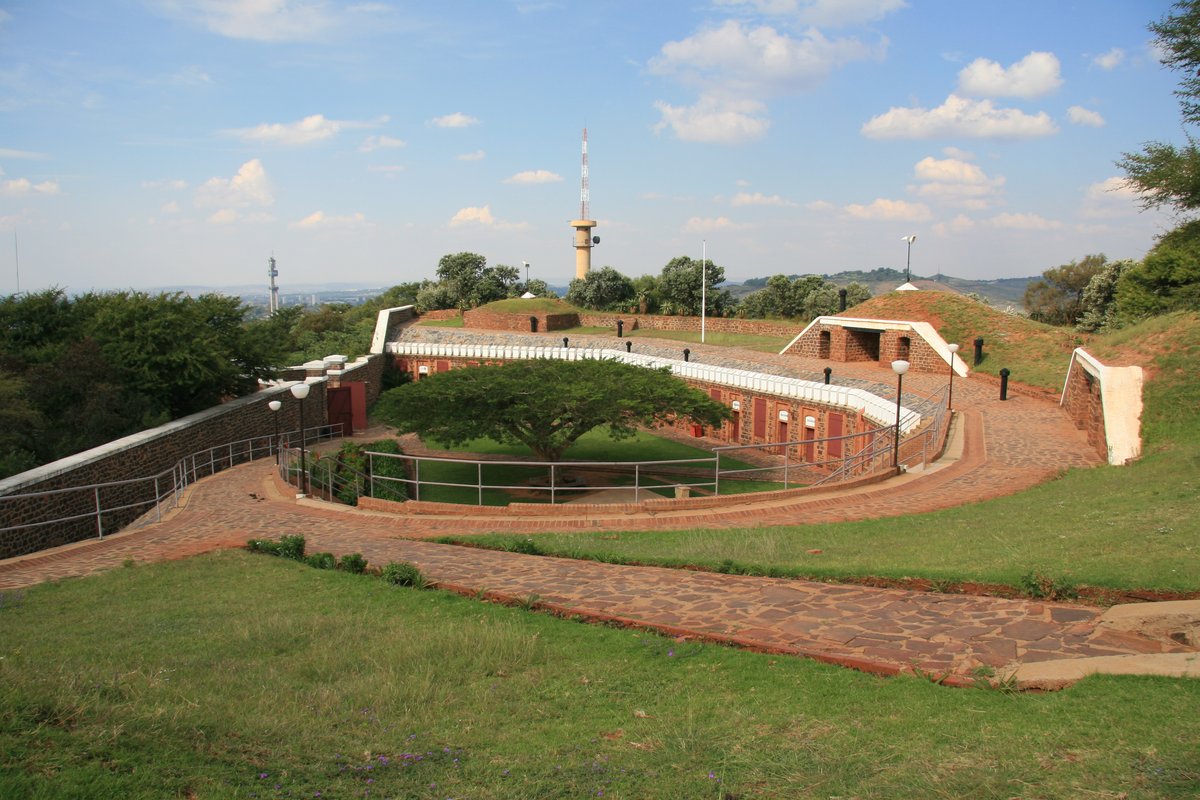

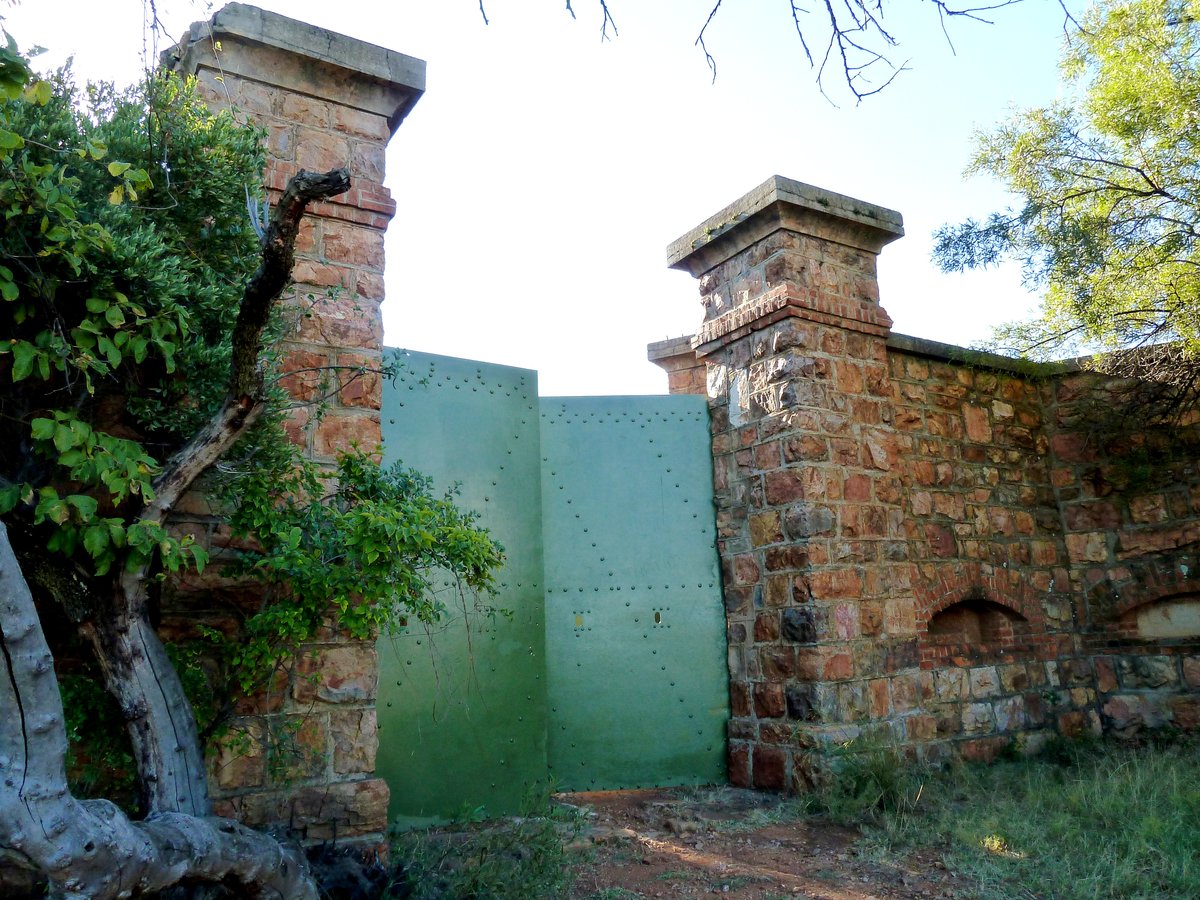
On the outskirts of Pretoria sits Fort Schanskop, a heritage site of the Zuid-Afrikaansche Republiek dating from just before the Second Boer War. The fort was built to protect the capital and the goldfields from the growing agitation of the Uitlanders and the Jameson Raid. While a French engineer proposed an initial defense plan, the government ultimately accepted a plan from two German engineers, Otto von Dewitz and Heinrich Carl Werner. The architect was the Dutchman Christiaan Kuntz, and the master builder was the Italian Celso Giri.
The fort was designed to prevent attacks from the railway lines of Johannesburg and Lourenco Marques. It featured modern defenses for its time, including a five-sided bastion with cannons on rotating mounts, machine gun slots, and surrounding trenches with barbed wire. Technical installations included a power generator, lightning conductors, a heliograph, a telephone, and an underground telegraph connection. Water was pumped in from the Apies River, with help from Cor Delfos.
Although it was built for defense, the fort never served its intended purpose during the war. Most artillery and equipment were moved to the Natal front. On 3 June 1900, British forces fired on the fort, but it was unmanned and unanswered. It served as an ammunition depot during both World Wars and as a signal and observation post around 1922. In 1938, it was declared a historical monument, and it eventually became the home of the Anglo-Boer War Museum.
The museum is well known for its photographic displays of the war, including sections on state artillery, generals, horses, and medical services. Today, the site remains a preserved piece of history, standing as a testament to the late 19th-century military engineering used to secure the region.
Sources: Wikipedia, OpenStreetMap, Wikidata, Wikimedia Commons
Written by Mutabor
Discuss this with the author and others
No comments yet. Be the first to start the conversation.