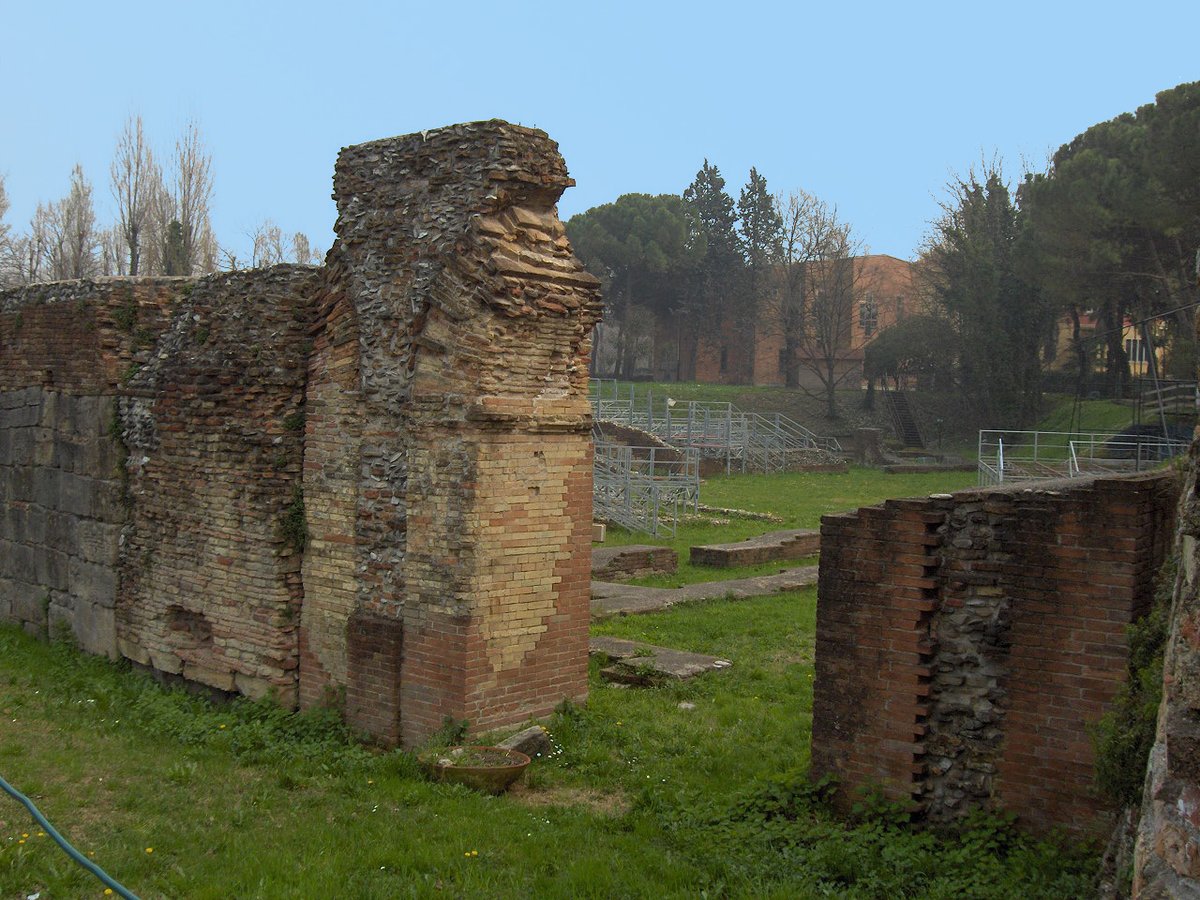

The Roman Amphitheater of Rimini was built in the 2nd century AD on the outskirts of the city. Situated to the east of the historic center toward the beach, its location took advantage of the proximity to the sea to provide a more spectacular emotional experience for those attending the spectacles.
The building's function as a venue for gladiatorial combat did not last long. During the late Roman period, the amphitheater was incorporated into the walls built to resist barbarian invasions and took on a military role as a fort. Its exterior facade facing the sea featured closed arches across a front of 63 meters. When it was no longer needed for defense, the structure also served as a quarry for well-cut stones and bricks to build other buildings during times of economic hardship.
After losing its ludic function and when defense was no longer a constant necessity, the massive structure also served as a lazaretto. By the Middle Ages, the great building had already been reduced to an immense pile of ruins surrounded by abandoned land or poor gardens. It remained largely hidden until 1843, when historian Luigi Tonini partially brought the remains back to light.
Today, the site is an archaeological area and a grassy park. The visible portion of the amphitheater houses events and shows that provide cultural and entertainment alternatives to typical days at the beach or in a nightclub. The elliptical structure once held about 10,000 spectators who entered through two main entrances and moved through a series of corridors and stairs to reach the seating rows.
Sources: Wikipedia, OpenStreetMap, Wikidata, Wikimedia Commons




Written by Nicolo Ciampini
Discuss this with the author and others
No comments yet. Be the first to start the conversation.