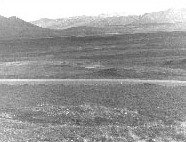

If you ever find yourself wandering the Brooks Range foothills, you are basically walking through a prehistoric workplace. Archaeologists think the people back then treated this spot like a quarry and a workshop where they worked on tools while observing the countryside for prey to hunt.
Construction crews actually stumbled upon the site in 1970 while they were building the Trans-Alaska Pipeline. The place is split into three distinct areas. Two of those areas date back to roughly 650 BCE and 1,000 BCE, but Locality 1 yielded a radiocarbon date of 10,540 before present, or about 8,500 BCE. At the time of its discovery, this was the oldest site of human activity known in the state, though older dates have since been obtained at the Dry Creek Archeological Site.
There is something notable about the finds from that oldest period. The most notable feature of the stone tools found at Locality 1 is the absence of bifacial tools. Furthermore, none of the three localities included any remains of animal-based tools made with antler, bone, or other animal parts.
Nowadays, the site is a National Historic Landmark. It is still a rugged and remote location in northern Alaska. It stays preserved as a record of how early humans managed to piece together their toolkit.
Sources: Wikipedia, OpenStreetMap, Wikidata, Wikimedia Commons

Written by Friendly Jane
Discuss this with the author and others
No comments yet. Be the first to start the conversation.