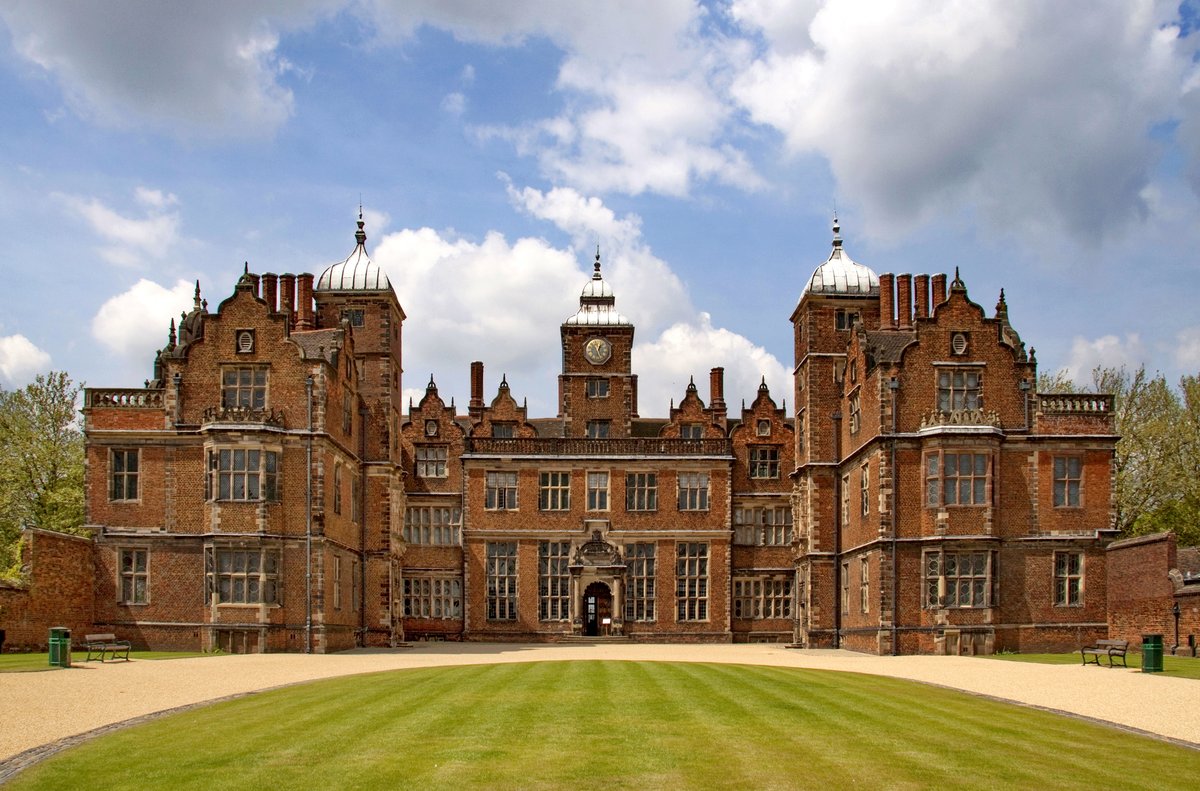
Aston Hall is a Grade I listed Jacobean house in Aston, Birmingham, England. Designed by John Thorpe, construction began in April 1618 by Sir Thomas Holte, who moved in in 1631. The house, a leading example of the Jacobean prodigy house, was completed in April 1635. It stands in a large park, part of which became Villa Park, the home ground of the Aston Villa football club. The park is listed Grade II. Parliamentary troops attacked Aston Hall in 1643, causing damage.
The house remained in the Holte family until 1817,when it was sold and leased by James Watt Jr, son of industrial pioneer James Watt. Aston Hall was purchased in 1858 by a private company (the Aston Hall and Park Company Ltd) for use as a public park and museum. After the company ran into financial difficulties, the house was bought by the Birmingham Corporation in 1864, becoming the first historic country house to pass into municipal ownership. Aston Hall was visited by Washington Irving, who wrote about it as Bracebridge Hall, taking the name from Abraham Bracebridge, husband of the last member of the Holte family to live there.
Irving's The Sketch Book stories described the harmonious warm-hearted English Christmas festivities he experienced while staying in Aston Hall, that had largely been abandoned. An Aston Hall custom the owners afforded the servants of the house on Christmas Eve appeared in The Gentleman's Magazine in 1795, which said: 'the servants have full liberty to drink, dance, sing, and go to bed when they please. For a few years from 1879, Birmingham's collections of art and the Museum of Arms were moved to Aston Hall after a fire damaged the municipal public library and Birmingham and Midland Institute, which shared a building in Paradise Street, until the building of the current Art Gallery in the Council House complex.
Aston Hall today is a community museum managed by the Birmingham Museums Trust and is open to the public after a major renovation completed in 2009.
Sources: Wikipedia, OpenStreetMap, Wikidata, Wikimedia Commons
Written by Nicolo Ciampini
Discuss this with the author and others
No comments yet. Be the first to start the conversation.