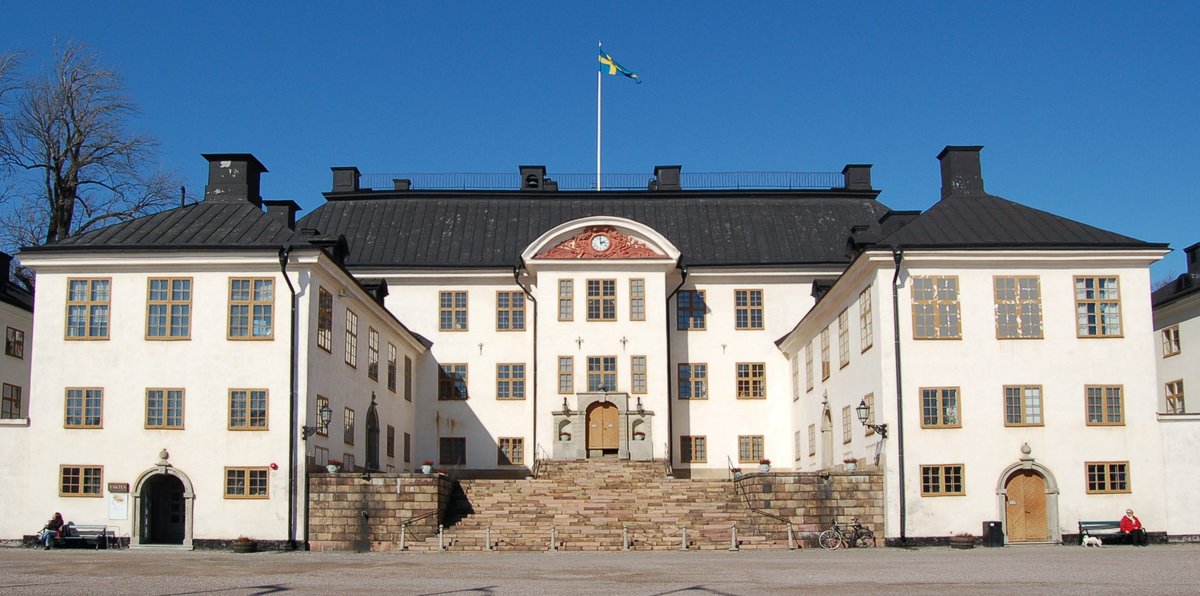

Karlberg Palace was built in 1630 by Lord High Admiral Carl Carlsson Gyllenhielm. The palace was designed in the Renaissance style with pink plaster and tall gables. Gyllenhielm's widow died six years after her husband, leading to a protracted legal battle. In 1669, Lord High Admiral Magnus Gabriel De la Gardie, one of the most influential men in Sweden, bought the estate from the heir of his precursor. De la Gardie had renowned architect Jean de la Vallée expand the palace into a grand H-shaped design, adding two wings, a terrace facing the waterfront, and a church in the eastern wing.
The palace featured ornate red festoon stucco ornaments, cornices facing the garden, and sumptuous stucco ceilings by Carlo Carove. The park around the palace was furnished with an orangery, ponds, fountains, parterres, and boxwood patterns in the manner of French Baroque architecture. Plans in the mid-1660s to transfer the estate to the widowed Queen Hedwig Eleonora were cancelled as De la Gardie sold one of his other palaces to the queen and bought Karlberg. Crown Prince Charles spent much of his childhood at Karlberg and used to hunt wolves in the surrounding forests.
The palace served as a temporary home for the royal family from 1697 to 1754 while the Three Crowns Castle was being rebuilt and later while the present palace was being completed. Today, the palace houses the Military Academy Karlberg and is owned by the State.
Sources: Wikipedia, OpenStreetMap, Wikidata, Wikimedia Commons


Written by Nik Frost
Discuss this with the author and others
No comments yet. Be the first to start the conversation.