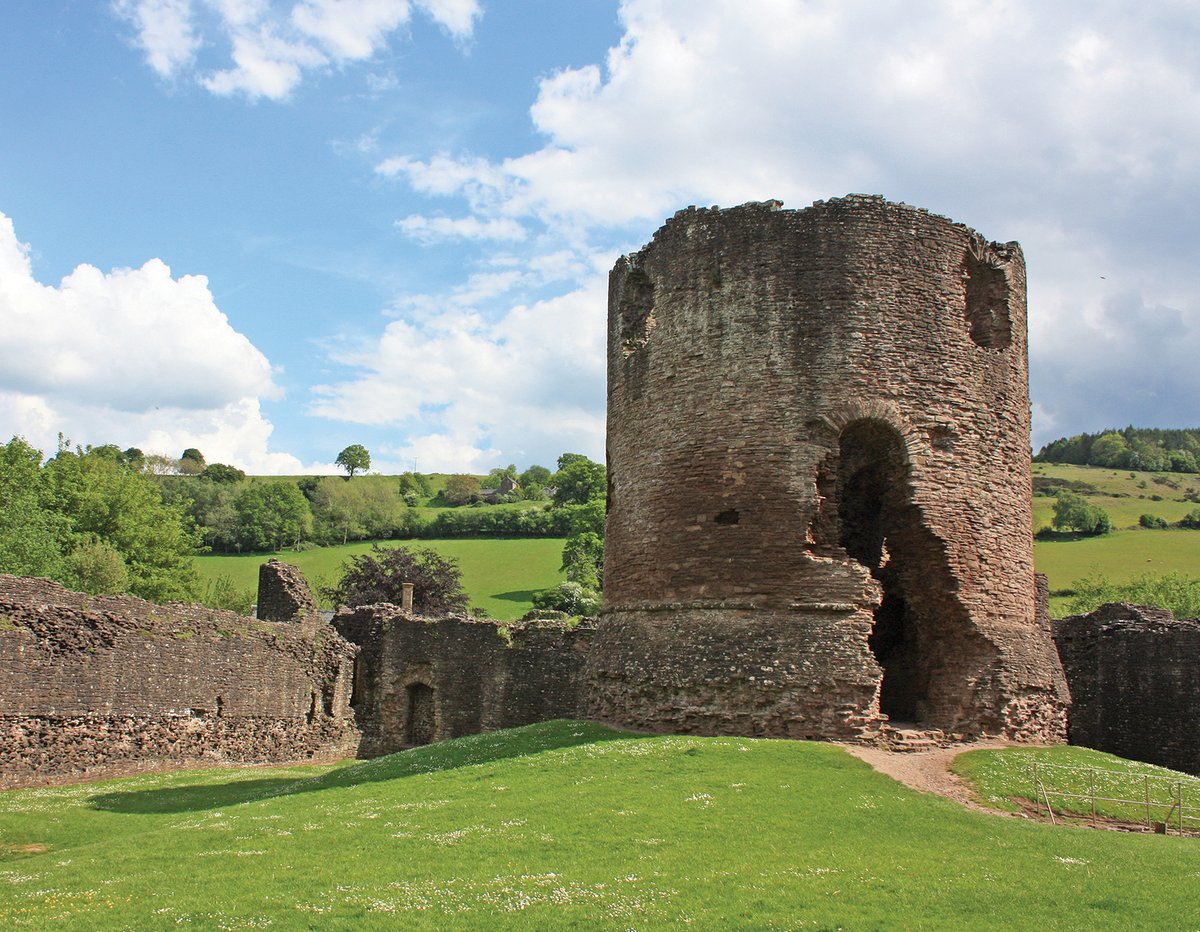
Skenfrith Castle was built by the Normans in the wake of the invasion of England in 1066. It was one of a triangle of fortifications in the Monnow valley, to protect the route from Wales to Hereford. The first castle on the site was built from earth and timber by Earl William, who was given the castle by William the Conqueror. Earl William rebelled against the King in 1075. In 1135, a major Welsh revolt took place, and in response King Stephen restructured the landholdings along this section of the Marches.
Skenfrith Castle, Grosmont, and White Castle were restructured under the control of the Crown to form a lordship known as the 'Three Castles'. In 1201, King John gave Skenfrith Castle to Hubert de Burgh, who rebuilt the castle in stone at the end of the 12th century. Today, only three of the four towers survive. The castle was held by the earldom, later duchy, of Lancaster for many centuries and is now managed by Cadw.
Sources: Wikipedia, OpenStreetMap, Wikidata, Wikimedia Commons
Written by Nicolo Ciampini
Discuss this with the author and others
No comments yet. Be the first to start the conversation.