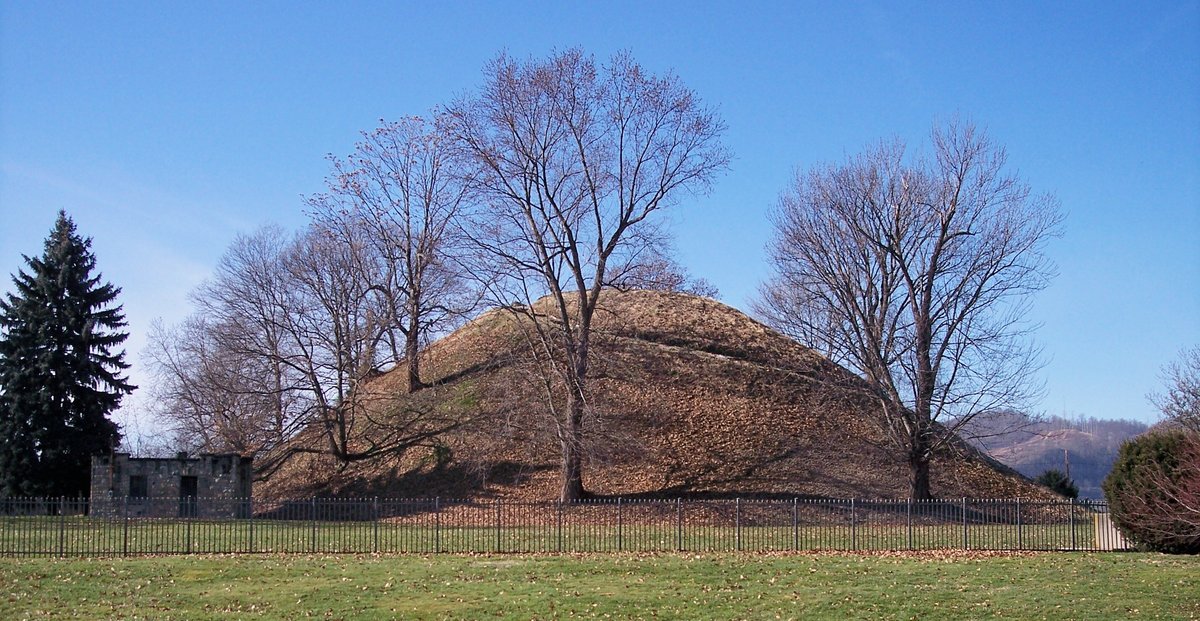

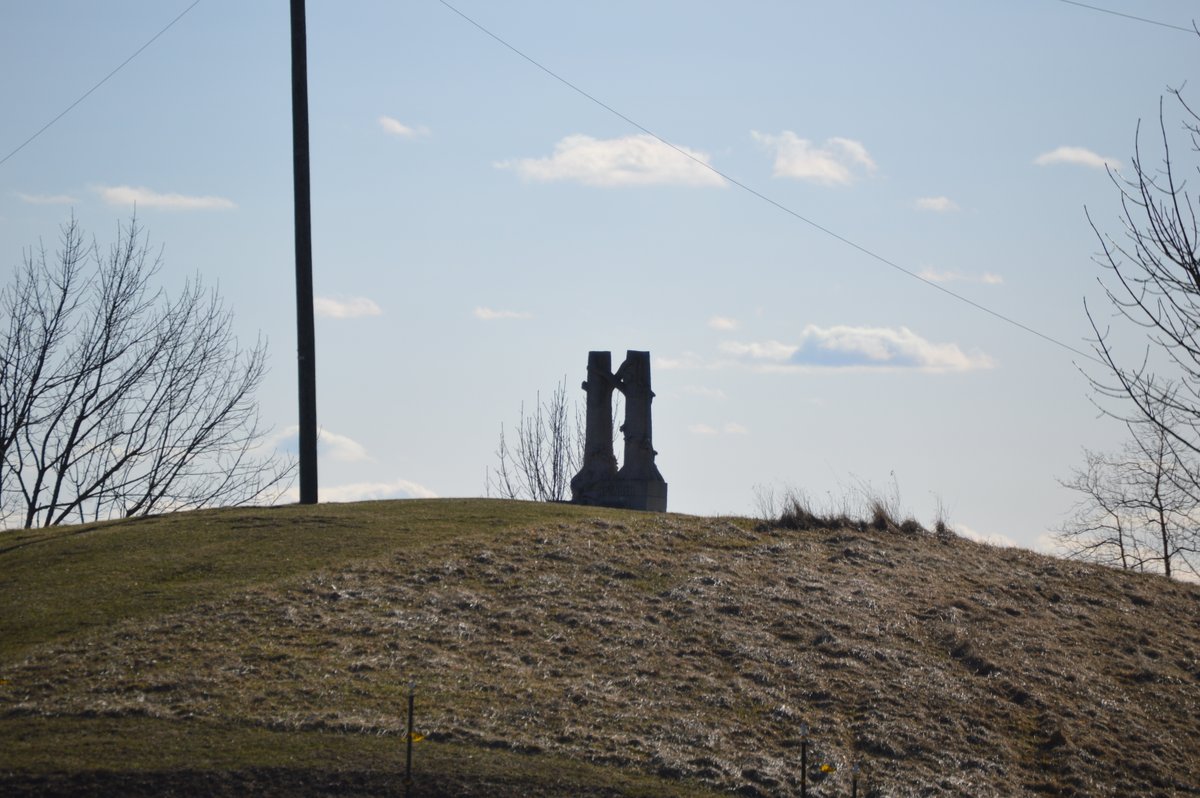
Grave Creek Mound in Moundsville, West Virginia, stands 62 feet high and 240 feet in diameter, making it one of the largest conical-type burial mounds in the United States. This archaeological site was constructed by the Adena culture around 250-150 BC. Originally, road engineers measured its height at 69 feet and its base as 292 feet in diameter.
The first recorded excavation of the mound took place in 1838 by Abelard Tomlinson and Thomas Biggs. Over time, the mound was designated a National Historic Landmark in the mid-20th century. In 1978, the state opened the Delf Norona Museum at the site, which interprets the ancient Adena Culture.
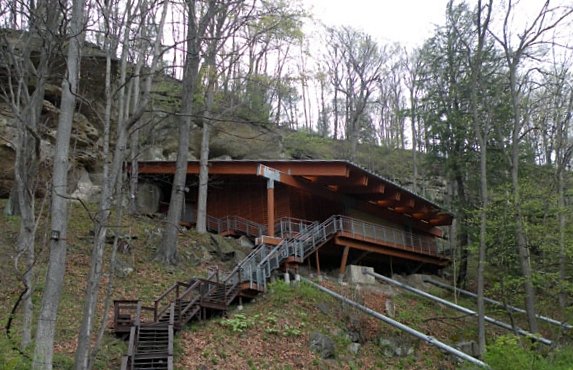
The Delf Norona Museum shows numerous artifacts and interprets the ancient Adena Culture. It displays items from the site and theories about how the mound was constructed.
Sources: Wikipedia, OpenStreetMap, Wikidata, Wikimedia Commons

Written by Friendly Jane
Discuss this with the author and others
No comments yet. Be the first to start the conversation.