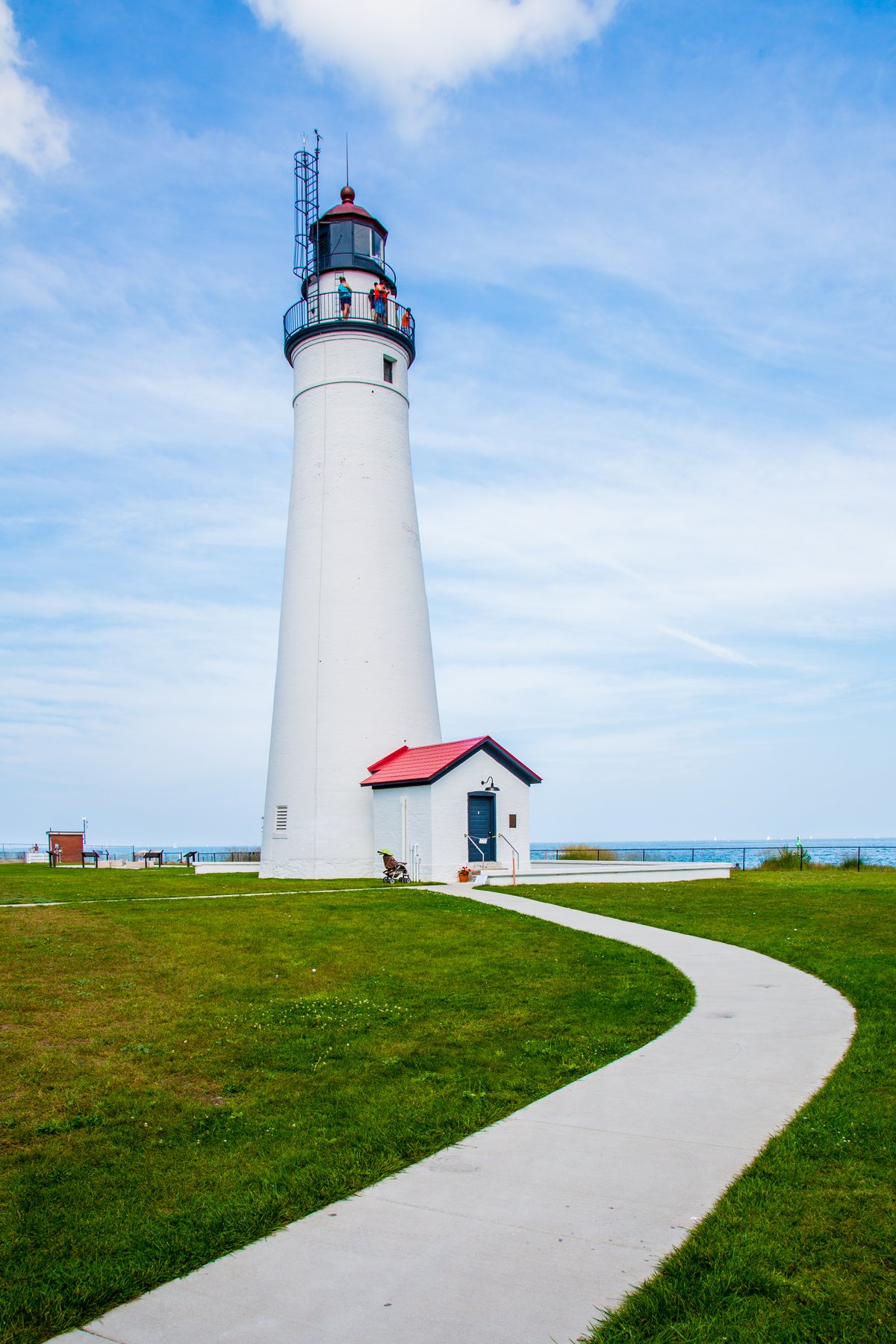
Imagine getting a mission to build a lighthouse and failing so hard you create a vertical obstacle course instead. That was the tactical nightmare at Fort Gratiot Light in 1825. It was meant to be a simple navigational assist for the St. River, but the construction was a total cluster. The first keeper, a Detroit lawyer named George McDougall with a shady background, reported that the stairs were so steep he had to climb sideways like a crab. The trapdoor to the lantern room was such a cramped choke point that he had to recruit an assistant just to move the heavy gear.
Congress initiated this operation in 1823 by dumping $3,500 on Captain Winslow Lewis of Massachusetts to manage the surge in Great Lakes traffic caused by the Erie Canal. Lewis was the guy who patented the Lewis lamp and specialized in underbidding contracts like a pro. He subcontracted the manual labor to Daniel Warren of Rochester, who clearly failed to communicate the requirement for ergonomic staircases to the higher-ups.
By April 1825, the project was bleeding cash and forced Congress to cough up an additional $5,000. The original 32 foot tower was a disaster waiting to happen. McDougall, a short man weighing over 300 pounds, was assigned to man this architectural headache. The tower eventually folded during a storm in 1828. Congress had to shell out another $8,000 in 1829 to build a 65 foot replacement and install a new Lewis lamp system powered by whale oil.
In 1857, the Lewis lamps were retired for a fourth-order Fresnel lens that actually functioned. The squad was expanded in 1862 when they stretched the tower to 82 feet and swapped in a third-order lens. A fog signal building joined the unit in 1900, and the facilities merged in 1939.
Today, this old soldier remains the oldest light still on duty in Michigan. The federal government officially handed the keys to St. Clair County Parks and Recreation in 2010. You can still climb the tower during the season for a fee, provided you can handle a little history while you do your laps.
Sources: Wikipedia, OpenStreetMap, Wikidata, Wikimedia Commons

Written by Kyle McLonely
Discuss this with the author and others
No comments yet. Be the first to start the conversation.