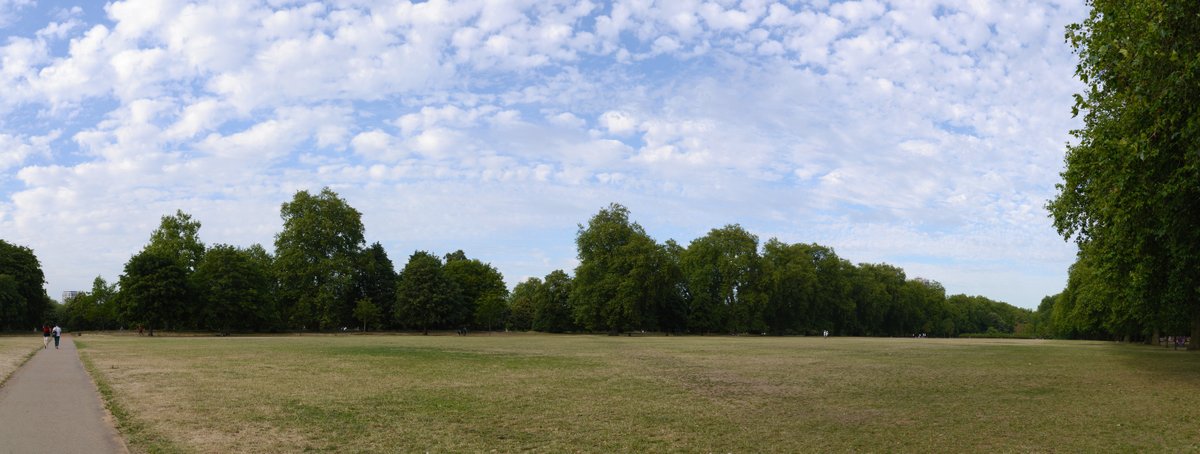

Is it strange to think of Hyde Park as a private hunting ground? Not really - Henry VIII acquired the manor of Hyde from Westminster Abbey in 1536 to use as a hunting ground.
For a long time, it was a restricted royal domain. But by 1612, things were changing. Authorities replanted two hundred lime trees and repaired the ponds. This did not stop the poachers. In 1619, keepers directed by Sir Thomas Watson ambushed deer poachers with hail shot, and the poachers killed a keeper.
Charles I eventually opened the park to the general public in 1637. It quickly became a popular gathering place, particularly for May Day celebrations. It also became a place for duels during the 18th century, often involving members of the nobility. During this time, Queen Caroline directed major improvements and divided the park from Kensington Gardens in 1728.
Today, you might walk down Rotten Row, which was possibly the first road in London to be lit at night to deter highwaymen. Hyde Park is a historic Grade I-listed urban park that served as a site for protests by the suffragettes and the Stop the War Coalition, and hosted large-scale rock music concerts for groups like Pink Floyd in the late 20th century.
Sources: Wikipedia, OpenStreetMap, Wikidata, Wikimedia Commons



Written by Nicolo Ciampini
Discuss this with the author and others
No comments yet. Be the first to start the conversation.