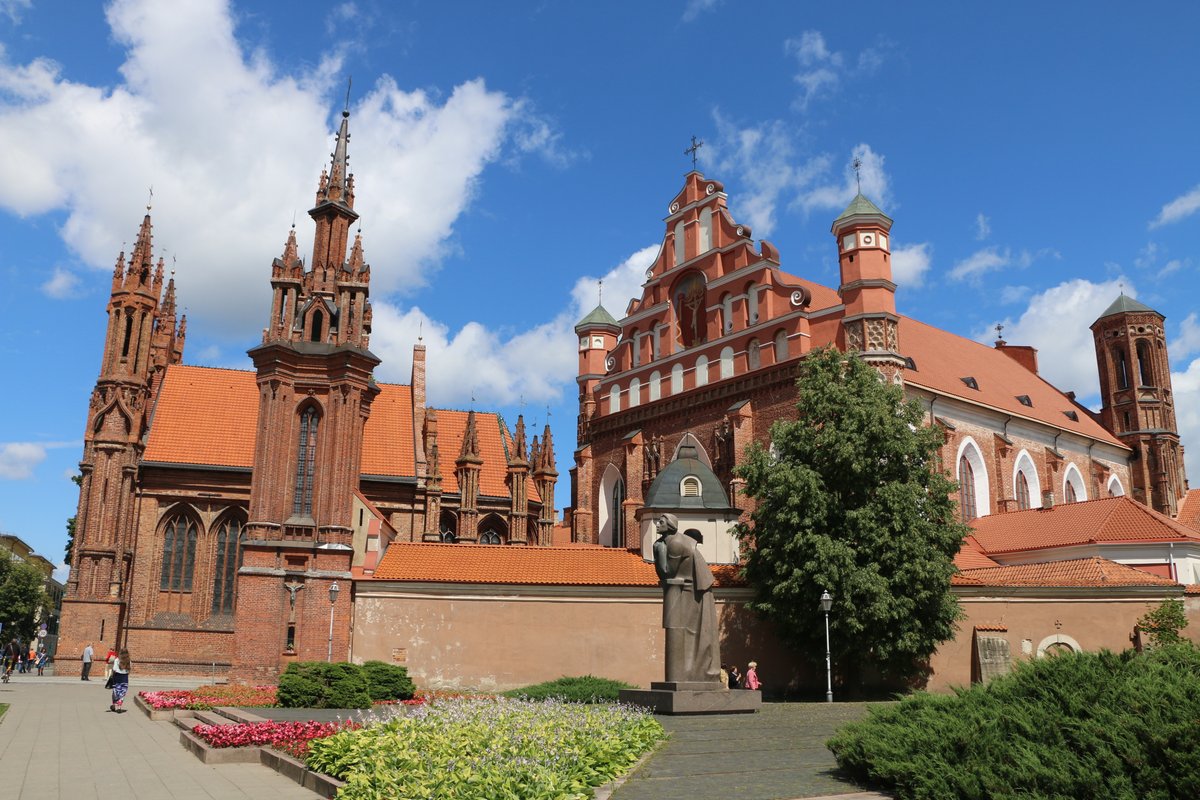

The monument to Adam Mickiewicz stands in a calm spot by the Neris River, but its history is far from simple. In 1925, a contest was declared to honor the Romantic poet, attracting deep interest from the artistic scene and resulting in 67 designs. First prize went to Avant-Garde artist Stanisław Szukalski, whose design featured a nude Mickiewicz lying upon a sacrificial altar. In this vision, a White Eagle - Poland's national symbol - was perched at the figure's side where it symbolically drank blood from the poet's wound.
Szukalski's design was highly divisive, sparking strong emotions among Poland's intelligentsia, leadership, and art critics. The polarized atmosphere led the monument committee to arrange for a new contest consisting only of concepts by invited artists. The winner was Henryk Kuna, whose proposal was chosen. However, due to problems involving financing and a suitable location, construction dragged on until the project was abandoned with the outbreak of World War II and the incorporation of Vilnius into Lithuania.
The project was later revived in the 1980s by Lithuanian sculptor Gediminas Jokūbonis and architect Vytautas Edmundas Čekanauskas. The monument, carved from granite brought from Volhynia, was unveiled on April 18, 1984. It depicts Mickiewicz leaning against a broken column and measures 4.5 meters in height. In 1996, six bas-reliefs from the never completed monument by Henryk Kuna were placed around the statue. These reliefs depict scenes from Mickiewicz's work Dziady and were intended to create one composition with the monument.
Sources: Wikipedia, OpenStreetMap, Wikidata, Wikimedia Commons




Written by Nicolo Ciampini
Discuss this with the author and others
No comments yet. Be the first to start the conversation.