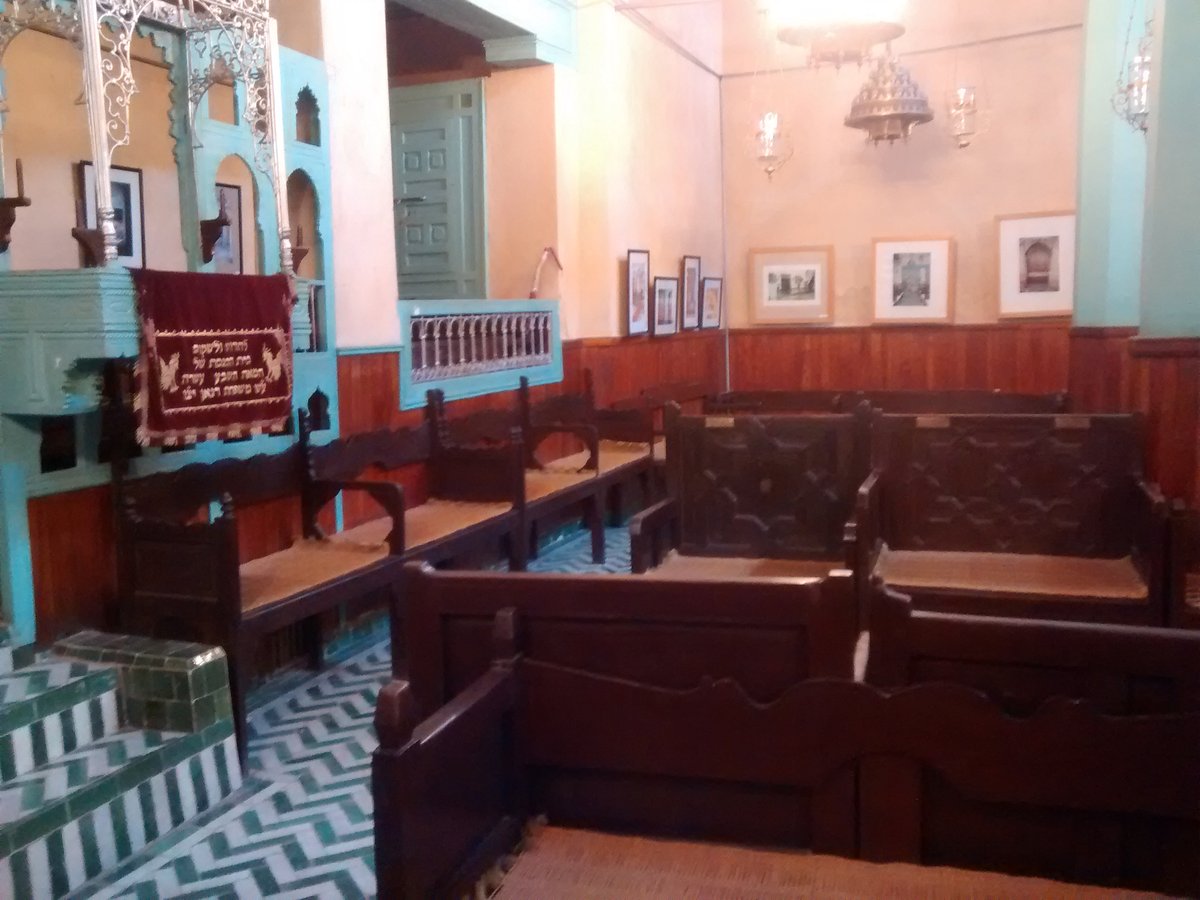

Located in the Mellah of Fez, Morocco, the Ibn Danan Synagogue is a place of worship whose construction is dated to 1680 by historian Hicham Rguig, though other dates suggest the early or late 17th century. It was originally built by Mimon Boussidan, a wealthy merchant. Unlike many other synagogues in Fez that were converted from houses, this building was constructed specifically as a place of prayer. The synagogue has undergone several restorations, most notably in the 1870s and again in the 1990s, which culminated in its reopening in 1999.
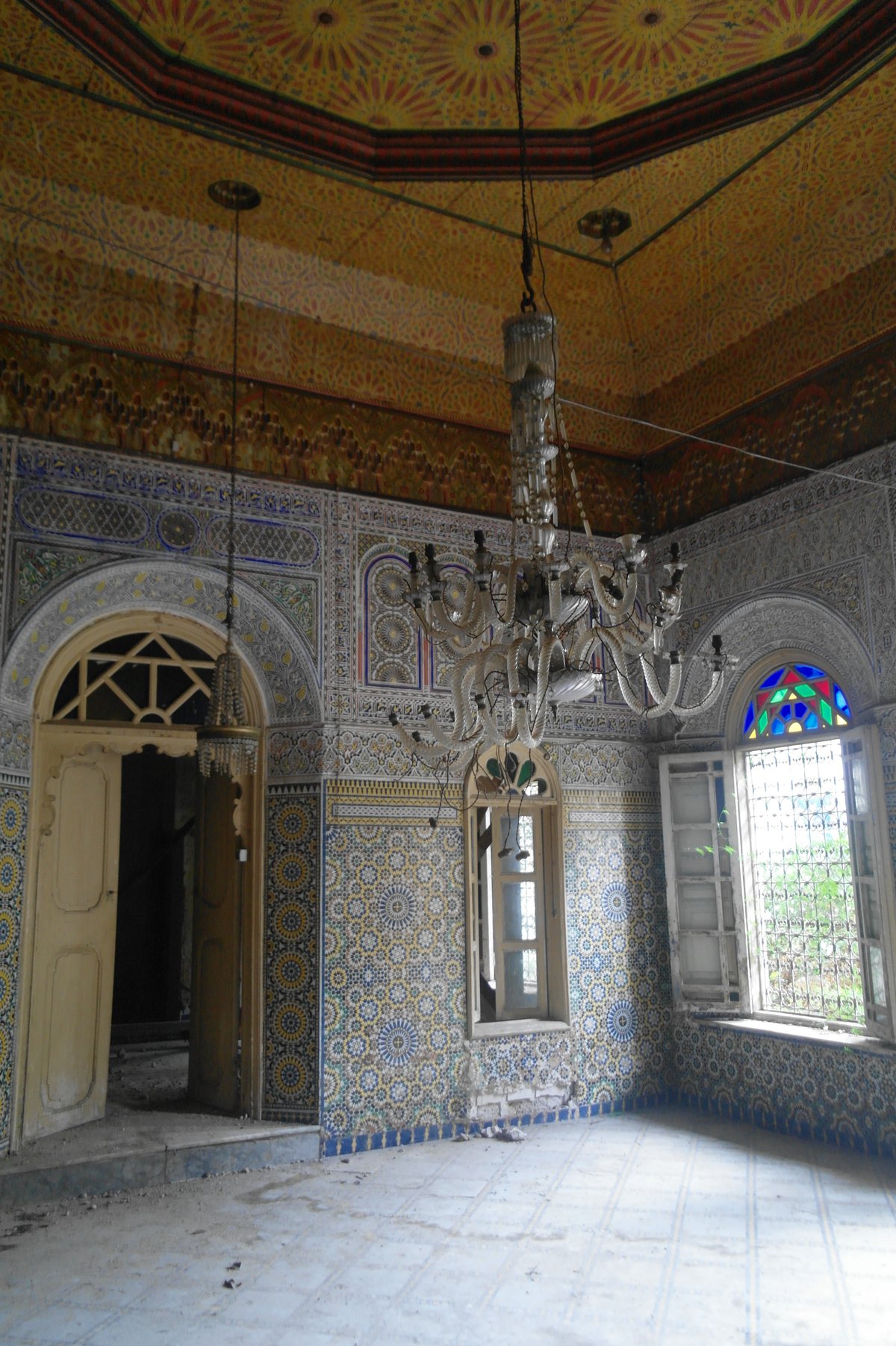
The interior of the synagogue features a main room divided by a row of three pillars. High windows provide light to the space, where the walls are wainscotted with blue figured Moroccan tiles. A large Torah ark made of carved wood occupies one wall, above which is intricately carved plaster work. Opposite this is a raised alcove for distinguished members, providing access to the bimah. The bimah is a wooden platform topped by a wrought iron canopy featuring Islamic-style arches and floral forms.
During restoration in the late 1990s, a subterranean vaulted chamber was rediscovered beneath the main hall. This chamber likely served as a cellar, but a passage also provides access to a mikveh, or ritual bath. While the mikveh was likely open to the outside originally, it was later enclosed due to new structures being built against the synagogue wall. To maintain access, a stairway was created from inside the synagogue to reach the bath and its underground water channel.
Sources: Wikipedia, OpenStreetMap, Wikidata, Wikimedia Commons
Written by Mutabor
Discuss this with the author and others
No comments yet. Be the first to start the conversation.