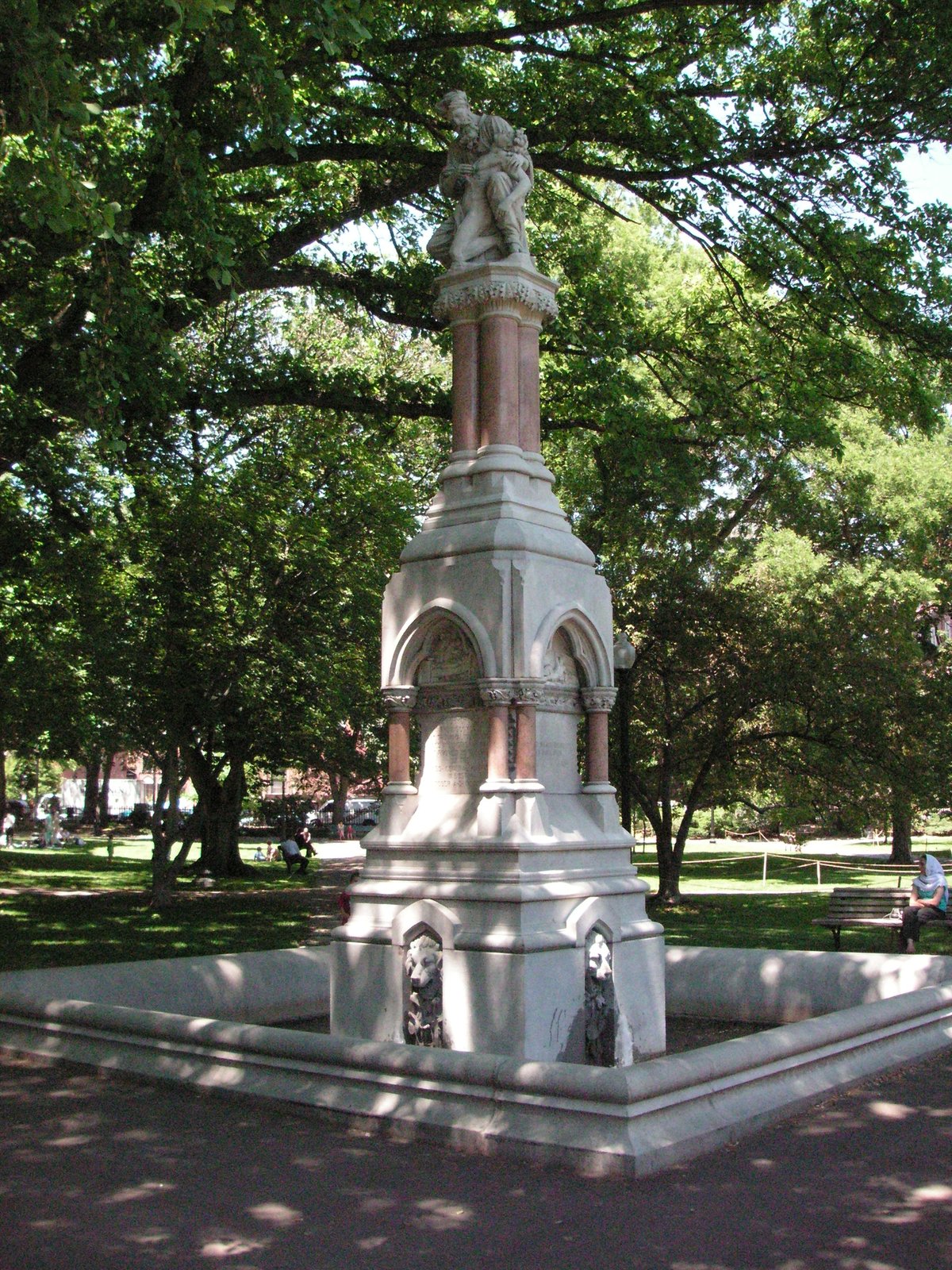

The Ether Monument in Boston is a striking 40-foot tall monument that commemorates the use of ether in anesthesia. The city accepted a proposal from Boston merchant Thomas Lee in March 1866 to fund a fountain-style monument expressing gratitude for this medical breakthrough first demonstrated at Massachusetts General Hospital in 1846. The monument was designed collaboratively by architect William Robert Ware and sculptor John Quincy Adams Ward, and was dedicated in 1868, making it the oldest monument in the Public Garden.
It stands atop a base consisting of four niches, containing spouting lion's heads, and has mouldings and a grouped quadripartite shaft at the top. The monument's form incorporates allegorical sculpture and reliefs illustrating mercy and the relief of suffering. The statue itself shows a medical doctor in medieval Moorish-Spanish garb, with a body of a man over his knee, receiving ether through a cloth. Inscriptions on the monument include: 'In gratitude for the relief of human suffering by the inhaling of ether, a citizen of Boston has erected this monument, A.
MDCCCLXVII. and 'Neither shall there be any more pain. Apart from its historical significance, the monument underwent a significant restoration and rededication in 2006 to ensure its conservation for future generations.
Sources: Wikipedia, OpenStreetMap, Wikidata, Wikimedia Commons
Written by Friendly Jane
Discuss this with the author and others
No comments yet. Be the first to start the conversation.