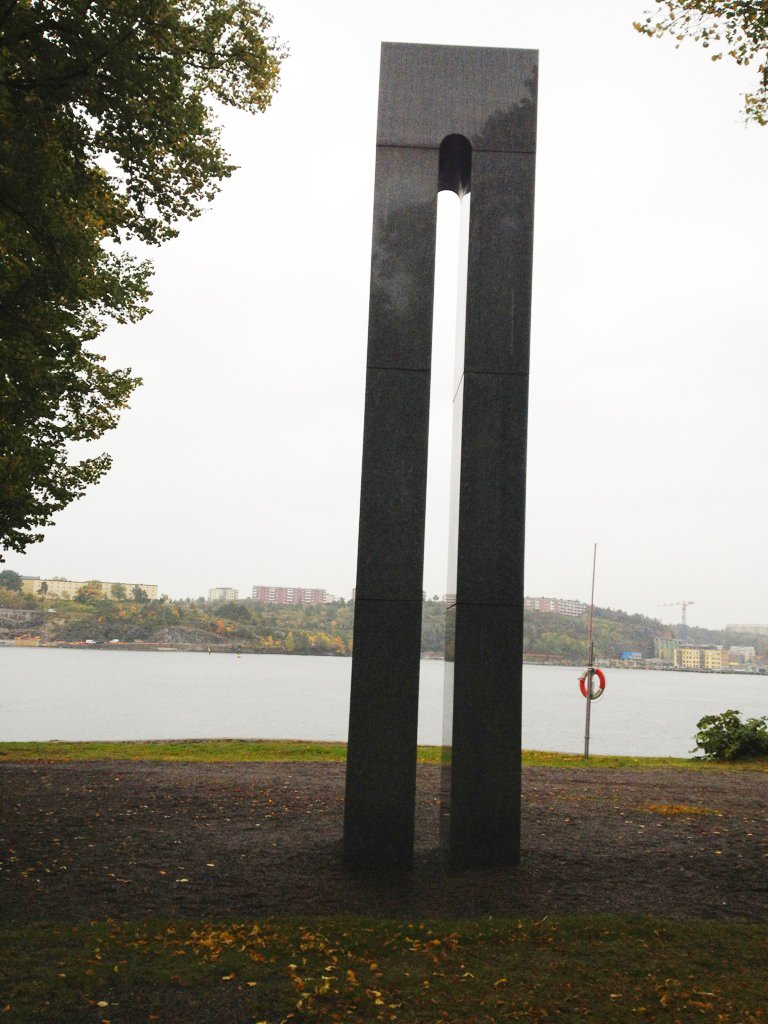

Frihetens Port serves as a solid, enduring testament to the 1944 exodus. It was raised in 1994 to mark 50 years since tens of thousands fled the war to find a new home. The monument was established as a gift and a thank-you to the Swedish people for providing refuge during a dark time.
During the 1990s, a group of people sought to create a permanent tribute. They selected a location on the edge of Manilla Holm, which belongs to the Swedish King, in the South Djurgården area. Sculptor Matti Varik designed the resulting 8-metre-high pillar from grey granite, which was officially handed over to the Swedish people on October 7, 1994.
This structure holds a deep sense of gratitude. It bears a message about Sweden's humanity and tolerance toward people who sought sanctuary in a dark time and toward the groups who found a new home here. It serves as a memorial to those whose journey to the shore was cut short.
We invite you to pause at this quiet site of contemplation today. As you examine the carved words concerning humanity and tolerance, you can explore the enduring bond between two peoples. The granite stands as a permanent invitation to remember those who found safety and a new home.
Sources: Wikipedia, OpenStreetMap, Wikidata, Wikimedia Commons





Written by Nik Frost
Discuss this with the author and others
No comments yet. Be the first to start the conversation.