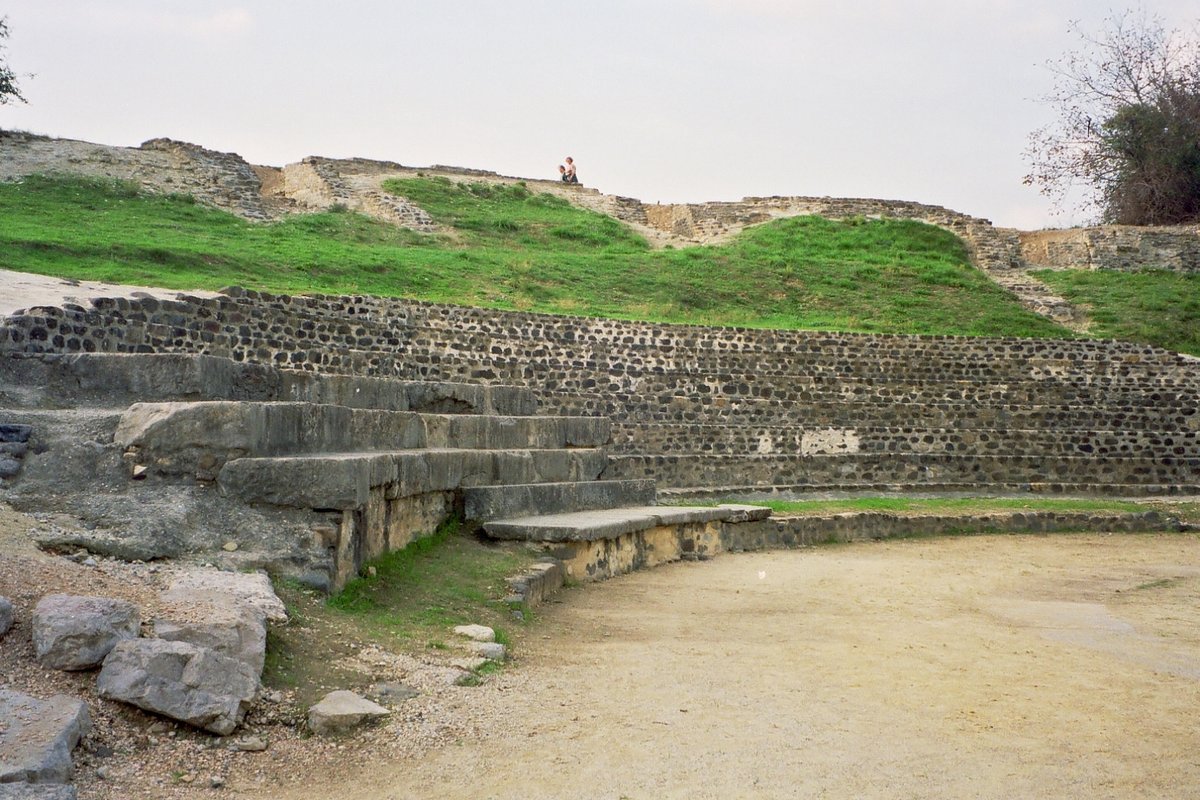

The Gallo-Roman Theatre, located in Alba-la-Romaine, France, is an element of the monumental decoration of Alba Helviorum. Built around the last decade of the Gregorian calendar B.C, this theatre underwent three phases of construction and amendment, but fell into disuse by the end of the 3rd century. Rediscovered and identified in 1819-1821, it has been a subject of numerous restorations since then. In its third state, completed around 120 A.D, the theatre could accommodate up to 3,000 spectators. Its cavea, dedicated to spectator seating, was composed of 22 rows of gradins supported by four semi-circular walls. Partially inherited from Greek architectural traditions, the stage was narrow and did not occupy the entire width of the monument. This stage was potentially the setting for the performers to bring the stories to life for the audience that filled the theatre.
Sources: Wikipedia, OpenStreetMap, Wikidata, Wikimedia Commons
Written by Nicolo Ciampini
Discuss this with the author and others
No comments yet. Be the first to start the conversation.